


Antique Mandarin Official in Belt Holding Gesture (19075)
$575.00
H: 10.75″ W: 4.6″ D: 3.25″ | FREE SHIPPING WITHIN CONTINENTAL U.S.
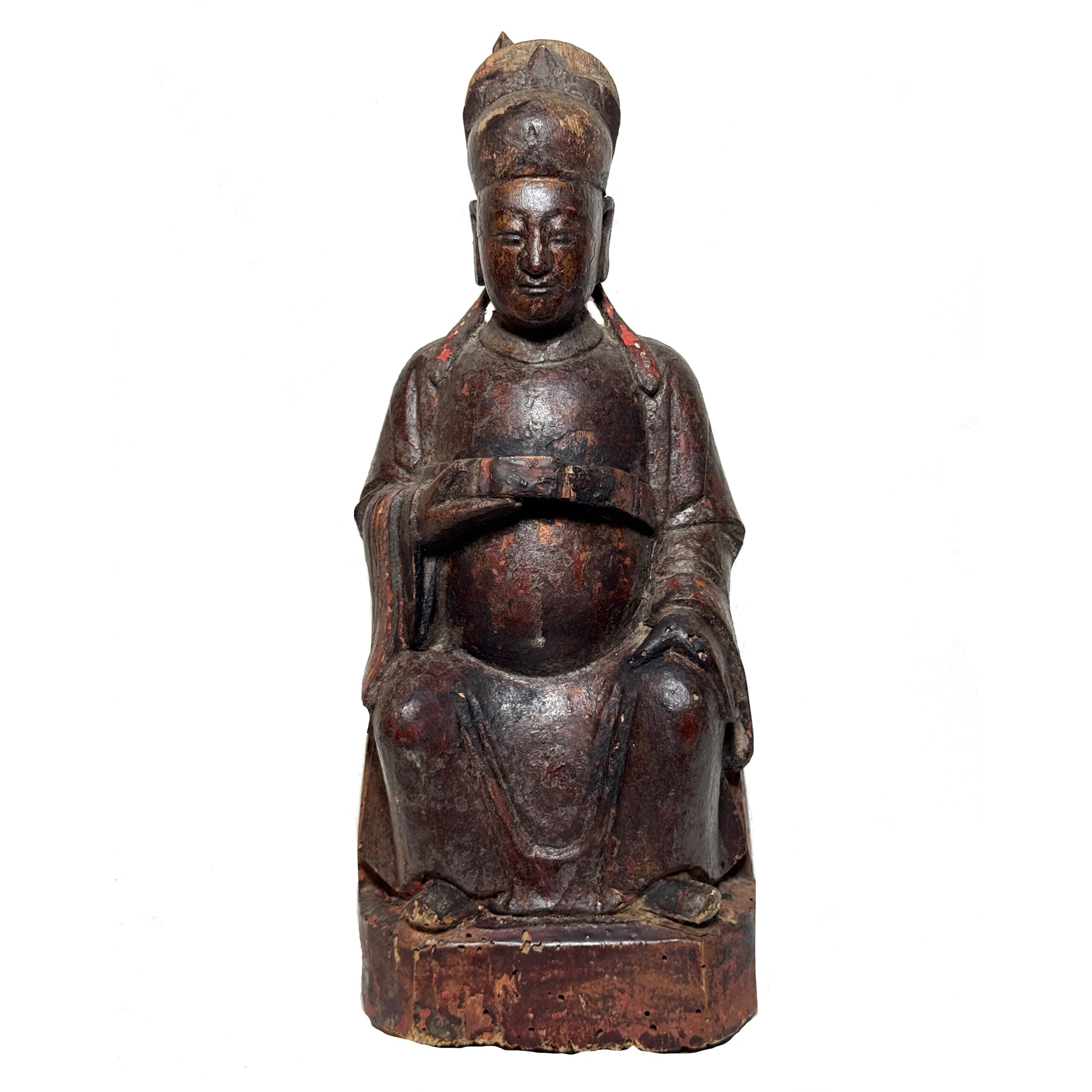
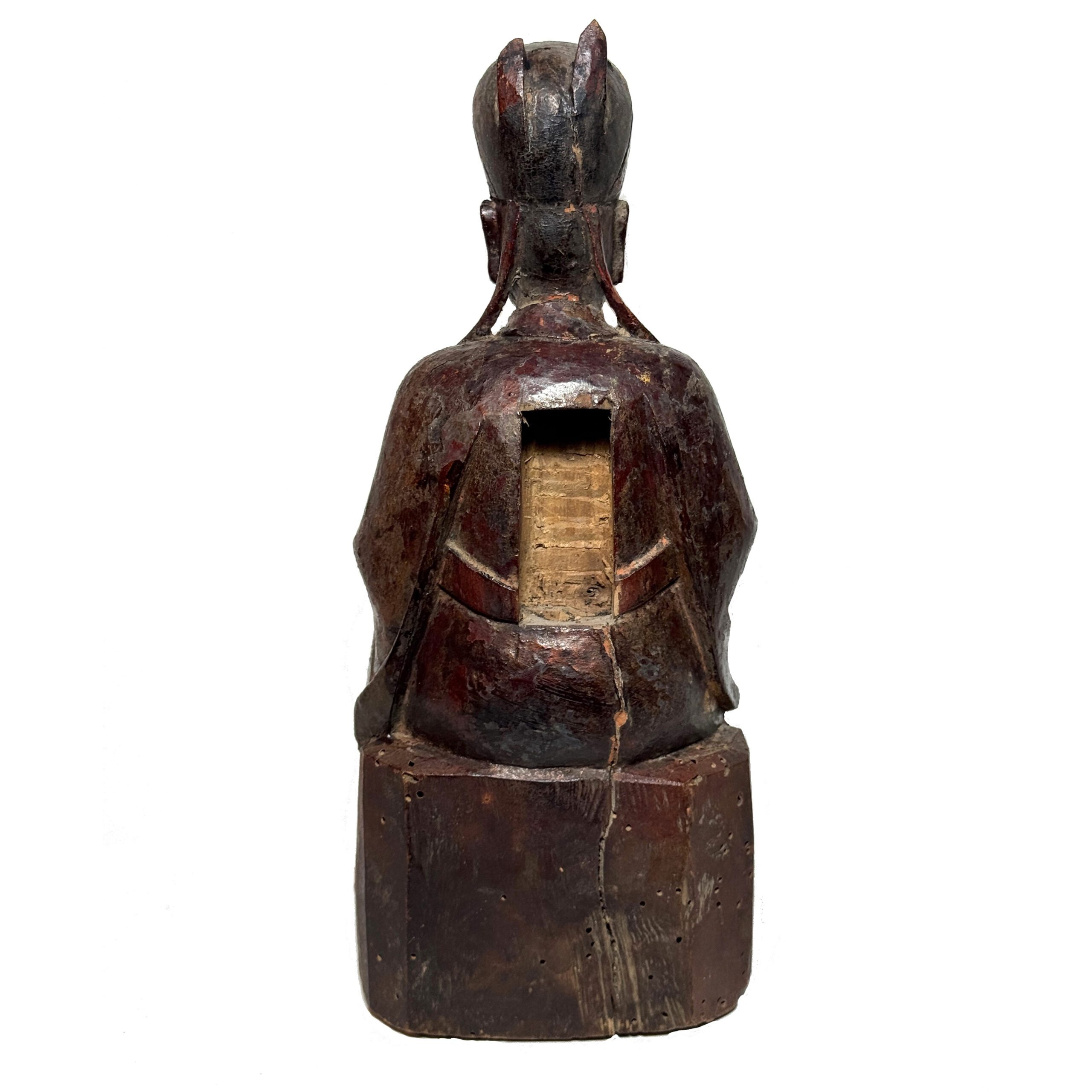
This civil official is in his “best dressed” form. to immortalize his status and importance on earth. Seated figures in the “belt-holding” gesture were considered persons of great achievement, high rank, imperial authority, and esteemed status. This high-quality commissioned statue was embellished with now faded gold leaf. The back cavity has its original consecration slip which is very rare.
Description
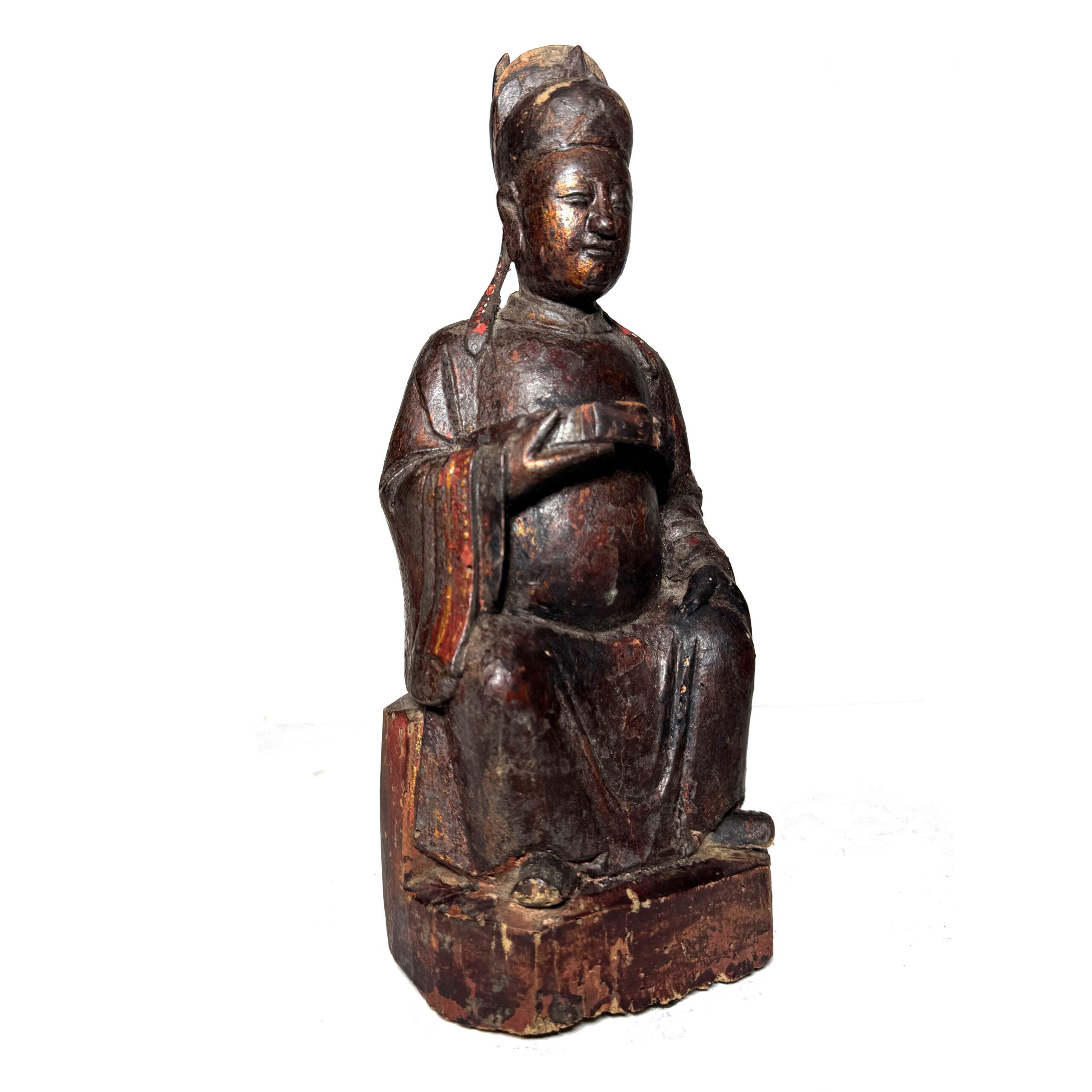
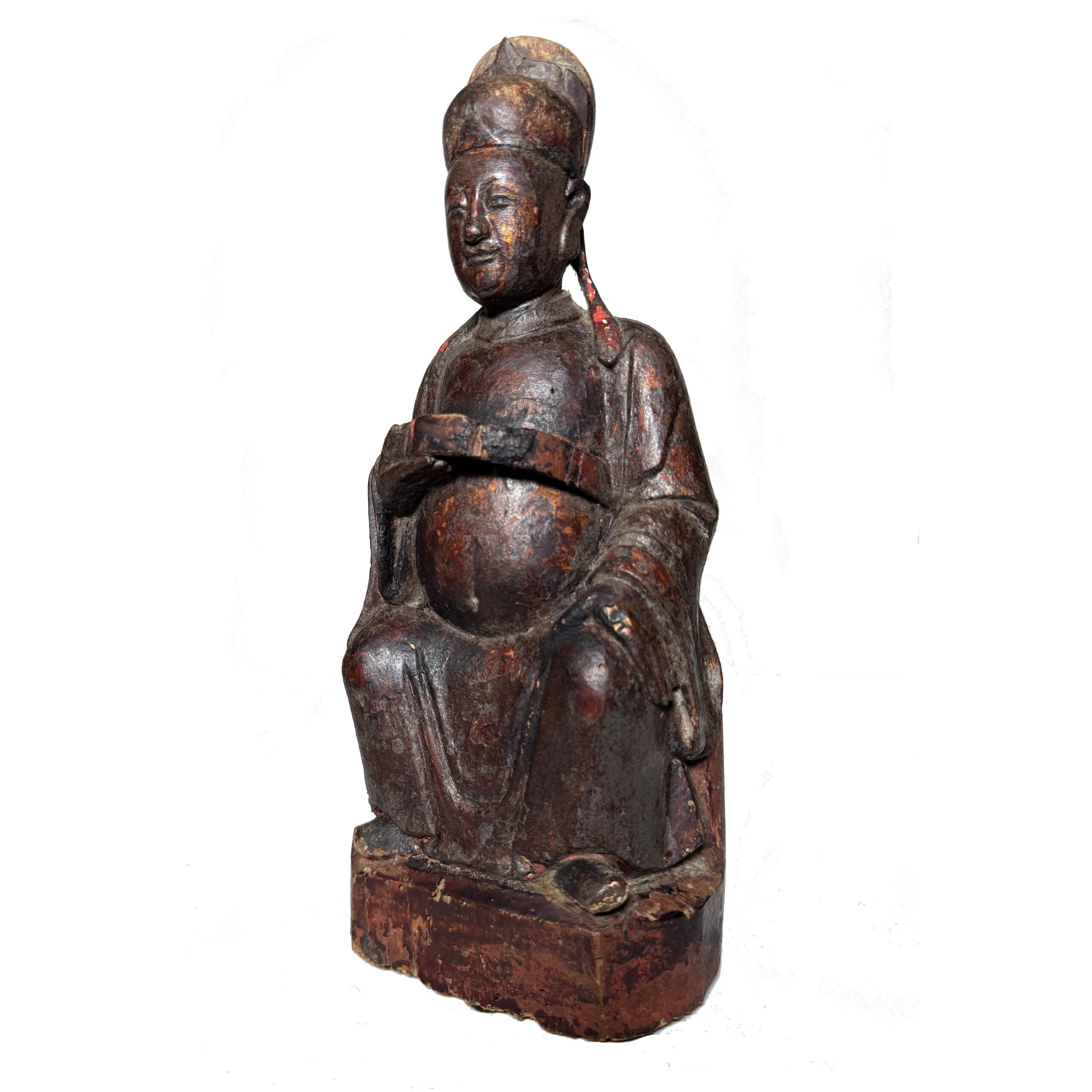
Based on his rigid posture, modest throne and official’s attire this ancestor was a civil official portrayed in his most prestigious form. Seated figures in the “belt-holding” gesture with one or both hands were especially revered as persons of great achievement, high rank, imperial authority, and esteemed status. . Displaying the belt with one hand and the other firmly place on the thigh was the “power pose” of a high-ranking Mandarin Official that affirmed adherence to court protocol and immortalized his success. Holding one’s belt had powerful symbolic and practical significance. These belts were strictly regulated by imperial law and holding one was a well-recognized cue of high status, power, and prestige. Belts were a symbol for career advancement and success. Parents presented belts to sons hoping they would pass the imperial examinations and become high-ranking bureaucrats. Practically speaking, officials held these heavy, oversized and loosely fitted ornamental accessories to assured they were centered and properly displayed. Holding the belt reflected the “weight” of the ancestor’s office and heavy obligations he fulfilled during his life.
A large, rounded belly was highly respected in Chinese carved and painted portraits: A prominent belly literally presented the ancestor as well-fed and prosperous enough to enjoy a life of leisure. It symbolized life’s fullness and the ancestor’s ability to provide for a large, flourishing family lineage.
This statue was clearly a high-quality commission by the descendants seen in the remaining traces of gold leaf that was believed to transform the family member into a deified, protected spirit. His status was reinforced by auspicious colors – red that symbolized good fortune, vital energy, and assured the ancestor spirit remained alive and benevolent and black to denote solemnity, wisdom, and integrity. The statue’s colors naturally age over several centuries. The red cinnabar turned a deep, brownish-burgundy and the gold leaf dulled by sinking into the lacquer or wore away which transformed the bright uniform metal shine into a faint, shimmering residue.
The back cavity indicates it was consecrated. It is in very good/excellent condition given its natural aging, with old insect damage to parts of the base and expected crack in the back.
Additional information
| Place of Origin | China |
|---|---|
| Period | Antique, Qing Dynasty |
| Date | 18-19th Century |
| Materials and Technique | Lacquer on Wood |
| Dimensions (inches) | Ht: 10.75” W: 4.624” D: 3.25” |
| Dimensions (metric) | Ht: 27.305cm W:11.74496. D: 8.255cm |
| Condition | Very good, see description |
| Shipping Box Size | |
| Item Number | 19075A-BSK |