



Ming/Qing Dynasty Guanyin on Lotus Throne, China (16357)
Original price was: $6,200.00.$3,900.00Current price is: $3,900.00.
H:42″ W 19.5″ D:13″ | CALL 213-568-3030 OR EMAIL [email protected] FOR SHIPPING.
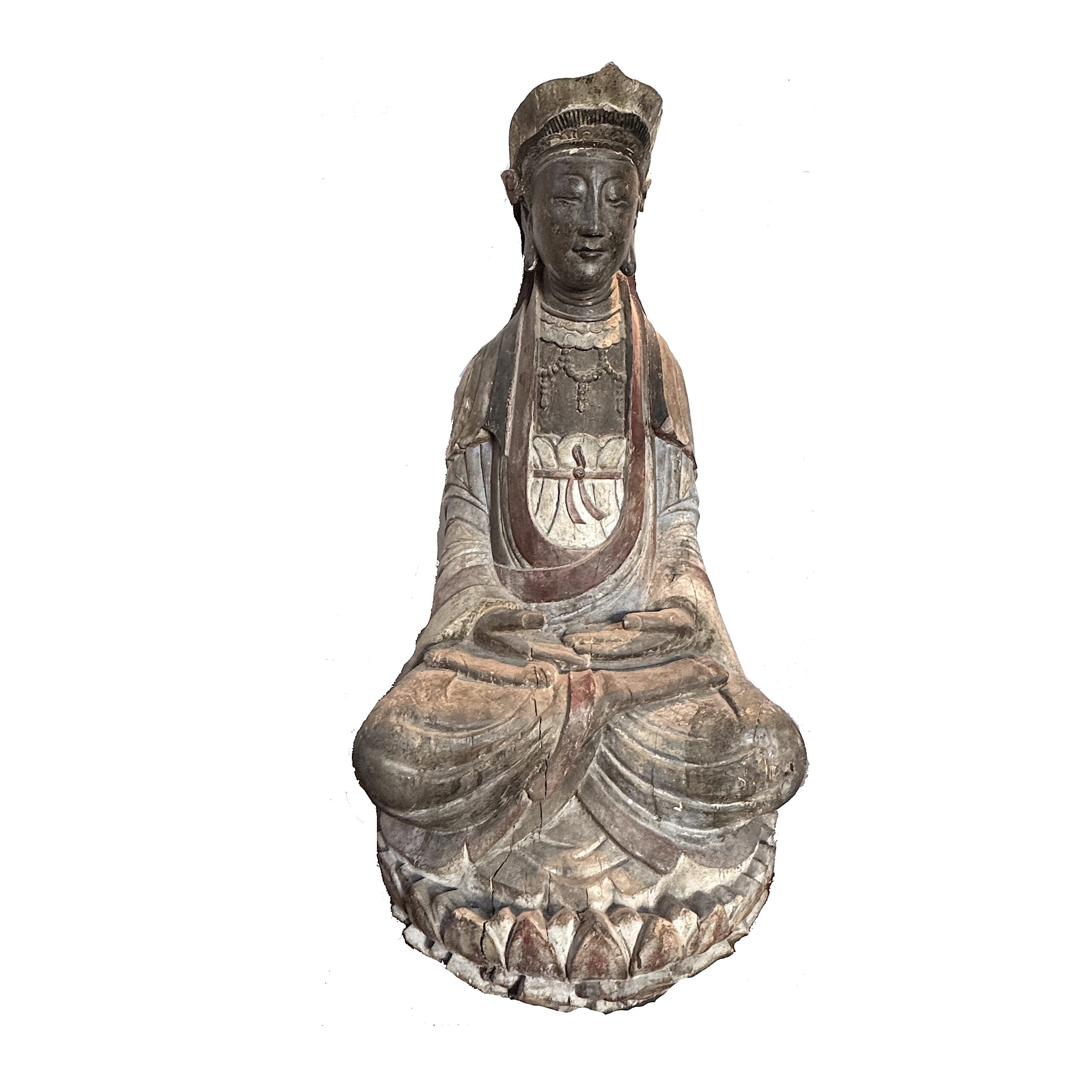
Splendid, large Guanyin statue on lotus throne likely placed in a prominent position in a Buddhist Temple or shrine. In meditation, eyes cast down, realistic with graceful benevolent postures and facial expressions. Sophisticated decorative Ming/Qing style with crown, jewelry reflect her regal status.
Description
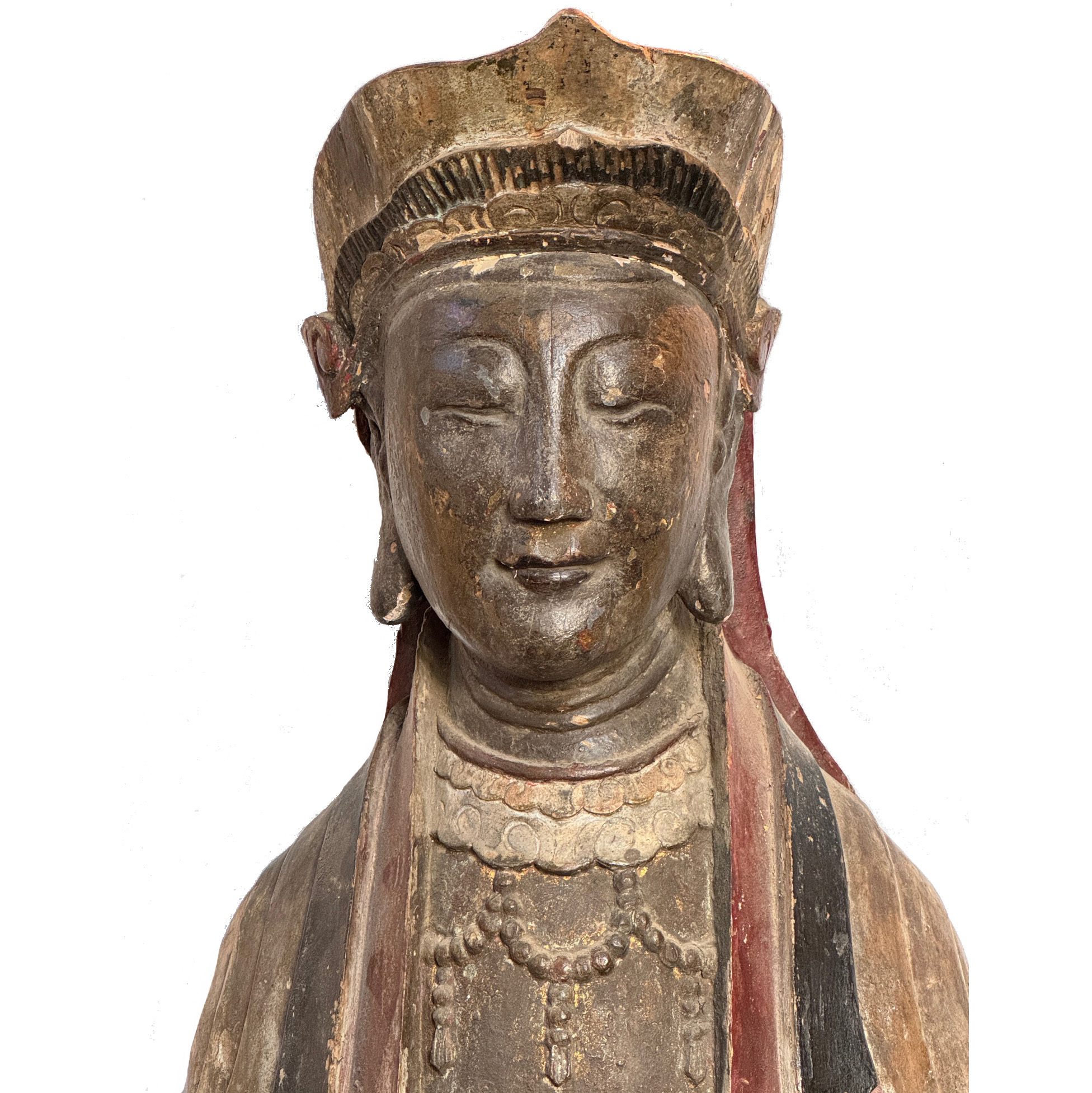
Given its size and masterful carving, this statue of Guanyin, the Bodhisattva of Compassion, seated on a lotus throne was likely placed in a prominent position in a Buddhist Temple or shrine. Its worn surface with remnants of original polychrome and gilding, indicates its long and devotional use. This eloquent statue displays many characteristics of the sophisticated decorative style that flourished during the Ming and early Qing eras, especially those associated with Bodhisattva figures. Her serene, calm and elegant demeanor was customary for the time when figures became more Sinicized in accordance with Chinese tastes: realistic and accessible with graceful benevolent postures and facial expressions. She wears the voluminous, loose-fitting, multi-layered 3-part robe with defined folds tied at the waist and draped around the body that is characteristic of the era. Her crown and elaborate jewelry reflect her regal status, typical of princely depictions of Bodhisattvas.
Guanyin sits in meditation (dhyana mudra), in deep concentration and calm with both hands in the lap and palms facing up. Her feet are set in classic cross-legged lotus posture, (padmasana) with each foot resting on the opposite thigh and soles facing up, symbolizing inner peace and enlightenment. Her almond shaped half-closed eyes gaze down compassionately. As a Bodhisattva, an enlightened being who chose to remain in the material world to help others achieve salvation, she sits on a base composed of carved lotus petals, a traditional Buddhist symbol of purity and spiritual awakening.
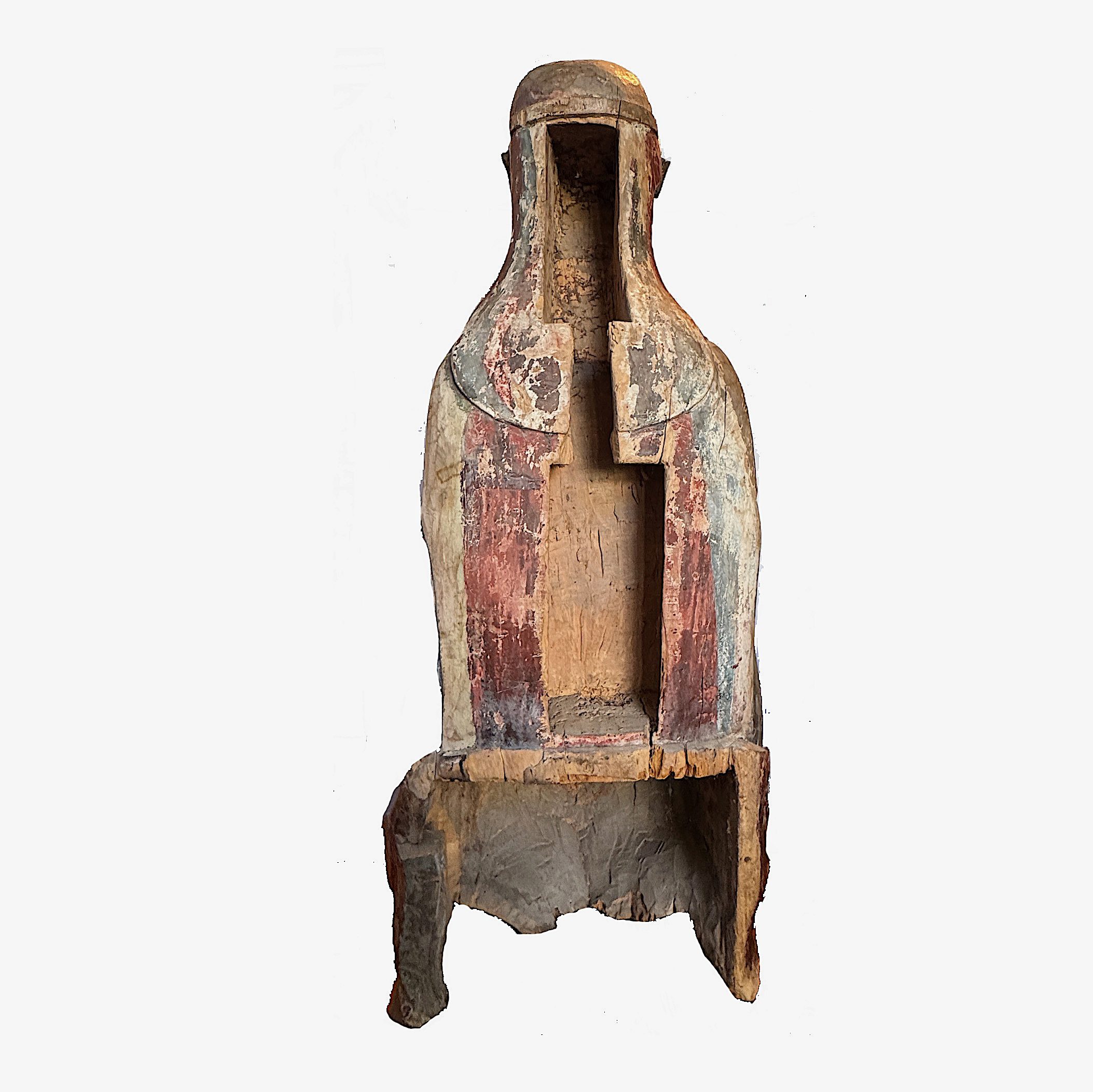
The front of the image contains much of its original polychrome and remnants of gilt. The traces of remaining red and off-white pigment confirm it was once a richly decorated piece. The back surface is heavily weathered, attesting to its age and has significant paint and gilding losses, revealing the raw wood.
The statue’s internal core was hollowed to allow the wood to dry and age without cracking due to humidity and temperature changes. It also made it lighter to allow it to be used in religious processions. Due to its size, smaller wood pieces were carved and assembled enabling multiple artisans to work simultaneously. The blocks were joined using interlocking joints to create strong, stable connections secured with wood pegs rather than metal fasteners. Once assembled, a layer of gesso or a base coat was applied to create a smooth surface. The statue was then painted with various mineral pigments and gilded with gold leaf to enhance its lifelike appearance and emphasize its religious stature.
The back cavities indicate it was consecrated by Buddhist monk during an eye-opening ceremony to give it life. The cavities were filled with documents, significant religious objects and sticks with strings representing bones and arteries and then sealed with a flat wood piece called a bung. After that it was transported to the temple or shrine where it remained for devotees’ veneration.
These sophisticated techniques demonstrate the high level of craftsmanship and engineering knowledge of the skillful artisans who created this splendid work of art. Its spiritual nature will add peace, serenity and splendor to any surrounding.
Additional information
| Place of Origin | China |
|---|---|
| Period | Antique, Ming/Qing Dynasties |
| Date | 17-18th Century |
| Materials and Technique | Wood & Paint |
| Dimensions (inches) | Ht: 42”. W: 19.5”. D: 13” |
| Item Number | 16357LKEM |
| Condition | Very good, no repairs/restorations (see description). |
| Shipping Box Size | Oversized. Call 213-568-3030 or email [email protected] for shipping. |