


Rare Large Ming Buddha on Lotus Throne, China (17008)
$8,900.00
H: 40″ | W: 31.75″ | CALL 213-568-3030 OR EMAIL VANISHINGARTS213@GMAIL.COM FOR SHIPPING.
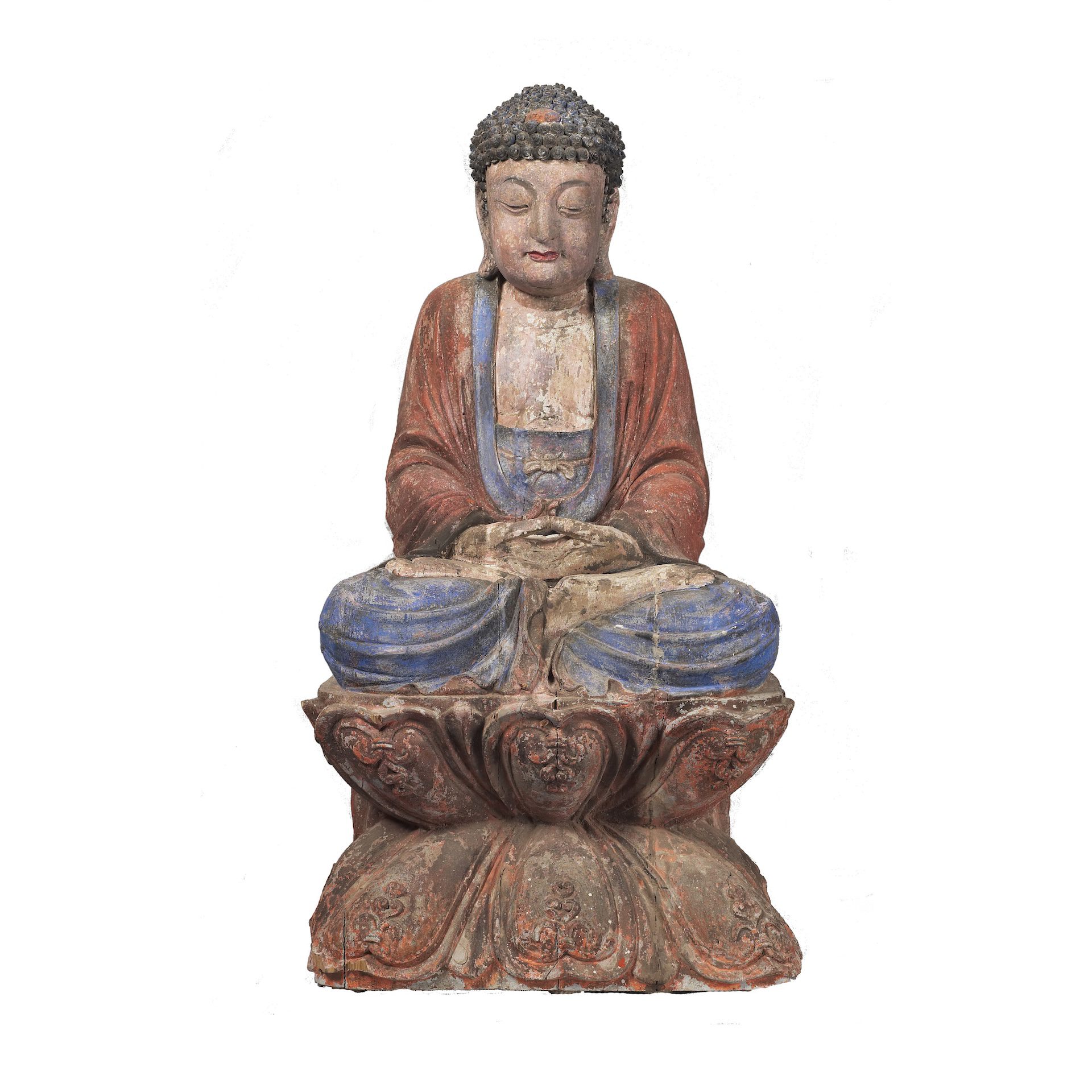
With a benevolent expression, this rare large Ming Buddha sits on lotus pedestal signifying his purity and enlightenment. Originally placed in a Mahayana Buddhism spiritual setting, this important and brilliantly carved image is calming, inspiring and imparts a feeling of serenity to his surroundings.
Description
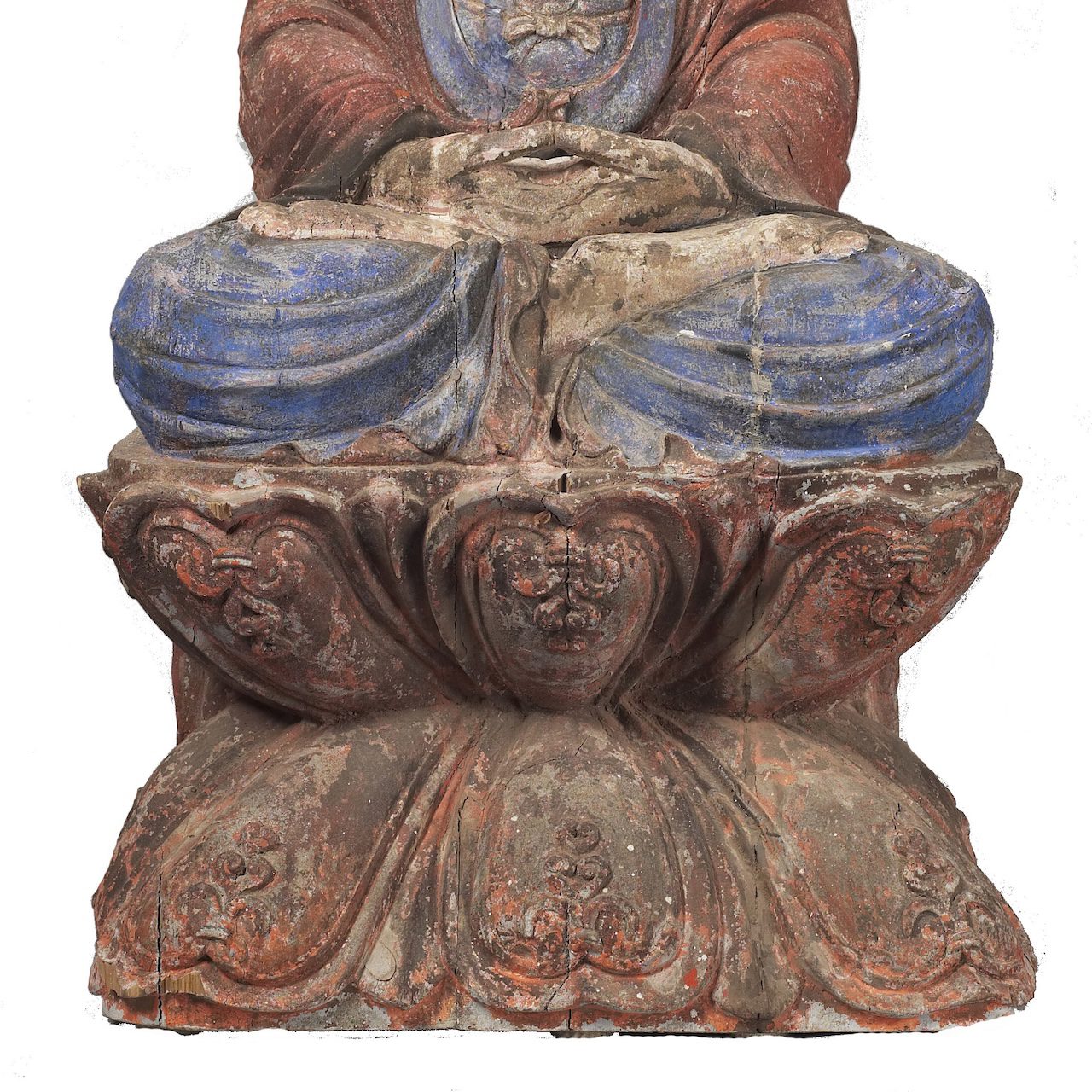
Although there have been countless Buddhas, only Shakyamuni is the historical figure who lived on earth spreading Buddhist teachings. He sits on a double lotus throne used only for enlightened beings, representing the “mother’s lap, the origin of all life.” His hands are in dhyana-mudra (meditation) symbolizing the perfect physical and spiritual balance he assumed under the Bodhi tree before enlightenment. The touching thumbs form a triangle that represent the Three Jewels of Buddhism (triratna): the Buddha, the Dharma (the Buddhas teachings) and the Sangha (the religious community). His legs are in the lotus position (padmasana), soles facing up resting on the thighs.
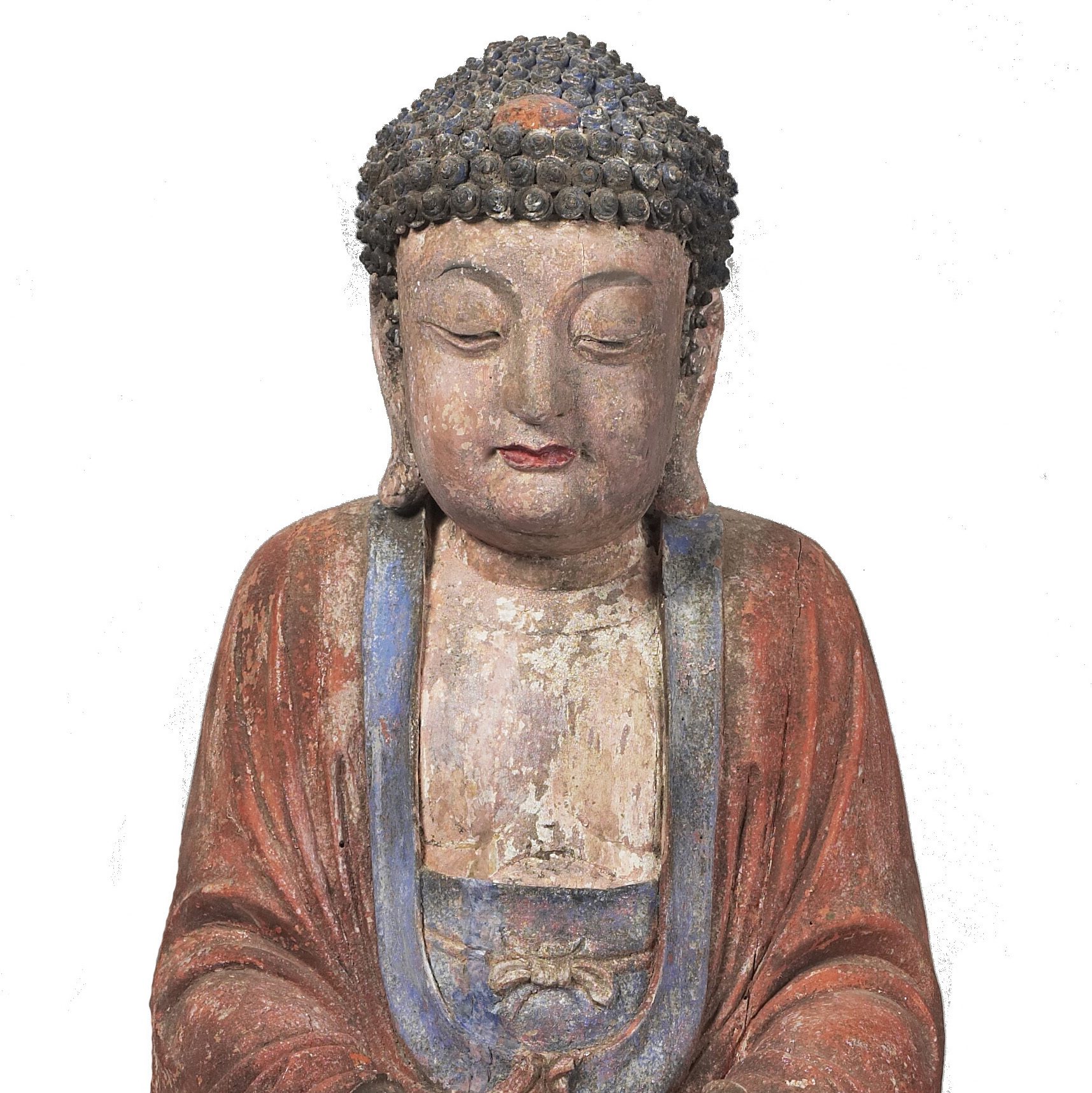
Given its distinct iconographic and stylistic traits, this Buddha is likely a North Chinese temple carvings from the Ming era as he displays many characteristic of Ming dynasty Buddhas including a round face, ,square jaw, full cheeks, and thick lips. His introspective face radiates serenity in a benign expression with downcast eyes under arched eyebrows and a slightly smiling mouth.H is classic Ming Dynasty three-part monk’s attire with cascading outer monastic robes over the shoulders and chest, leaving the torso partially bare to show the inner garment garment (dhoti) gathered at the waist. The folds are thick and geometric rather than naturally cascading and are bunched over the crossed legs. He displays many of the 32 physical traits which identify a Buddha (lakshanas): a cranial protuberance (usnisha) denoting divine energies centered by a painted hemisphere (nikkeishu) the jewel radiating the light of wisdom and pendulous ears denoting he can “hear” the suffering of all beings and respond with compassion. His head is crowned with snail-like spiral curls alluding to the snails who formed a protective helmet over the Buddha’s head in gratitude for his love for all sentient beings.
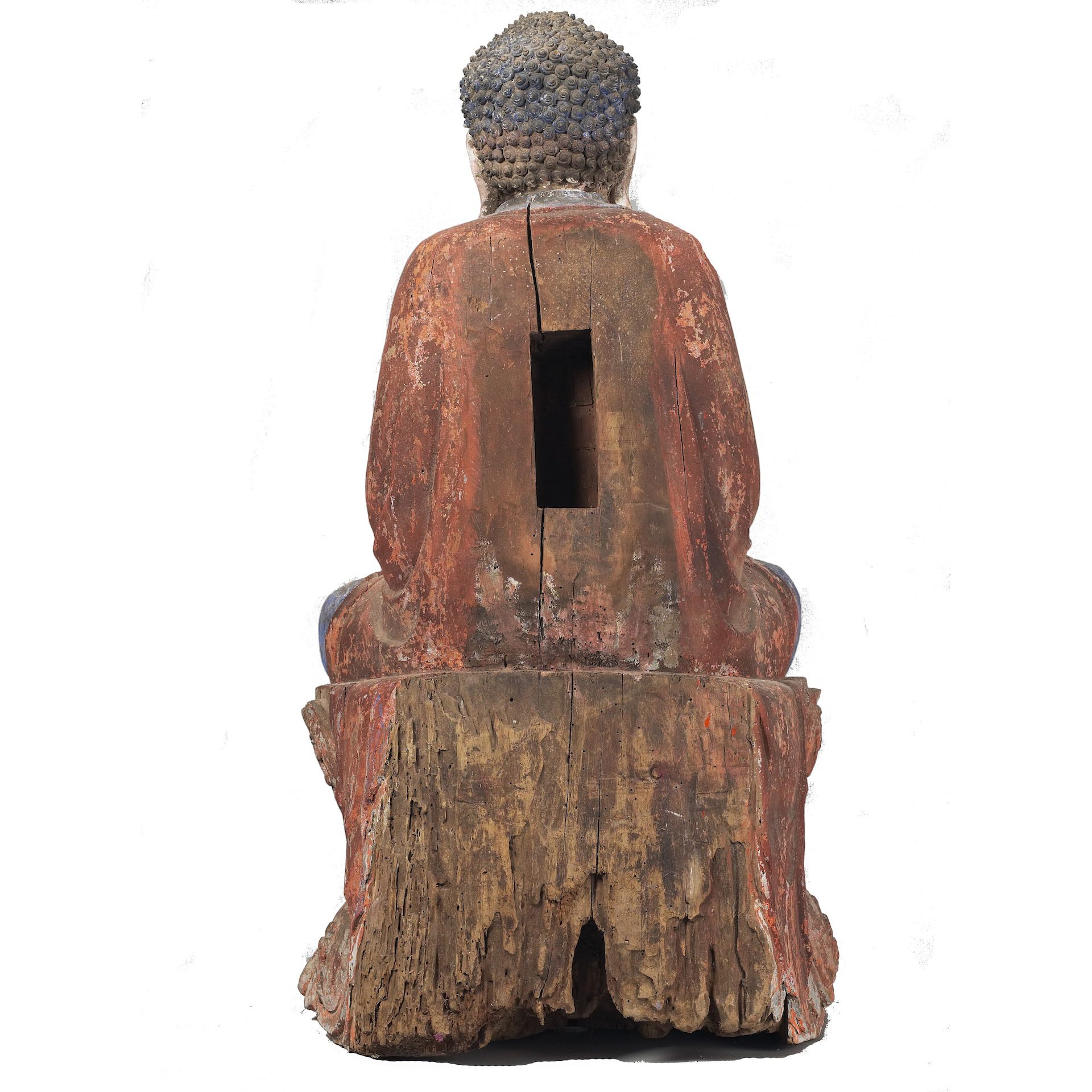
The Buddha is seated on a double-lotus throne with large, deeply carved with upward-curling outer petals. Lotus thrones are used only for enlightened deities and throne-style lotus pedestals is traditional for imperial and high level provincial altarpieces of the 15th to 17th centuries. The wood is entirely covered on front and back.. The smooth white skin tones on the face, the deep blue on the hair, and the iron-red lacquer on the garments were traditional ly created by a gesso-and-pigment application. The carvers applied a ground layer of animal glue and chalky clay over the wood to seal it before brushing on mineral-based paints and applying gold leaf which is just slightly visible. Given its size and consecration by a monk in an eye-opening ceremony, the statue was commissioned as a prominent altarpiece for a community shrine or temple. It is in excellent condition given its age.
Additional information
| Place of Origin | China |
|---|---|
| Period | Antique, Ming Dynasty |
| Date | 16-17th Century |
| Materials and Technique | Wood |
| Dimensions (inches) | Ht: 40”. W: 31.75” D: 16.5” |
| Dimensions (metric) | Ht: 101.6cm. W: 80.645cm 41.91cm |
| Item Number | 17008 |
| Shipping Box Size | Oversized. Call 213-568-3030 or email vanishingarts213@gmail.com for shipping. |