
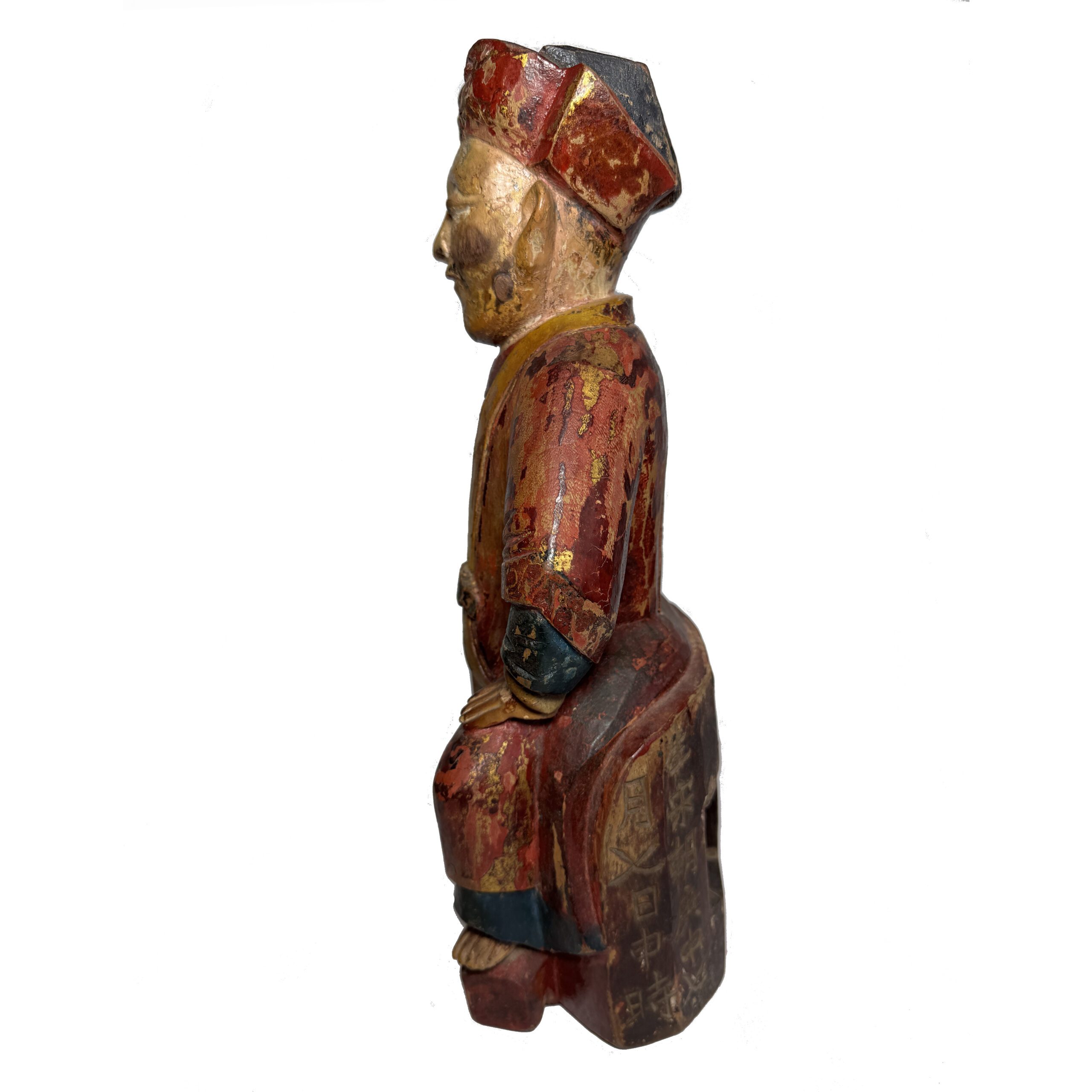


Antique Seated Provincial Mandarin Official with Inscriptions (16911)
$525.00
Ht: 12” W: 6.25” D: 3.25” | FREE SHIPPING WITHIN CONTINENTAL U.S.
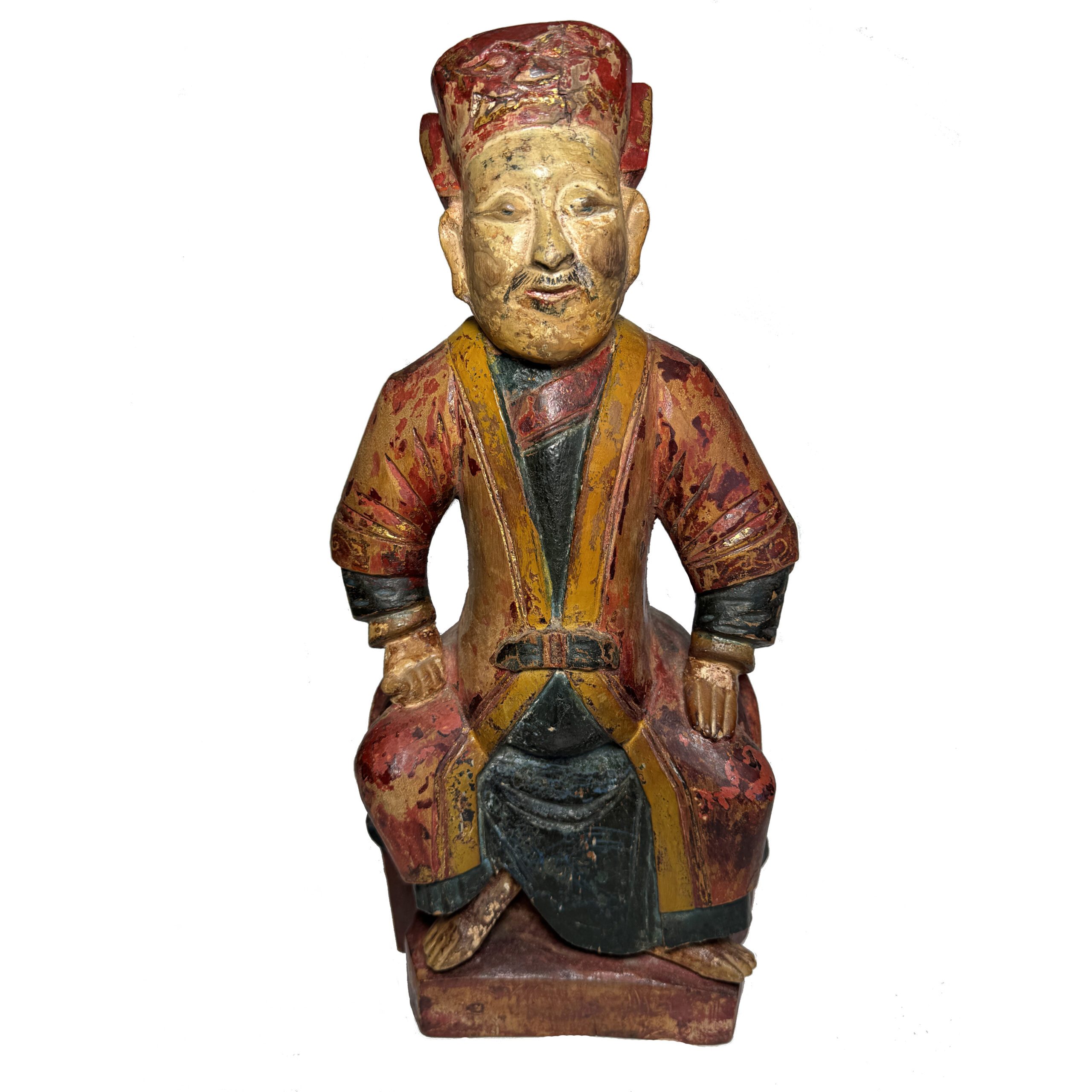
This bare-footed folk art provincial image is a low/mid-ranking civil official or wealthily landowner was an accessible and powerful protective figure “of the people.” Consecrated with rare identifying inscriptions.
Description
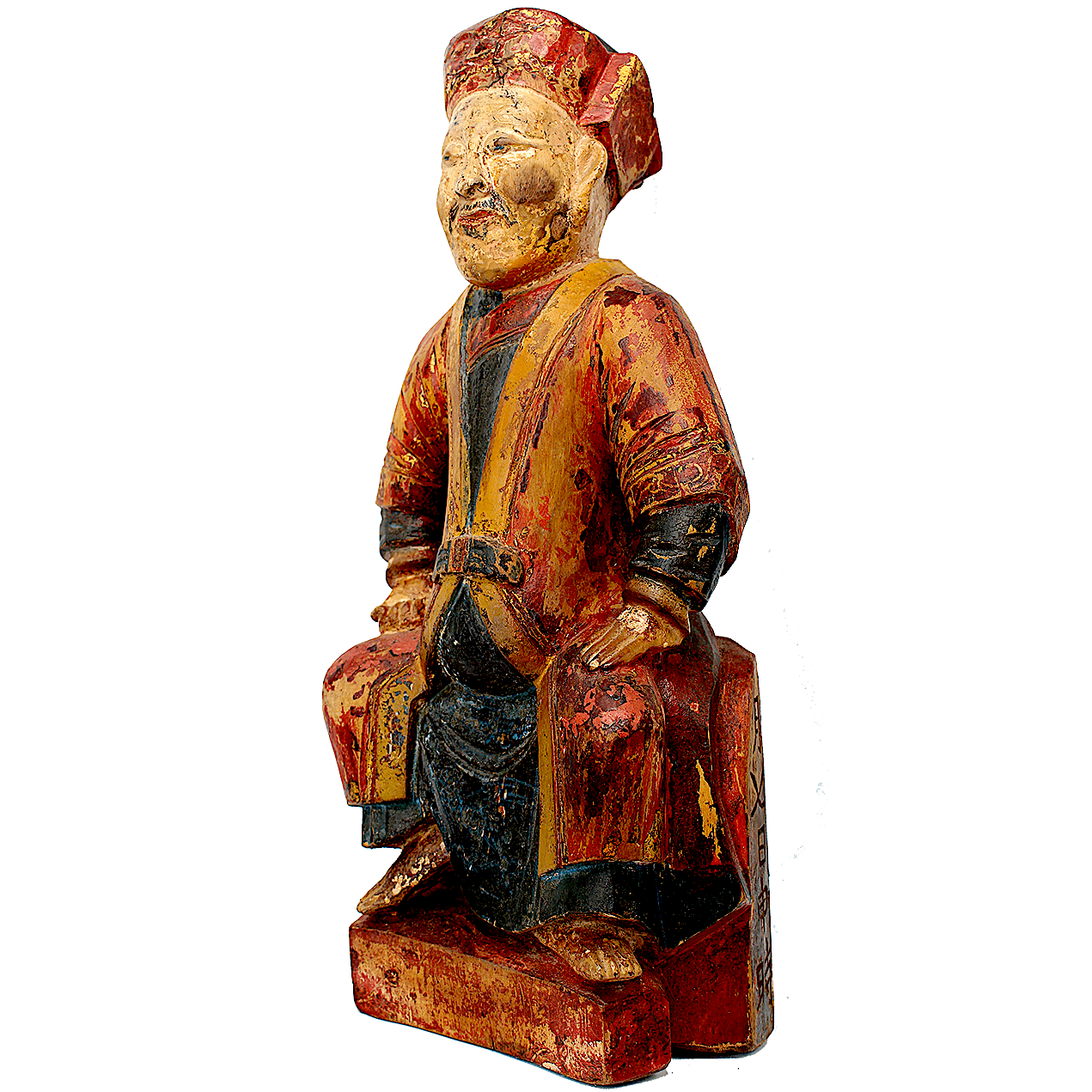
Clearly made by a provincial artisan, this barefooted image on simple base identifies this ancestor as a commoner. Officials were required to wear official boots, which was not the case for this low-to-mid-ranking civil official. Ancestor Lin Huītóng was either a wealthy landowner or minor government official. In Chinese folk tradition even if an ancestor held a modest rank, he was depicted in idealized official attire to reflect honor to his lineage.
The face on his oversized head is symbolically calm and detached to suggest an objective, otherworldly status. His proscribed stylized serene expression and small painted mustache, although mask like, were used to inspire devotion.
He wears a civil official’s cap and long Mandarin coat with wide sleeves of the upper class over a garment with the right-over-left wrap closure of traditional Han Chinese clothing (hanfu). His cap has a carving of a Taotie which is a warning against overconsumption, avarice, and human greed. The “jewel-tone” colors of his red robe and gold accents on the collar and belt were part of his “best dress” representation. Red symbolizes joy, good fortune, and vitality and gold represent wealth and prosperity. His belt which he used to hang personal items indicates he was a man of means.
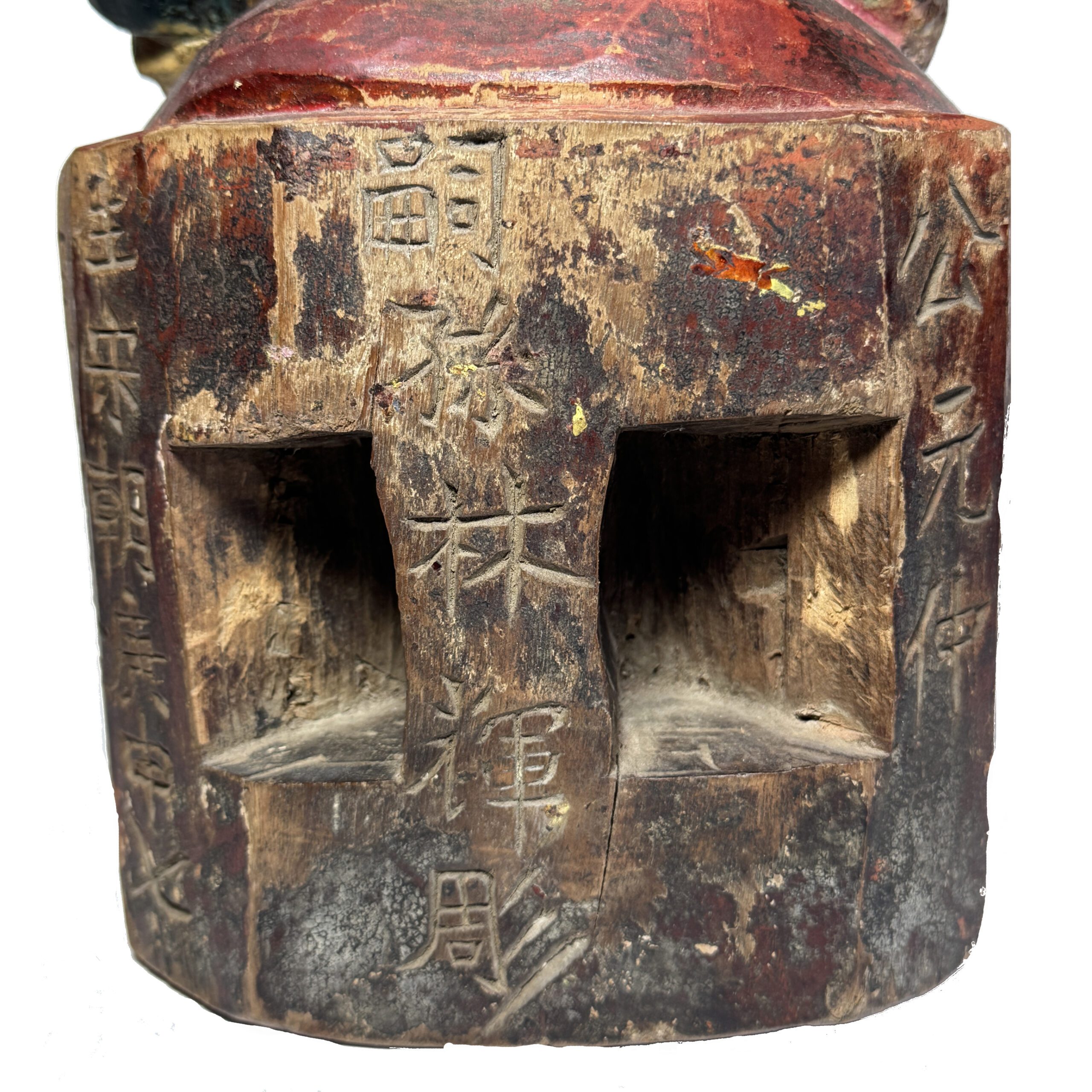
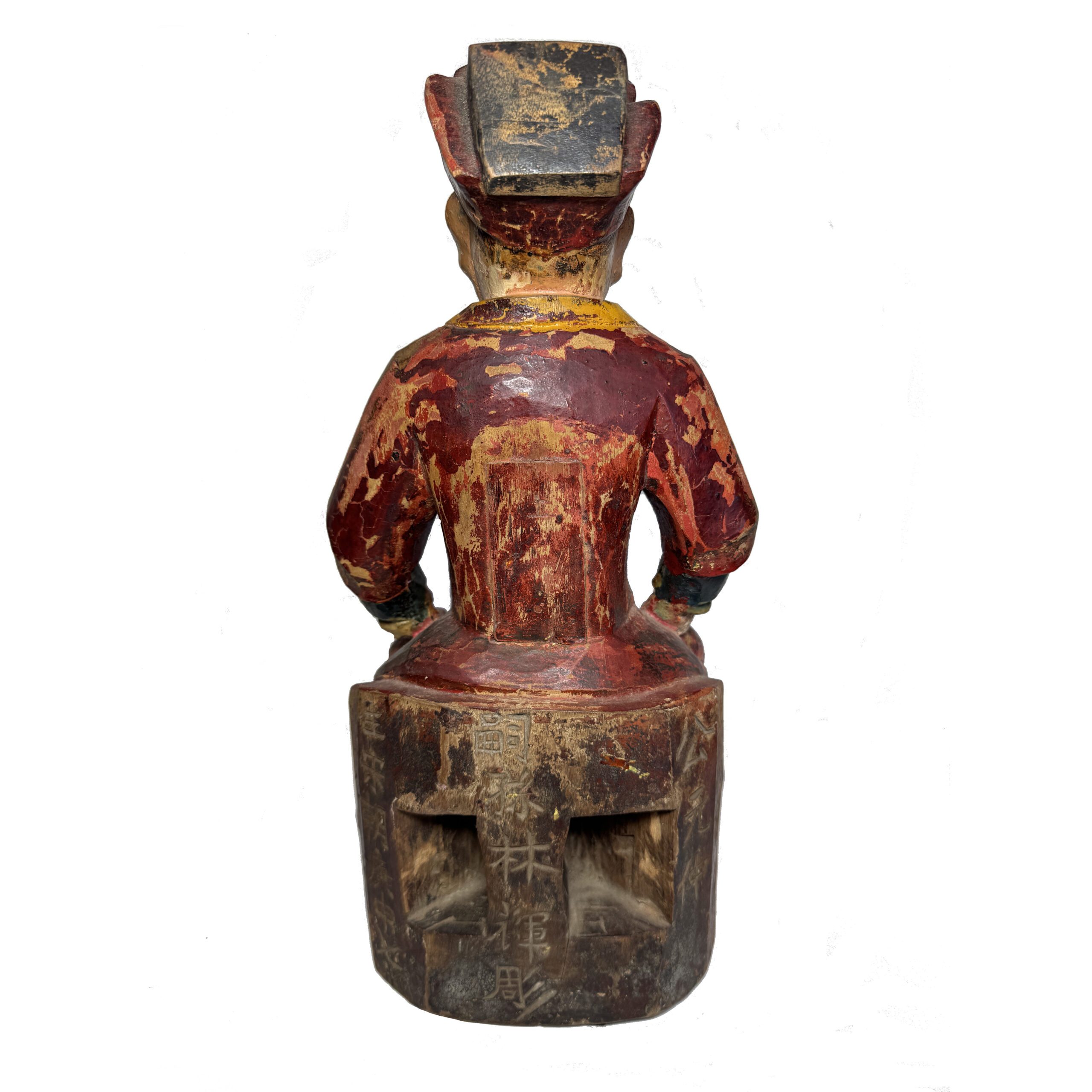
The prolific inscriptions provide historical context. On the top back is his name Lín Huītóng, along with his paternal grandfather Zǔ Kǎo, that he was a “respected elder” and the carving was dedicated for ritual worship. On the sides, the multiple inscriptions denote a localized lineage society often included on southern folk caving’s, the phrase “carved by or commissioned under the supervision of Sun Linhui, the ancestor’s’ birth date of birth – Year of the Metal Monkey, probably 1860 – and time of death and his ancestral lineage.
The back finger grips enabled it to be a living part of the family’s life rather than a static shelf piece. They used the grip to remove it from the altar, turn, clean and travel with it. Its smoothness indicates it was in constant use and an active part of the family traditions, favored by collectors.
AI Market Valuation Summary
AI rates this piece as Collector Quality for the following reasons:
The collector-quality characteristics are based on its structural integrity and authentic aging attributes. The wood’s shrinkage cracks, mineral buildup, and stratified layers of original vermilion lacquer and dark pigments clearly indicate its origin in the 19th century. The lacquer sealed cavity holds it consecration items that gave the statue spiritual life. The incised artisan and donor names and information are historical documentation rarely seen in provincial carvings which contribute significantly to its collector valuation.
Additional information
| Dimensions | 14 × 10 × 7 in |
|---|---|
| Place of Origin | China |
| Period | Antique, Qing Dynasty |
| Date | 19-20th Century |
| Materials and Technique | Wood & Paint |
| Item Number | 16911BOK |
| Dimensions (inches) | Ht: 12” W: 6.25” D: 3.25” |
| Condition | Very good, patina and wear consistent with age and use |
| Shipping Box Size |