Showing 13–19 of 19 results
-

$395.00
Ht: 6.5” W: 2.625” D: 1.75” | FREE SHIPPING WITHIN CONTINENTAL U.S.!
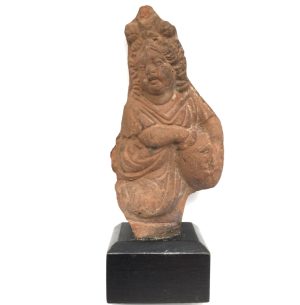
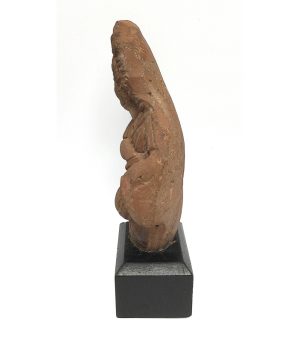
This ancient figurine is Harpocrates the Greek god of silence and secrets holding a jar made for a home shrine. He probably represents a royal and temple cult, as he wears a double crown symbolizing both Upper and Lower Egypt and his royal emblem signifies his association with the reigning Egyptian king, who was considered a manifestation of the Egyptian god Horus. Missing part of his right side when excavated, and no with no repairs this is a true slice of history. It pairs well with #1845 Ancient Pottery Figurine of Child Nurturer Goddess.
-
$450.00
H: 2.25” Dia: 14.5″ |Free shipping in Continental US!
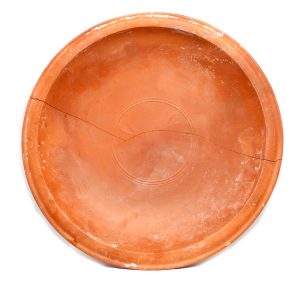
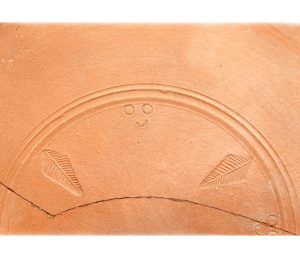
Created in the Roman North Africa platters like this were distributed throughout the Roman Empire. Known as s ARS (African Red Slip) it is decorated with circular rings with perfect ridges made using a pottery wheel. This ancient serving plate is remarkable for its survival, size, stamped designs and graceful simplicity. Found in two pieces, the breaks were clean and glued together. Platters of this size are rare and are usually in multiple broken pieces with significant losses.
-
$395.00
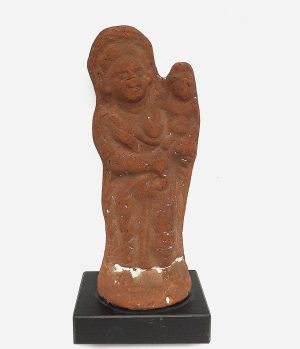
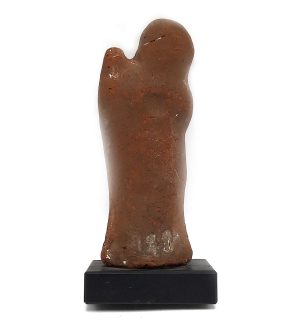
Ht: 6.75” W: 3” D: 2” | FREE SHIPPING WITHIN CONTINENTAL U.S.!
This Roman Egyptian figurine from Alexandria of a woman holding a young child is a Kourotrophos, a class goddess figures holding infants or children. Referred to as “child nurturers”, these were revered deities, cult figures and mortals who were also fertility symbols and protectors of the young. Made from a bivalve mold, this terracotta figurine was probably placed on a home altar for protection. Mother and child figures like this are universal and appear in cultures throughout the world. It pairs well with #1844 Ancient Harpocrates Figurine.
-
$625.00
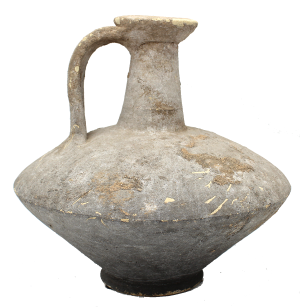
H: 8.5” Dia: 9.75” | FREE SHIPPING WITHIN CONTINENTAL U.S.!
Made in the Roman North Africa, this ancient carinated ceramic flagon called coarse wear for daily use made of inexpensive durable clay was used to hydrate all kinds of people and on home altars for offerings to family deities. Carinated pottery, where the top and lower sections are angled in opposite directions forming a pointed edge, was common ancient pottery shape, this one with a handle.
-
Sale!
$465.00 Original price was: $465.00.$365.00Current price is: $365.00.
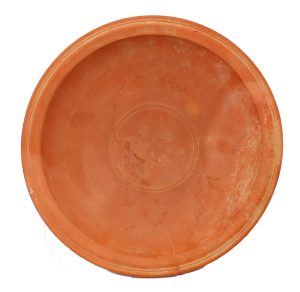
H: 1.625” Dia: 10.125” | FREE SHIPPING WITHIN CONTINENTAL U.S.!
A fine ancient Roman platter produced for upper classes, this is refined and delicate and has stamped decorative images in complex circles. Although rough areas with small losses remain, it is an ancient piece otherwise in very good condition that, especially considering its age and use, remains a remarkable surviving piece of history.
-
$595.00
H: 3.125” W: 3” D: 2.875” | FREE SHIPPING IN CONTINENTAL U.S.
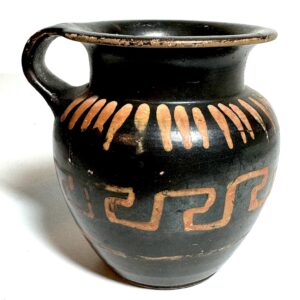
Miniature 4th century BCE elegant xenon Apulia vessel, flared rim and handle, with painted orange geometric designs which may have been a child’s cup or used for votive purposes.
-
$495.00
H: 11” W: 9.5” D: 2” | SOLD
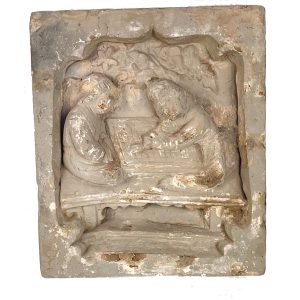
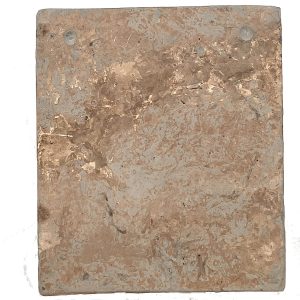
As part of the The Song dynasty cultural expansion, government and public buildings and tombs were built with interior walls decorated with earthenware unglazed mold-made brick tiles. This fanciful vibrant tile with a scalloped frame portrays two people playing a board game called wéiqí which originated in China over 2500 years ago. It is the world’s oldest and most complex board game still played.
End of content
End of content