-
Sale!

$2,900.00 Original price was: $2,900.00.$2,100.00Current price is: $2,100.00.
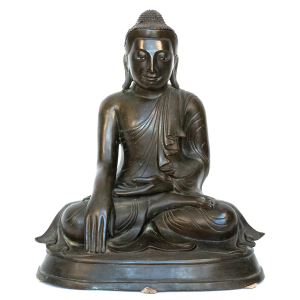
H: 22” W: 17” D: 11” | CALL 213-568-3030 or email us at [email protected] FOR SHIPPING
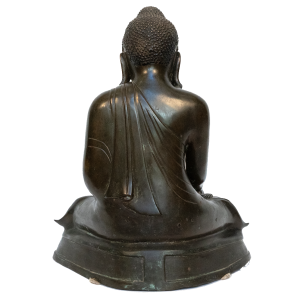
Finely modeled vintage Mandalay style Burmese bronze Buddha in Earth Witnessing mudra made by lost wax process is a one-of-a-kind exquisite work of art. Soft youthfully sweet smiling face with almond-shaped eyes are inlaid with glass.
-
$11,075.00
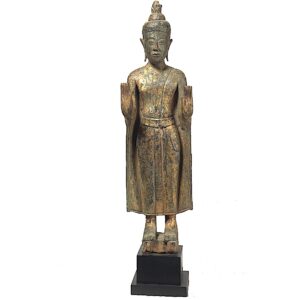
H: 20″ W: 3.75 D: 3.75″ | CALL 213-568-3030 OR EMAIL [email protected] FOR SHIPPING.
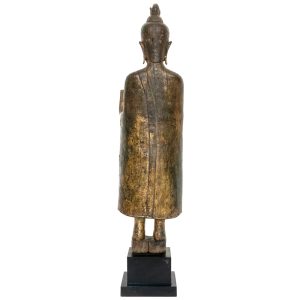
Rare antique, wood Theravada Lao Buddha in abhaya mudra symbolizing reassurance, divine protection, and dispelling fear. Gilt paint reflects his golden skin.
-
Sale!
$2,350.00 Original price was: $2,350.00.$1,950.00Current price is: $1,950.00.
H:26″ W: 10″ D: 5″| CALL 213-568-3030 OR EMAIL [email protected] FOR SHIPPING.
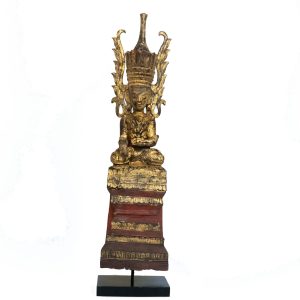
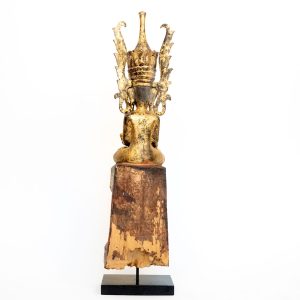
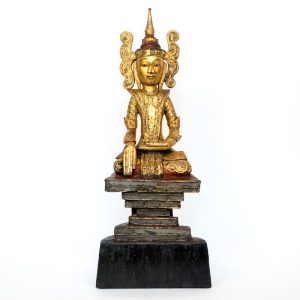
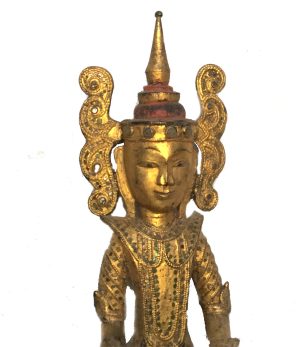
Rare, gilt covered Jambupati Buddha in Earth Witnessing position on high multi-tiered throne. Court attire, luxuriant jewelry and decorative flanges on faceted crown topped by long ushnisha. Strength and smile emphasize his spiritual and material power.
-
Sale!
$2,575.00 Original price was: $2,575.00.$1,850.00Current price is: $1,850.00.
H: 25.5” W: 9.75” D: 5” | CALL 213-568-3030 FOR SHIPPING quote or email [email protected]
Lavish Jambupati Buddha in Earth Witnessing mudra, in lavish gilt court attire, elaborate crown with butterfly flanges and his kingly garment “bejeweled” with multi- colored cut glass insets.
-
$1,575.00
H: 24.5” Dia: 7″ | CALL 213-568-3030 FOR SHIPPING quote or email [email protected]
Lao carved Buddha statues are renowned for their delicacy and refinement. This elegant antique Buddha is depicted in the “Calling for Rain” mudra found only in Laos with his half-closed gazing downward in meditation, elegant gestures, lyrical flaring robes and graceful curves of the body reflecting the Buddha’s gentleness. The curvature, proportions and oversized head indicate the perfection, wisdom and compassion of the “Enlightened One. He stands on a multi-tiered circular and waisted base. Carved Laotian images as old and elegant as this are rare.
-
Sale!
$725.00 Original price was: $725.00.$450.00Current price is: $450.00.
H: 26″ Dia: 12.5″|CALL 213-568-3030 OR EMAIL [email protected] for shipping.
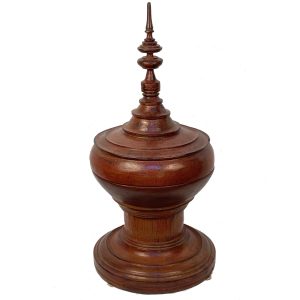
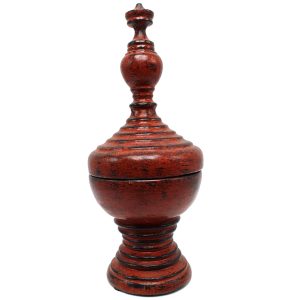
This elegant early 20th century red lacquer hsun-ok has a simple striking silhouette with raised circular layers on a pedestal base and woven vertical bands topped by a tall round finial resembling a Buddhist stupa.
-
Sale!
$395.00 Original price was: $395.00.$295.00Current price is: $295.00.
H: 21” W: 15.5 ” D: 9.5” | CALL 213-568-3030 FOR SHIPPING
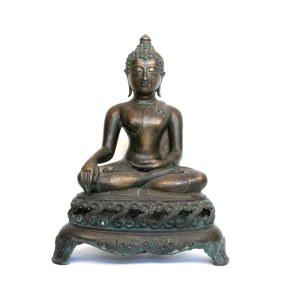
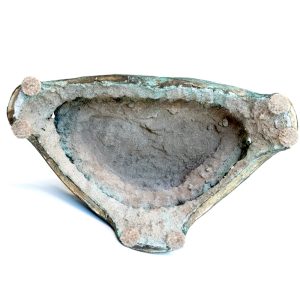
Thai bronze Lopburi style Buddha in Earth Witnessing position on decorative pierced throne on 3 footed curved base wearing simple 2-part Theravada Buddhist monk’s robe showing his modest religious devotion. Heavy statue filled with cement binder.
-
$295.00
H: 9” W: 4.25 D: 3.125” | FREE SHIPPING
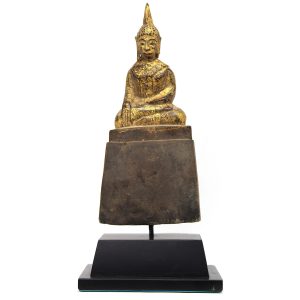
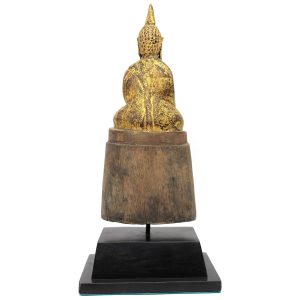
This mid 20th century Buddha Shakyamuni in Earth Witnessing position is carved in rural Lao style. Covered with gilt, the small rustic and simply carved image follows Lao artistic canons for depicting a Buddha: a curved hairline and high arched eyebrows that meet at the bridge of the nose, distinct hair curls, long ears, and a flame-shaped radiance emerging from his ushnisha. Its very large base is as tall and wide as the image, reflecting Laotian beliefs that a high pedestal reflects a deep respect for the Buddha. A base has been added for display purposes. Authentic old Lao images, even small personal ones like this, are difficult to find.
-
Sale!
$185.00 Original price was: $185.00.$160.00Current price is: $160.00.
H: 10.5” Dia: 4.25″ | FREE SHIPPING WITHIN CONTINENTAL U.S.
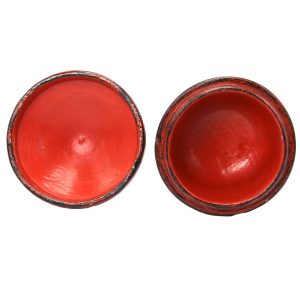
Vintage miniature lacquer and bamboo hsun ok used on a home altar for offerings to the Buddha statue there with circular tiers repeated on the foot and the stupa finial top.
-
Sale!
$335.00 Original price was: $335.00.$275.00Current price is: $275.00.
H: 16.25 ” Dia: 8 ” | FREE SHIPPING WITHIN CONTINENTAL U.S.
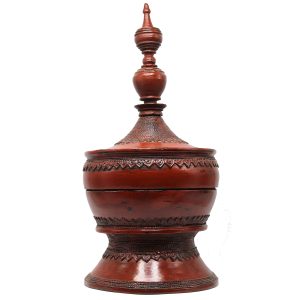
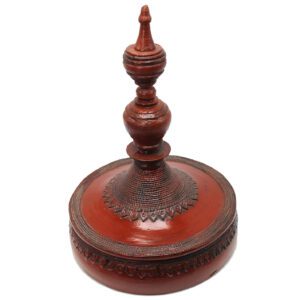
Given its size this smaller early 20th century Hsun-ok with simple sophisticated designs of with parallel rows of intricate triangular and beaded borders may been placed as decorative piece on a home altar.
End of content
End of content