
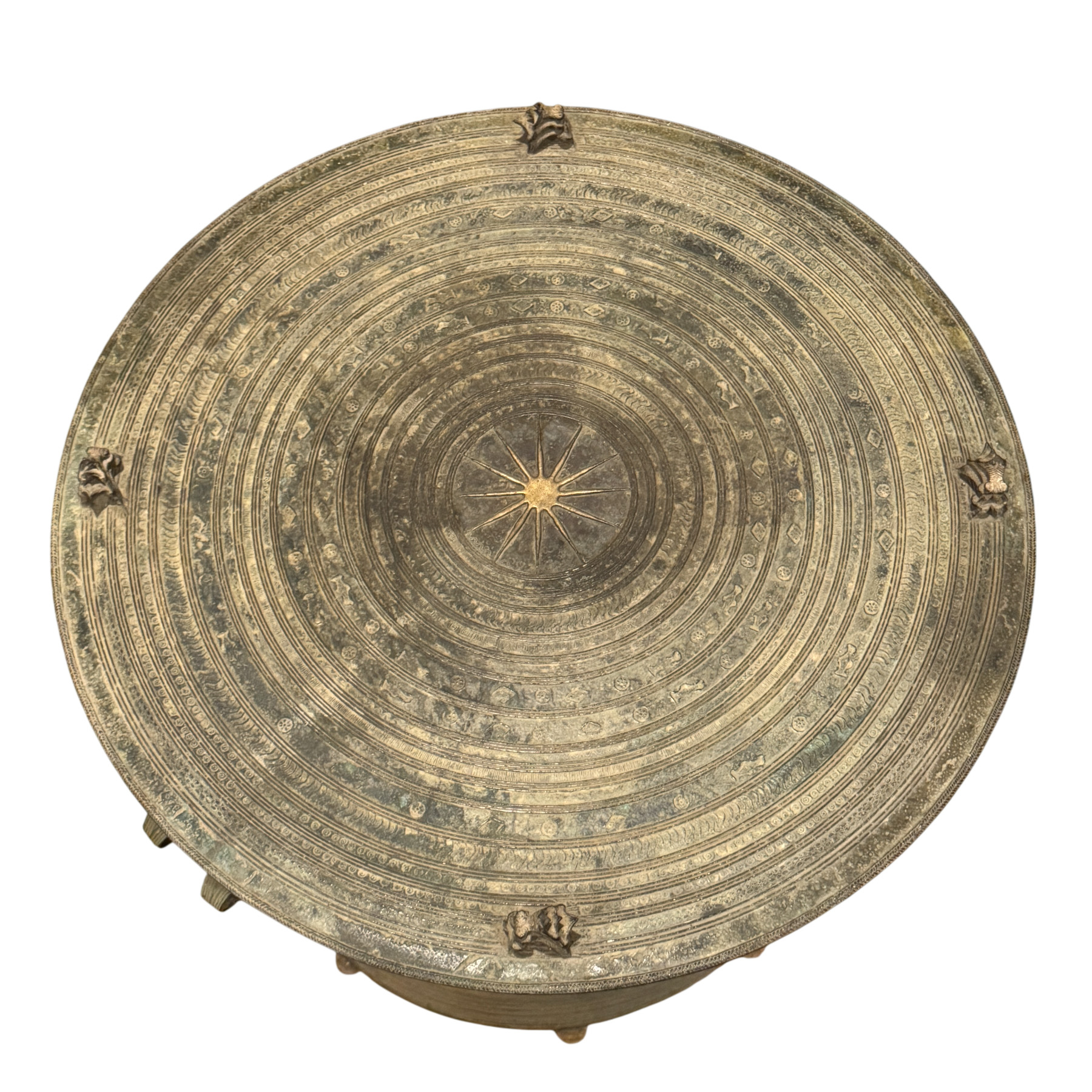


Antique Rare Bronze Rain or Frog Drum (T178BHLE)
$3,250.00
Ht: 21.5” Dia: 25” | CALL 213-568-3030 OR EMAIL VANISHINGARTS213@GMAIL.COM FOR SHIPPING INFORMATION
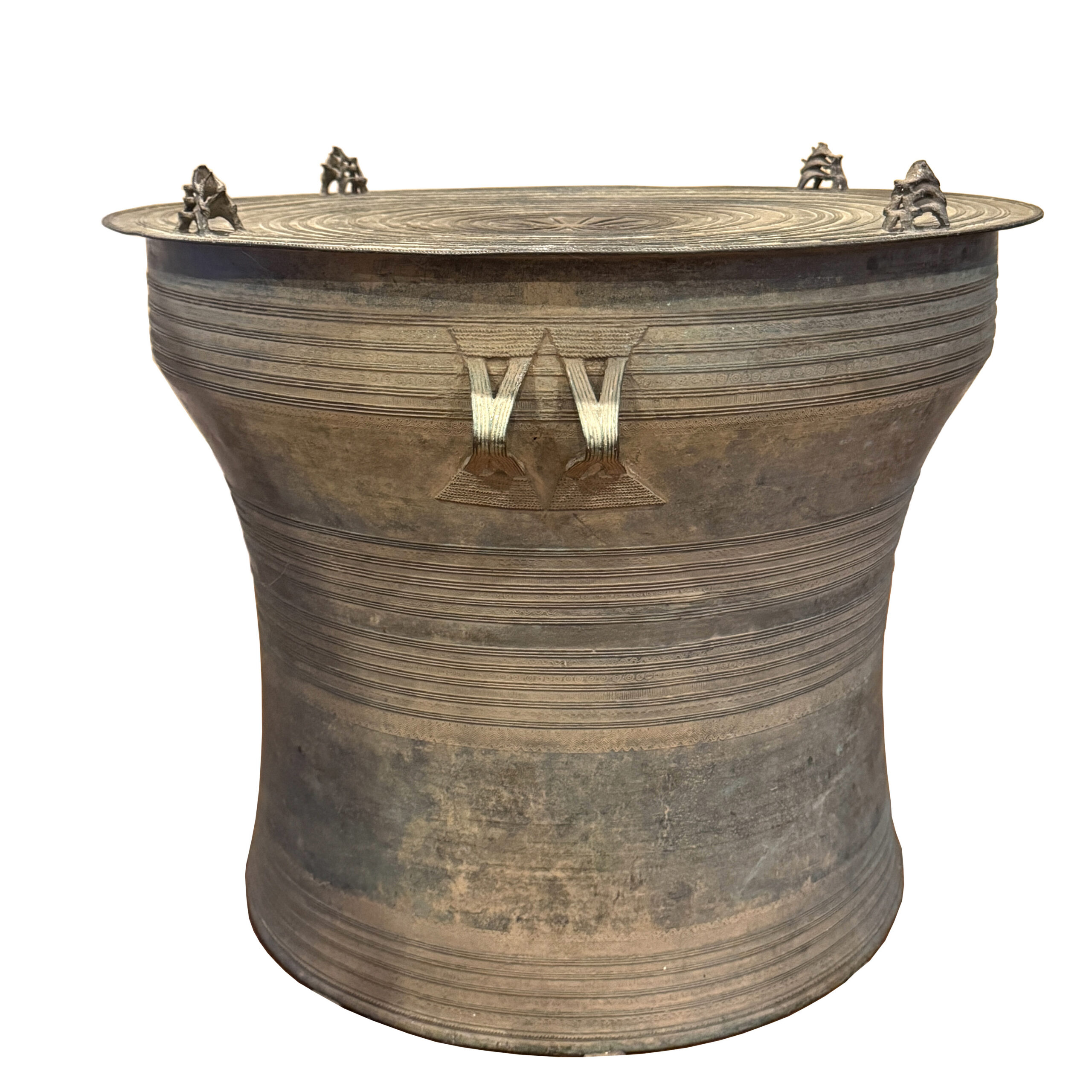
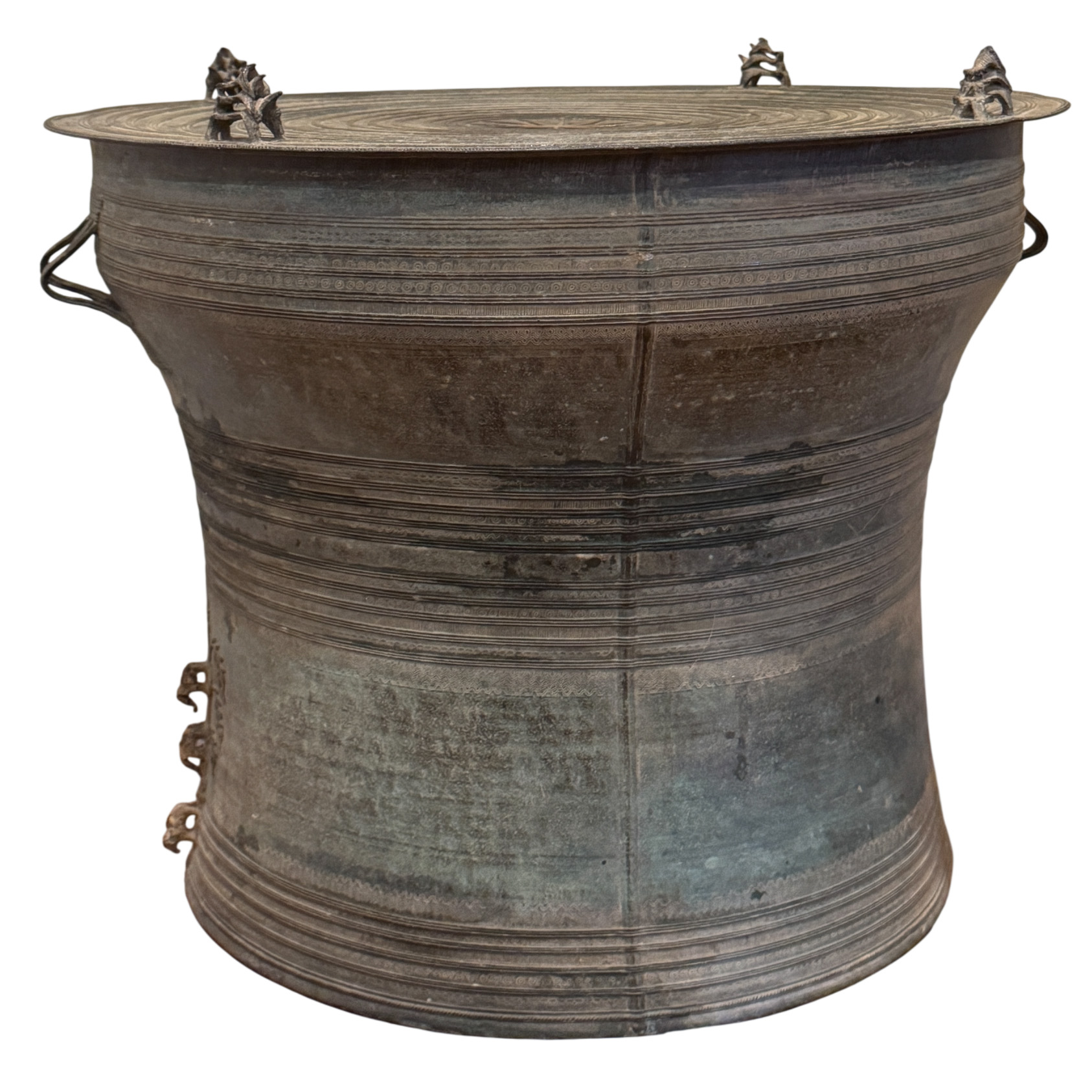
Exceptional, museum-grade large lost-wax antique bronze Burmese Shan Rain/Frog drum with elaborate one-of-a-kind decorative configuration. Top with radiating sunburst, concentric ripple patterns, stylized waterbirds and sides with rare combination of stacked frogs and elephants on rice stalks
Description
This exceptional Southeast Asian Rain Drum, also known as a Karen drum or frog drum, is a traditional ceremonial hollow bronze instrument created and used by the Karen people of Myanmar/Burma, Thailand, and Laos. Originally associated with Vietnam’s Bronze Age Dong Son culture of 4th – 3rd century BCE, it was later cast by other Southeast Asian cultures, especially the Karen tribal group of Laos and Burma. By the 19th century, Lao tribal groups no longer cast these drums and instead commissioned them from highly specialized renowned Shan Tai Yai metal craftsmen in Burmese foundries, often trading them for valuable elephants or raw silver to bring them back to Laotian villages in Southeast Asia.
These drums are revered for both their ritual power and complex, extraordinary design features. They have been primarily used at spring planting festivals to bless the soil before planting and to implore the gods/spirits to bring rain and agricultural prosperity. They were also a part of funerary rituals to guide the deceased souls and assure a prosperous journey to the afterlife.
Its magnificent top surface is centered with 12-pointed radiating sunburst motif. In Karen traditions, the rays represent the sun which helps crops grow, while the triangles between them symbolize the points of a ritual compass and act as a cosmic center when the drum is struck. Drum tympanums are sometimes called “The Magical Bronze Pond” since the raised concentric circles around the sunburst depict outward ripple patterns when raindrops land on water. Concentric circles with decorative elements used in the 18th – 19th centuries, contained geometric patterns of diamonds, fish, and stylized herons or waterbirds in flight which were ancestral icons associated with guiding souls and calling for rain. The many radiating concentric circles are believed to multiply the amount of rain requested in prayers.
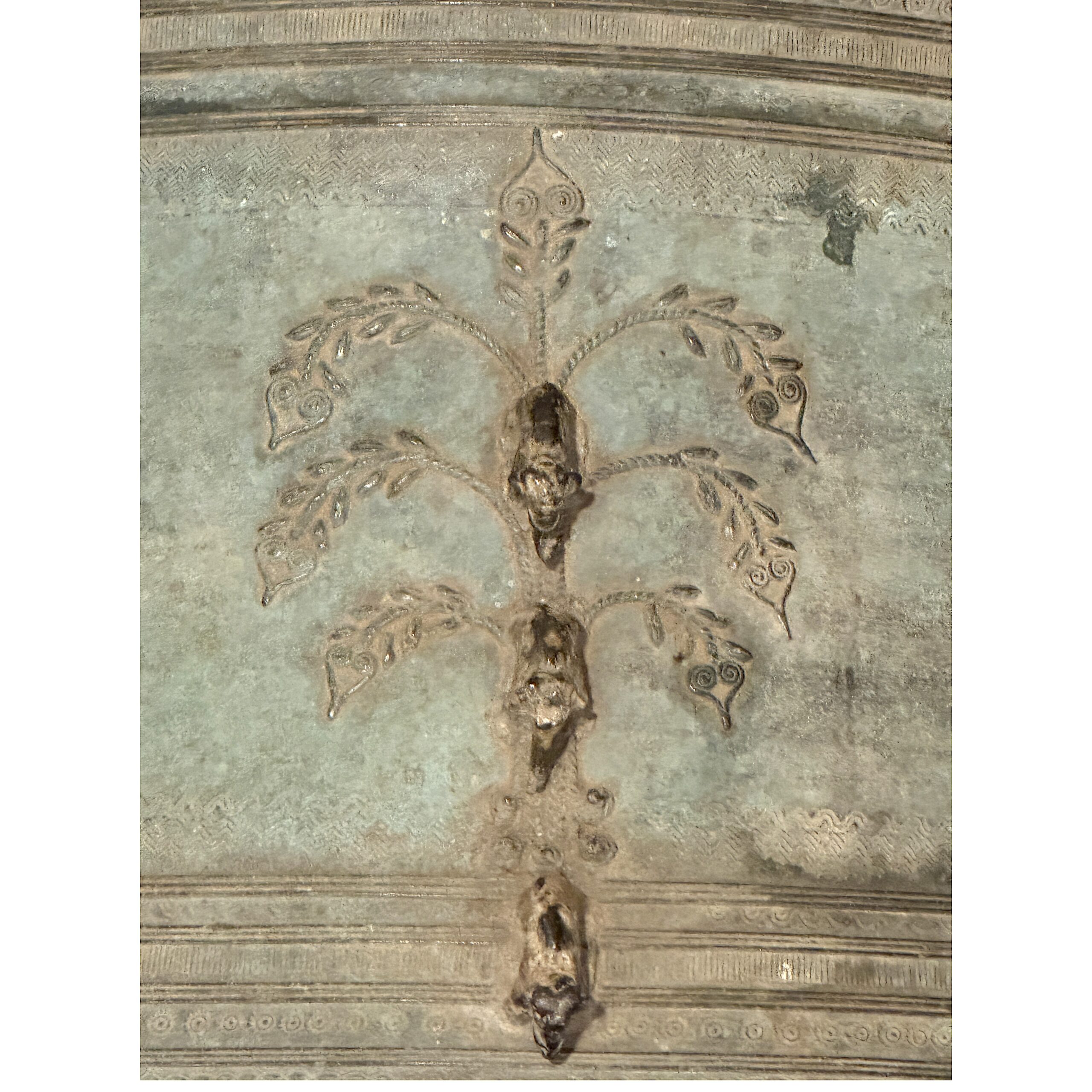
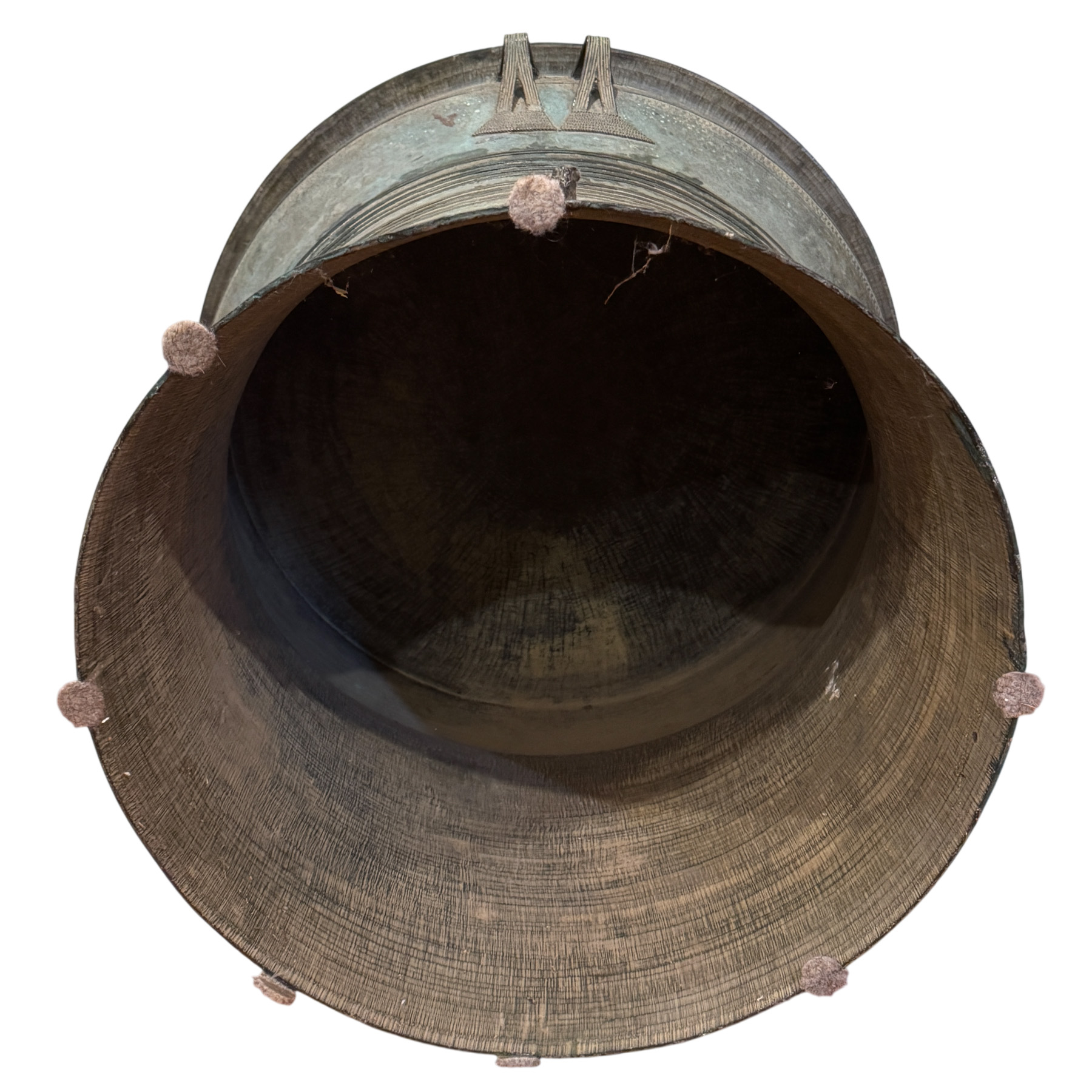
The drum tapers inward at the waist and flares out at the base, creating a highly resonant chamber. A lower area has a set of 3 elephants walking down through a detailed rice stalk with branches lying on either side. Elephants symbolize power, royalty, and rain clouds and, when combined with rice stalks, is a visual prayer for agricultural abundance and wealth. Four sets of small evenly spaced, single-cast stacked miniature frogs in a group of three perch on the outer rim. Frogs are sacred symbols linked to water, fertility, and the calling of monsoonal rains to ensure successful rice harvests. In local folklore, 3-stacked frogs correlates to the intensity of prayers for rain: one frog calls for rain; two multiplies the request; and three is a plea for heavy, monsoonal rain. The combination of rice stalks, frogs, and elephants enhances the power of the prayers for fertility, abundance, wealth, and prosperity. When beaten, the drum sound resembles croaking frogs to please the gods/spirits and bring monsoon rainfall for the rice crops and insure the continued lives of the farmers. Frogs were considered harbingers of rain because as they croak before storms begin. When struck in the center, the drum has a deep, low, vibrating hum that mimics the frequencies of thunder which is believed to trigger frogs to croak and convinces farmers the drum is working.
A heavy-duty, double strap handle decorated with braided rope-like designs is attached to each side. This enables hanging the drum from trees or other holders with the tympanum facing outward at an angle to strike with a padded mallet.
While the main use for these drums was as a ritual musical instrument for prayers and entreaties, they also conferred power, influence, and high status to the owners. With its size and masterful casting, this magnificent drum’s is a substantial symbol of wealth and a family heirloom that could pay bridal dowries or even settle inter-tribal disputes. It is enhanced with a beautifully mottled, verdigris and dark-oxidized natural patina as the copper alloy reacted to moisture, soil burial, or decades of ritual handling and incense smoke.
AI Comments Summary:
This exceptional, museum-grade 19th-century drum with an elaborate decorative configuration. The crisp details indicate high-quality complex lost-wax-casting, as the 3-tier vertical openwork back-to-back frog sets and individual elephants require incredible skill. The elephant trunks’ positions are varied, a strong indicator of hand-modeled artistry. This piece’s unique and one-of-a-kind design was favored by the Karen people and Shan artisans in the late Konbaung Dynasty. The large size and specific combination of triple-stacked frogs and elephants on rice stalks place this drum in the top tier, and highly desirable among Southeast Asian tribal antique collectors.
Additional information
| Place of Origin | Laos or Burma (Myanmar) |
|---|---|
| Date | 18th-19th Century |
| Materials and Technique | Bronze, Lost Wax Method |
| Dimensions (inches) | Ht: 21.5" Diameter: 25" |
| Dimensions (metric) | Ht: 54.61cm Dia: 63.5cm |
| Condition | Excellent, age appropriate signs of wear |
| Item Number | T178BHLE |
| Shipping Box Size | Oversized. Call 213-568-3030 or email vanishingarts213@gmail.com for shipping. |