


Antique Rare Large Buddha in Teaching Mudra, China (17013)
$4,900.00
H: 30″ W: 18″ D: 10″ | | CALL 213-568-3030 OR EMAIL VANISHINGARTS213@GMAIL.COM FOR PRICE and SHIPPING.
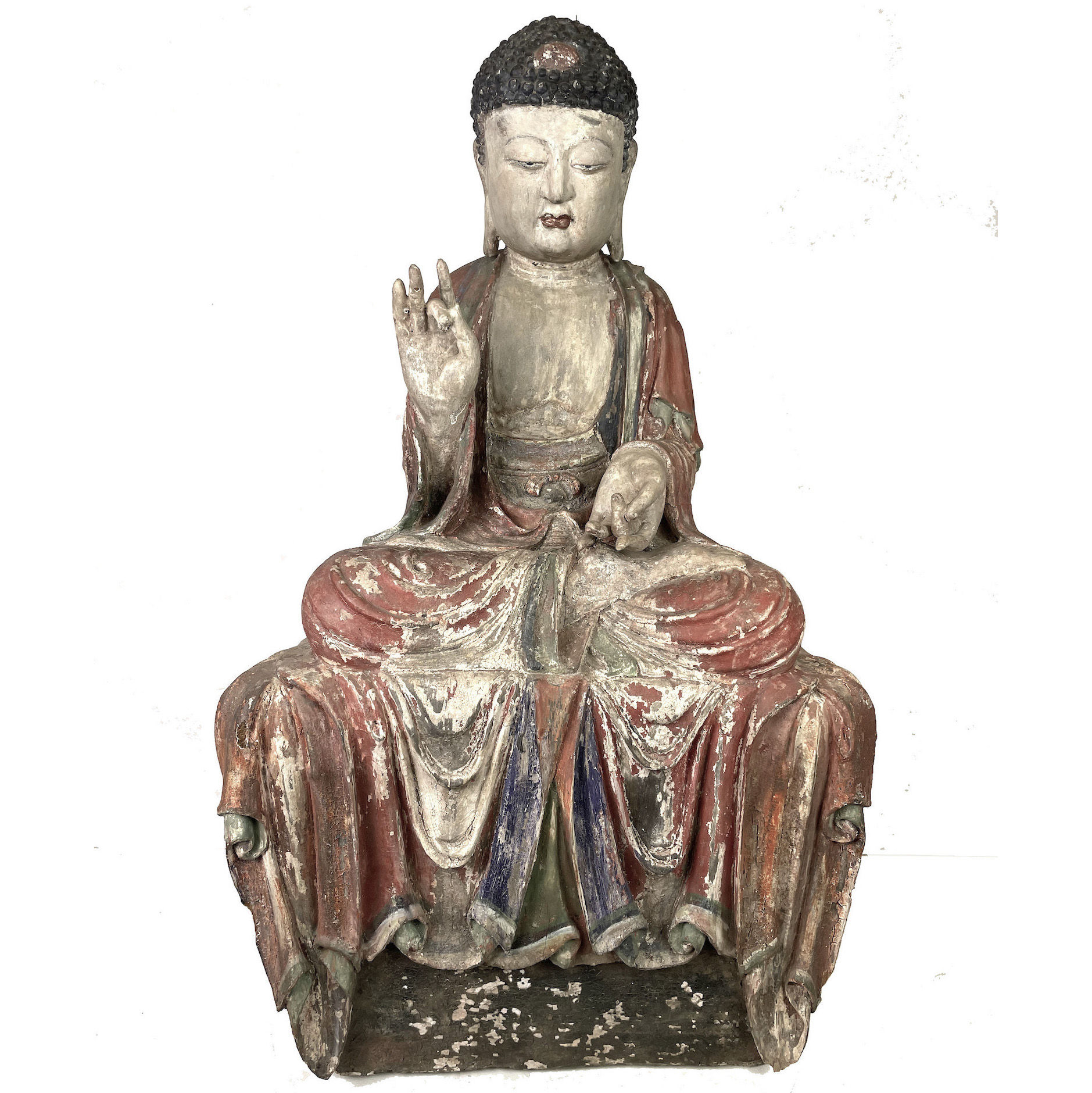
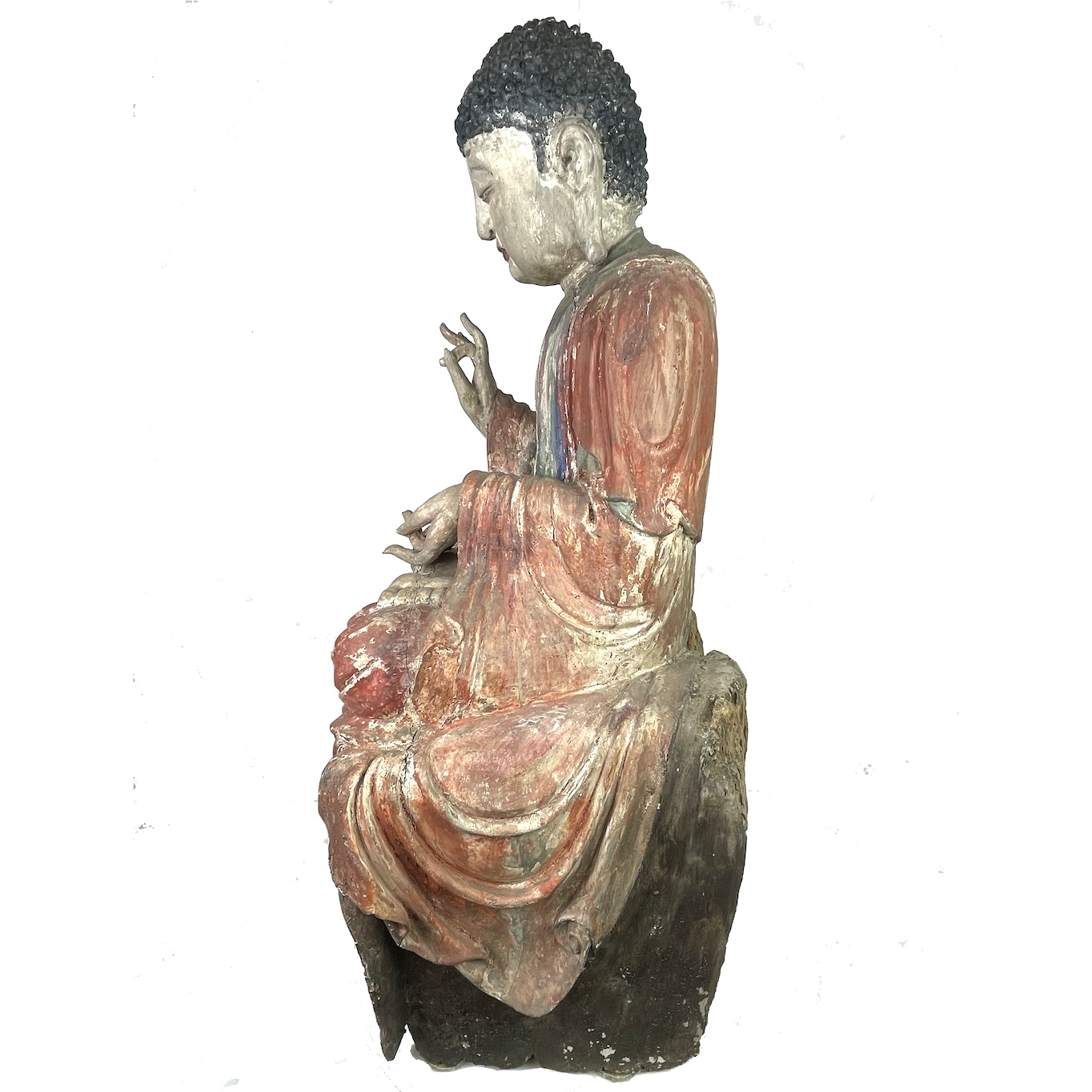
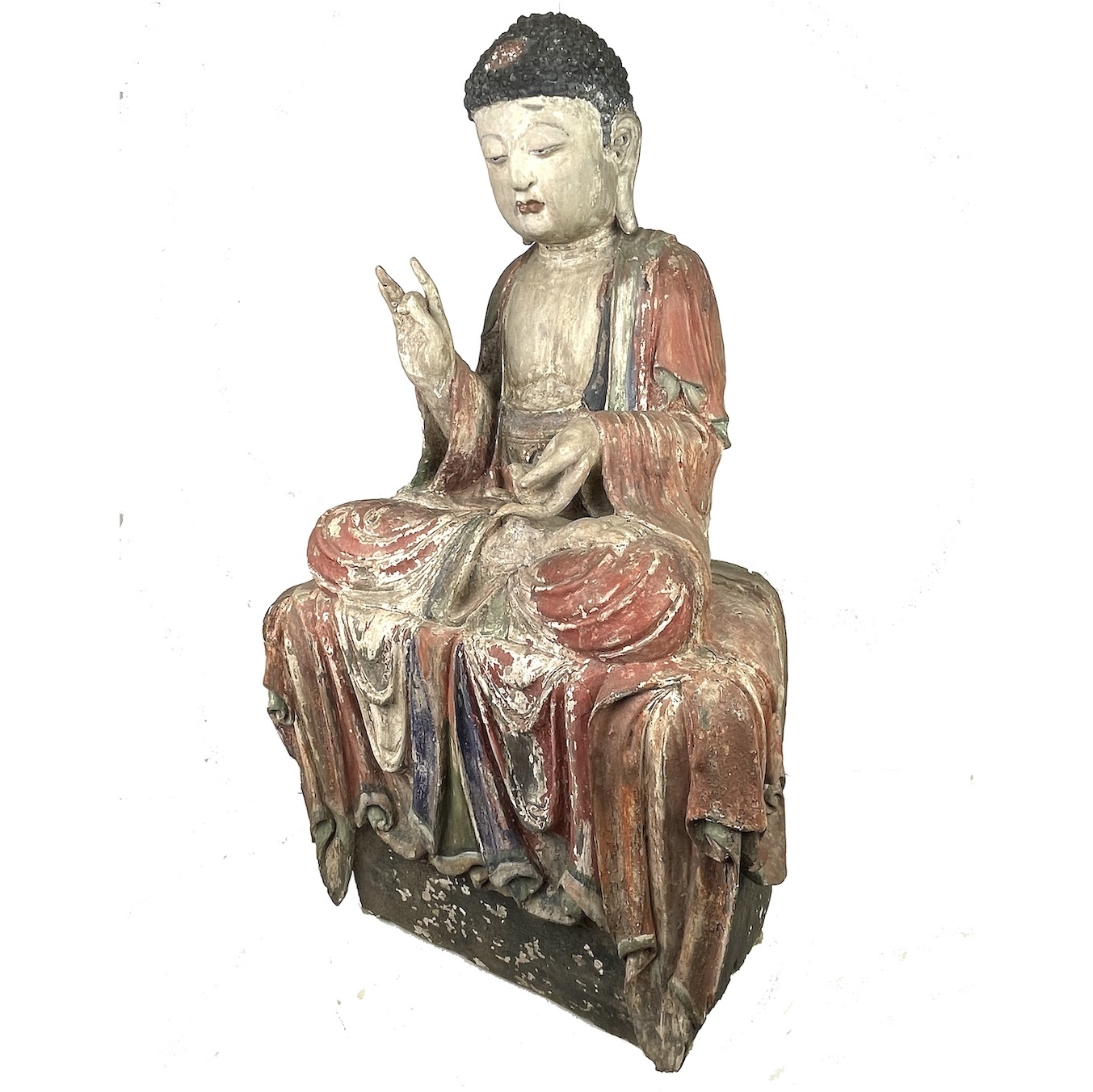
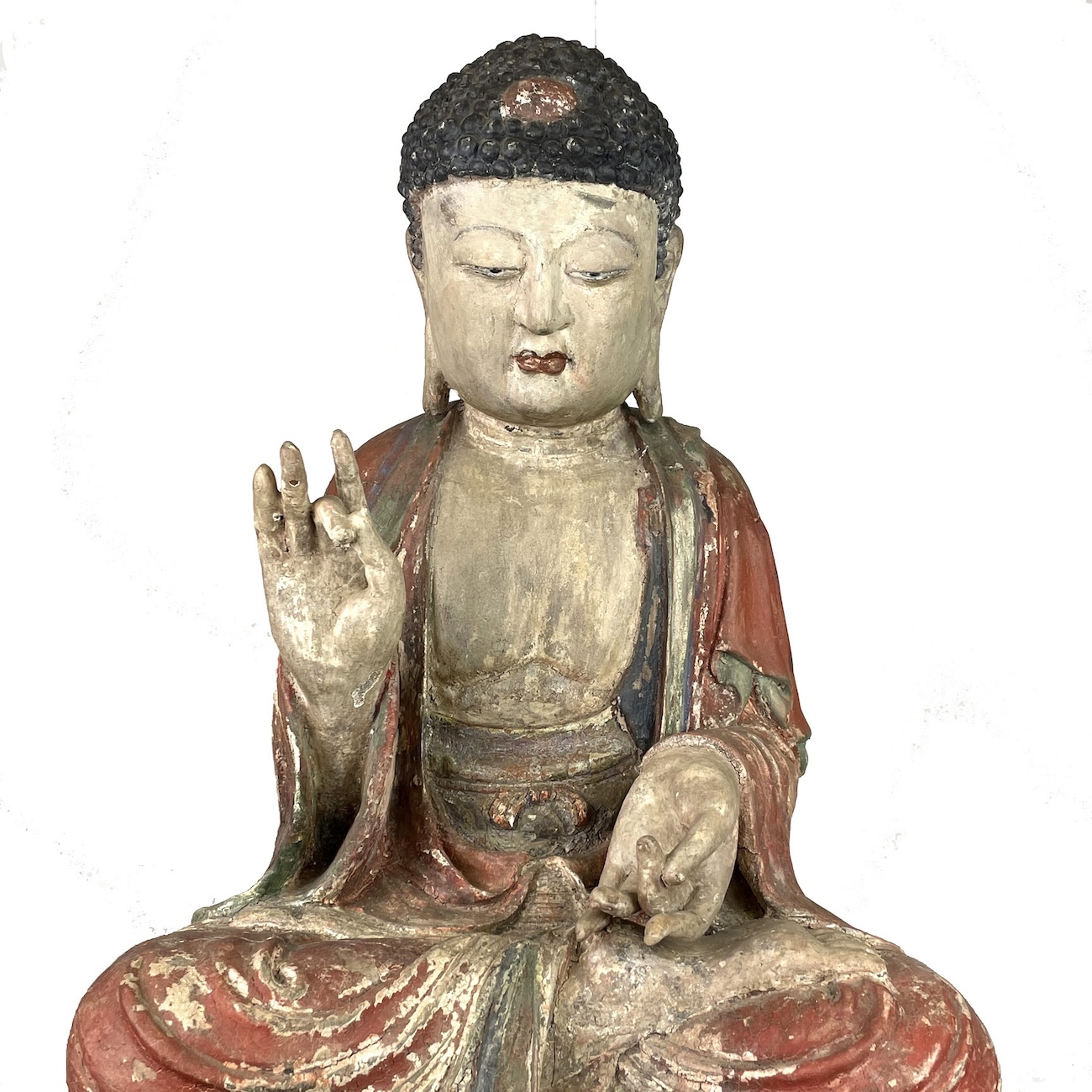
Superb, colorful and rare Buddha in teaching (vitarka) mudra appears to float above swirling cloud. Fine features, graceful body and exquisitely rendered drapery make this a truly striking statue. Given its size and masterful carving, it should be revered commensurate with its spirituality and artistry.
Description
This wonderfully colorful carved Buddha Shakyamuni Buddha is depicted here soon after he reached Enlightenment under the Bodhi tree when he delivered his first Sermon at Deep Park called the Turning of the Wheel. He sits with legs in padmasana with one upwards facing foot exposed, hands in vitarka mudra associated with this sermon that is a metaphor for teaching the way to enlightenment. The right hand in up, palm outward, joining the tips of the thumb and the middle finger forming a circle and his left rests in his lap in the same mudra. Using the middle finger rather than the traditional index finger symbolizes great compassion.
His delicately carved face has a benevolent and compassionate expression and is flanked by large pendulous lobes symbolizing his infinite wisdom. His almond-shaped half-closed eyes glaze down serenely under arched eyebrows above a brightly painted bud-shaped mouth with a slight hint of a smile. Atop his head, tightly coiled hair surrounds his dome shaped ushnisha indicating the potent spiritual power of his enlightenment. His slender and elegant body appears to float above gracefully flowing robes in deeply carved swirls over his backless throne including some folds reminiscent of clouds.
This serene carving displays many of the 32 Buddhist lakshanas (auspicious marks) of sanctioned Buddha images readily recognizable to devotes, including elongated fingers, arms, and hands and a cranial protuberance (ushnisha) surrounded by pointed curls referred to as snail-crowned. His pendulous ears signify his wisdom. The delicately carved serene, idealized face has a benevolent and compassionate expression with half-closed almond shaped eyes and a brightly painted delicate bud shaped mouth with a slight smile. The tightly wound snail-curl knots of the hair are painted in a dark pigment, culminating in a broad ushnisha featuring a small red-pigmented jewel insert (cintamani) at the center.
The Buddha is always portrayed in monk’s robes to show his religious devotion. In the Mahayana tradition his cinnabar red, lapis blue and malachite green three-part robe cascades in folds and reveal the lower garment (dhoti) gathered at the waist with the shawl over his shoulders extending to his back. The sweeping, overlapping folds draped dramatically down the front and sides of the base, accented by bright lapis blue, malachite green, and cinnabar red pigments. The slender and elegant body appears to float gracefully above flowing robes with deeply carved swirls reminiscent of clouds. The white skin tones are emphasized by the multi-colored robe.
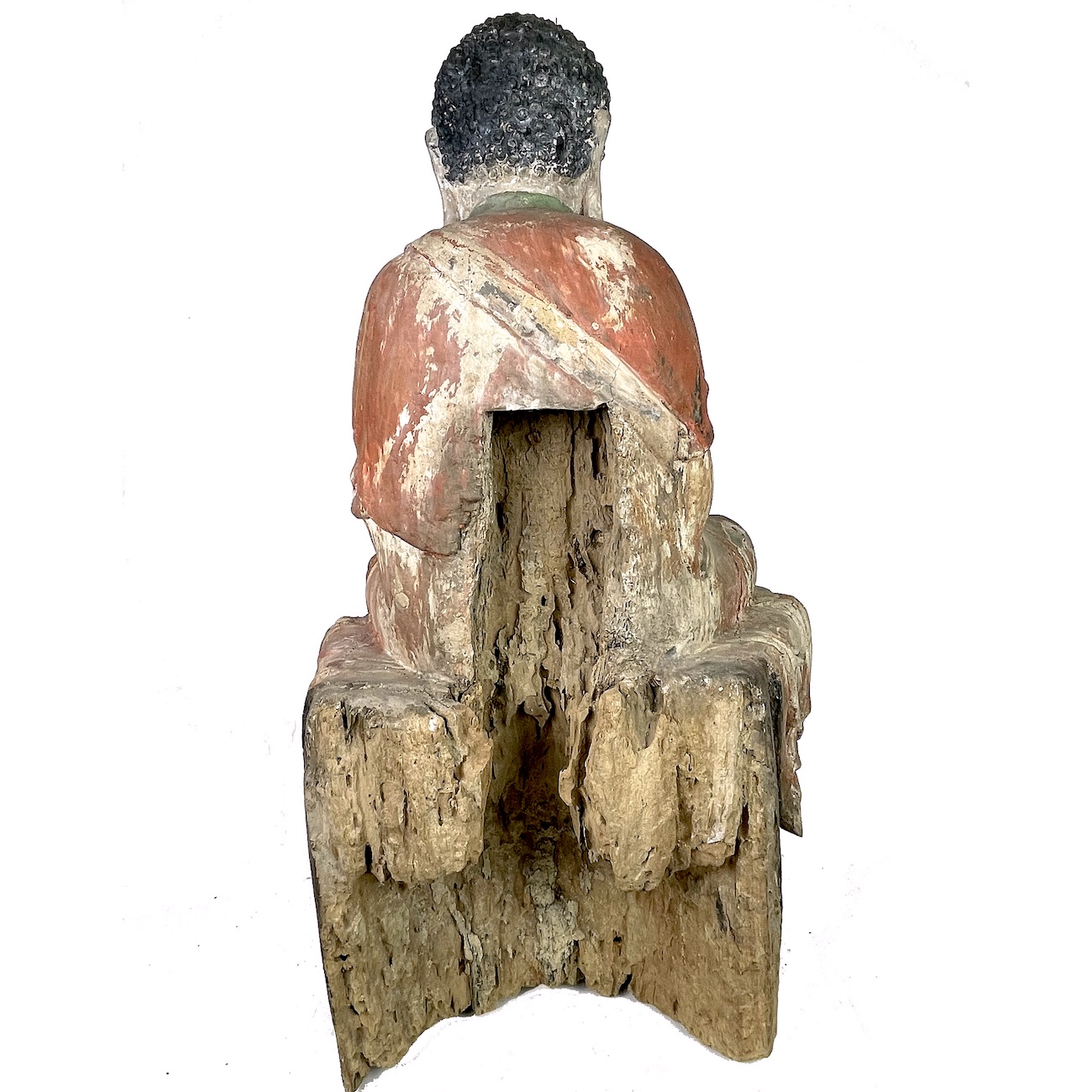
Although the front is in excellent condition with most of the original pigmentation, the back with a cavity indicating it was consecrated has greatly deteriorated from age but is still structurally sound. See the AI comments below. During China’s modernization many Buddhist statues were seriously damaged or lost, making them rare.
AI rates this piece as Exceptional, Top-tier Masterpiece for the following reasons.
Carving of this monumental size were exclusive, high-cost commissions created for regional monastic halls. The stark contrast between the well-preserved front pigmentation and the heavily eroded reverse tells a textbook historical story. For centuries, this statue sat fixed inside a humid temple alcove against a damp wall. The rear wood fibers naturally rotted and eroded away from trapped moisture and insects, while the thick gesso and mineral paint layers on the front shielded the facade, locking its beauty in place. figures seated on draped, throne-platform bases are highly coveted by advanced collectors. It mimics the grand stone cliff carvings found in sacred Buddhist grottos (like Longmen or Dunhuang) converted into a portable temple wood medium.
Click here for the Blog Consecrating Wooden Images to Imbue Them with A Life Force
Additional information
| Place of Origin | China |
|---|---|
| Period | Antique, Ming/Qing Dynasties |
| Date | 17-18th Century |
| Materials and Technique | Wood |
| Dimensions (inches) | Ht: 30” W: 18” D: 10” |
| Dimensions (metric) | Ht: 76.2cm W: 45.72cm |
| Condition | Very good, see description |
| Weight | 30 lbs |
| Item Number | 17013BREM |
| Shipping Box Size | Oversized. Call 213-568-3030 or email vanishingarts213@gmail.com for shipping. |