


Antique Ancestor Official in Ornate Robes, China (5686)
$3,900.00
H: 23.5″ W: 15.625″ D: 10″CALL 213-568-3030 OR EMAIL vanishingarts213@gmail.com for shipping.
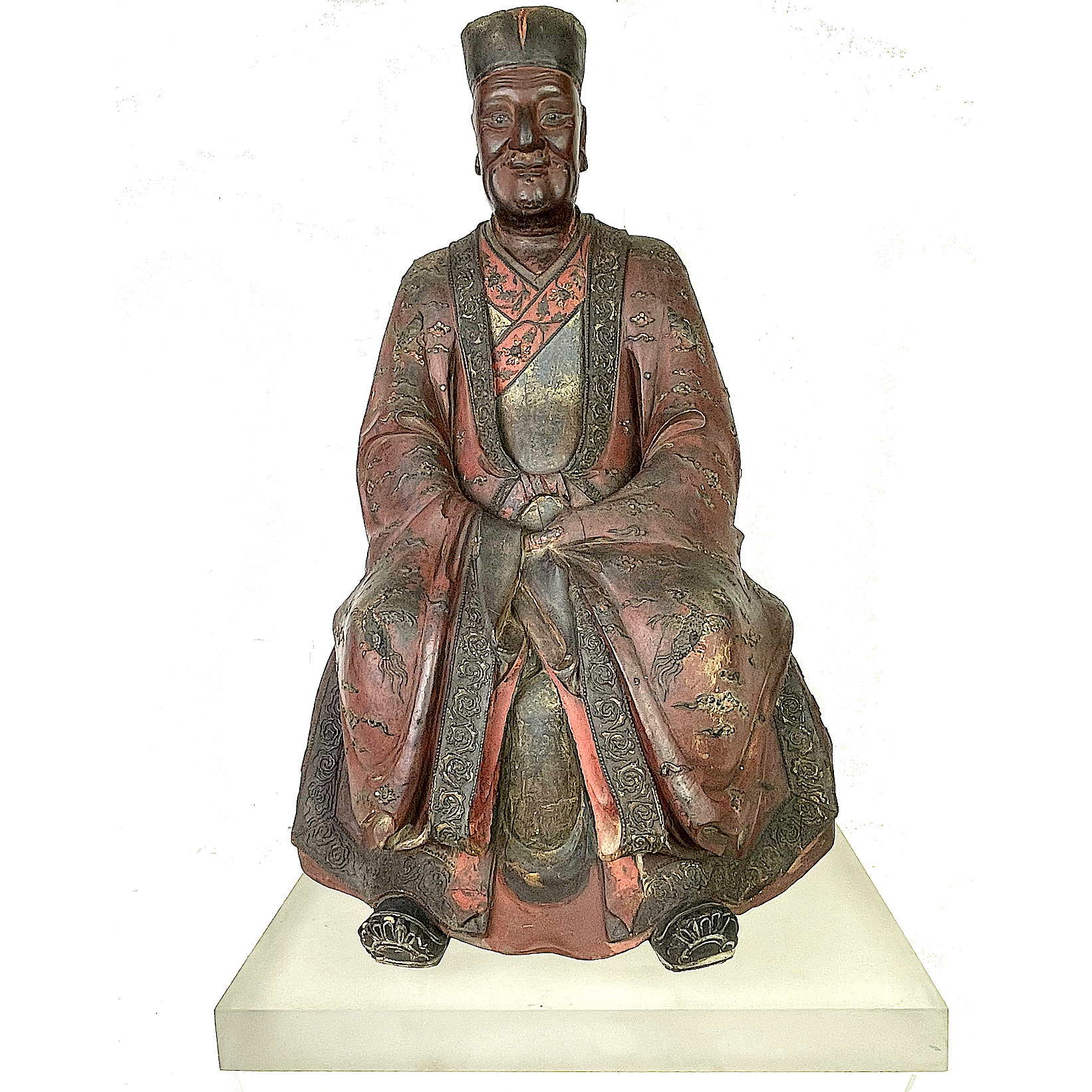
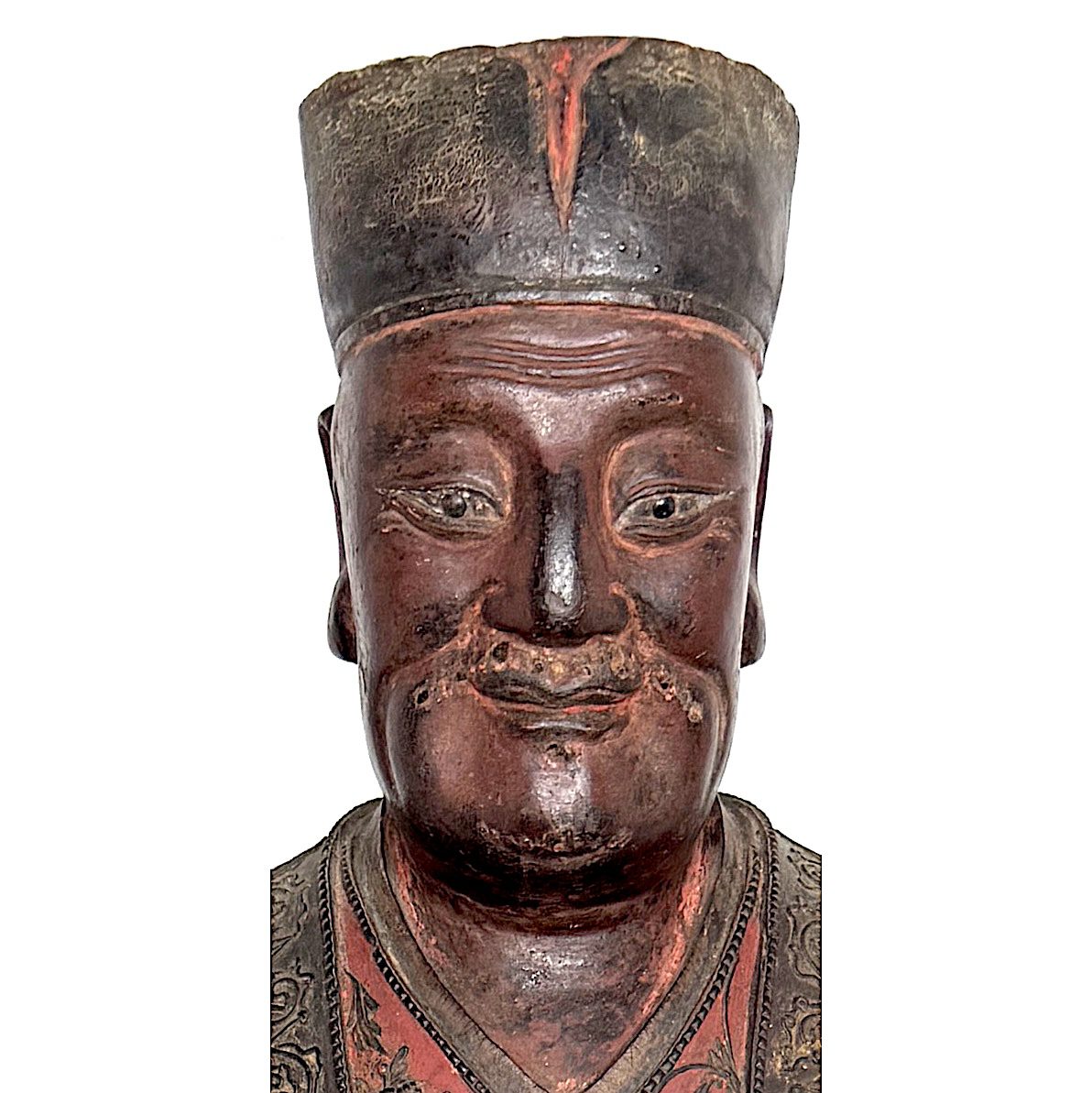
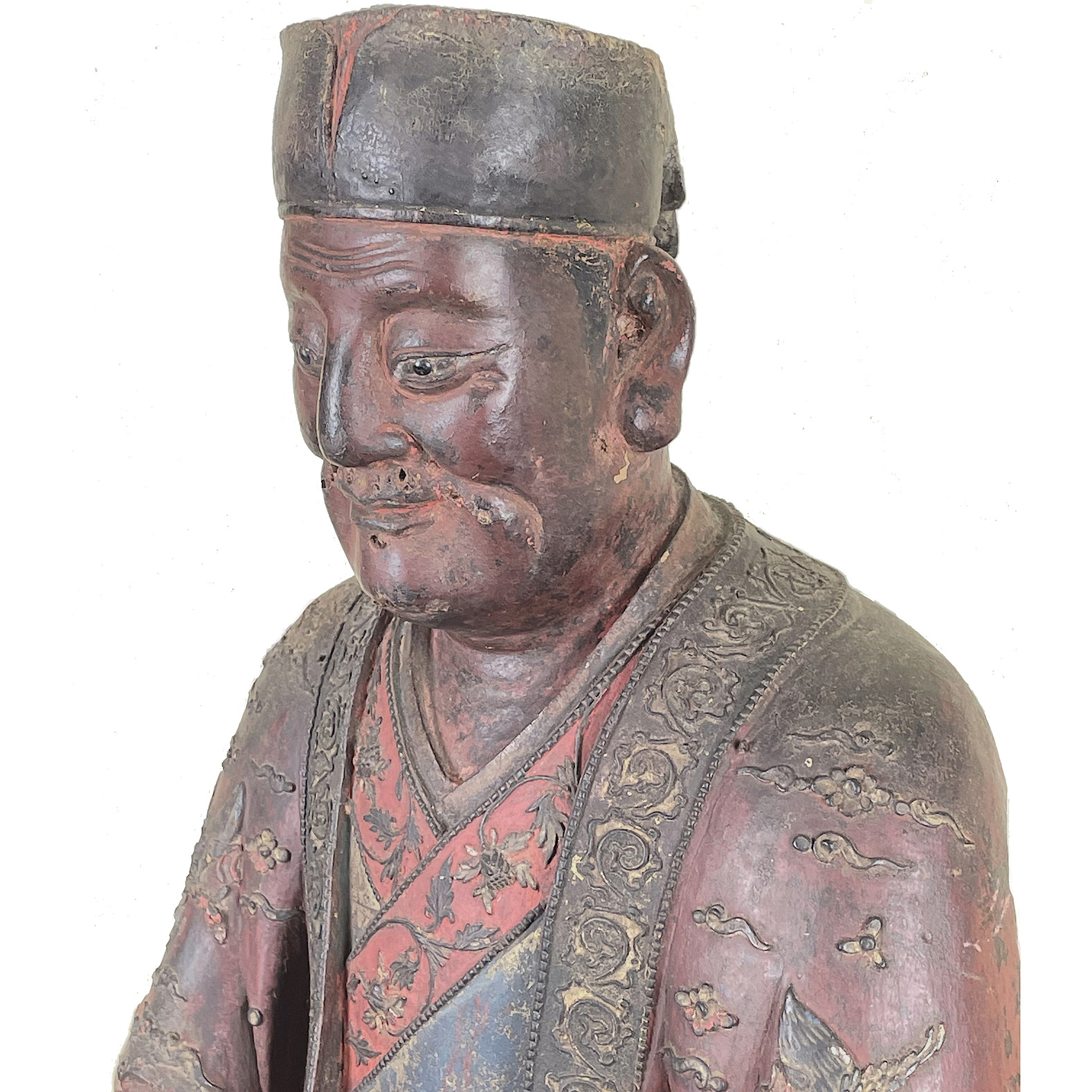
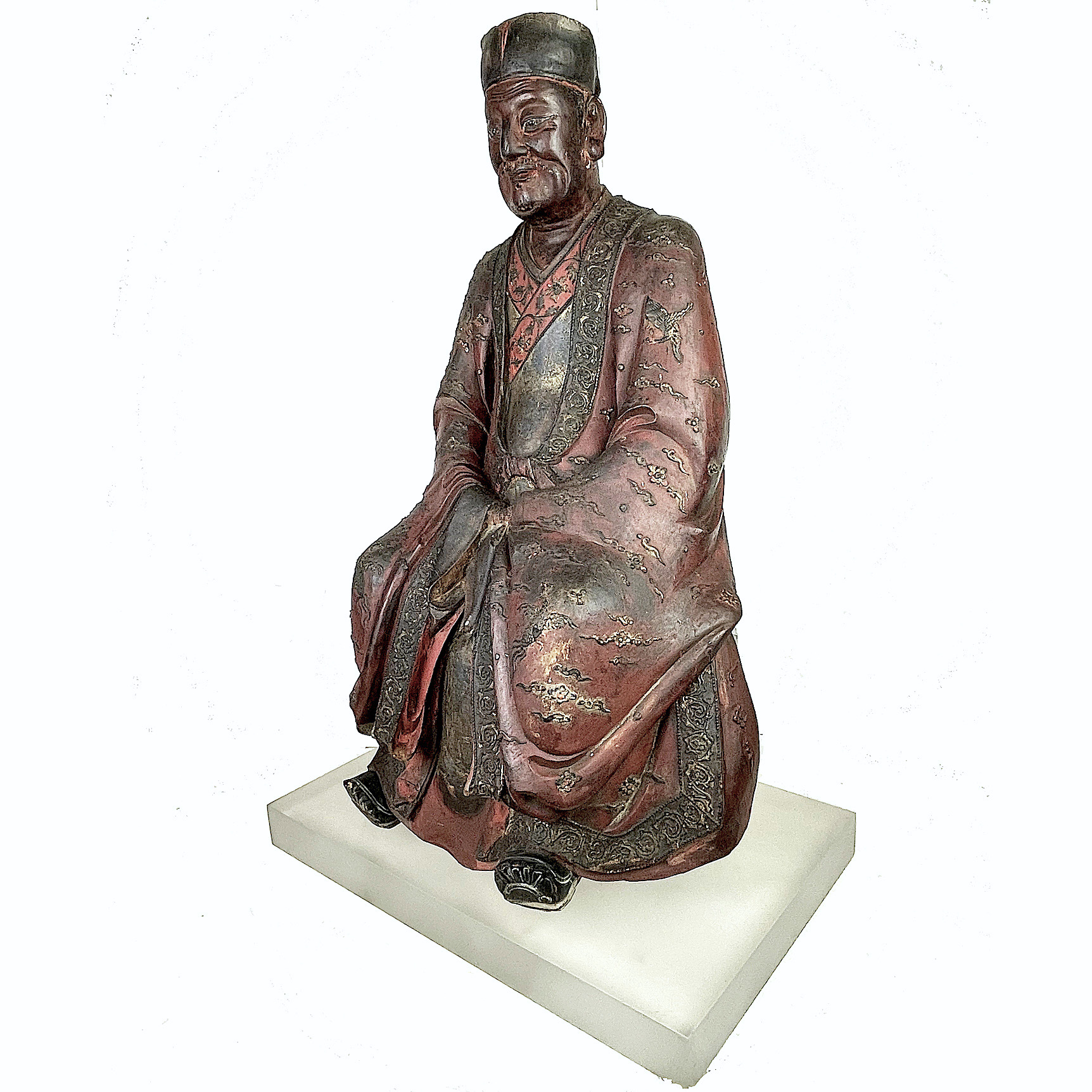
This exceptional carvig is one of the most significant ancestor figures in our collection. His attire, glass eyes and distinct facial features indicate a portrait of a wealthy powerful merchant who commands respect. Seated on Lucite base.
Description
This fine carving of a seated Mandarin ancestor figure reflects the opulent aesthetic and social aspirations of the rising Qing dynasty merchant class. Up through the Qing Dynasty the Chinese bureaucracy was run by a class of scholarly elite officials schooled in history, philosophy and the Confucian teachings of statecraft and ethics and who passed rigorous government exams. Wealthy merchants occupied the lowest tier, while scholar-officials referred to as Mandarins held the ultimate social prestige. In the social transformations of 18th and 19th-century China a powerful class of wealthy merchant cartels rose to power through trade in salt, tea, silk, and finance. To elevate their family wealthy merchants spent fortunes to buy honorary imperial titles or finance their sons’ education for civil service exams. Statues like this were placed on family altars to visually show off a of political and intellectual elite status lineage. By dressing their lineage’s patriarch in the luxurious silk-mimicking red and gold robes of a state official, the merchant class successfully validated their massive financial wealth with political legitimacy. This opulent and fine carving magnificently reflects that transformation.
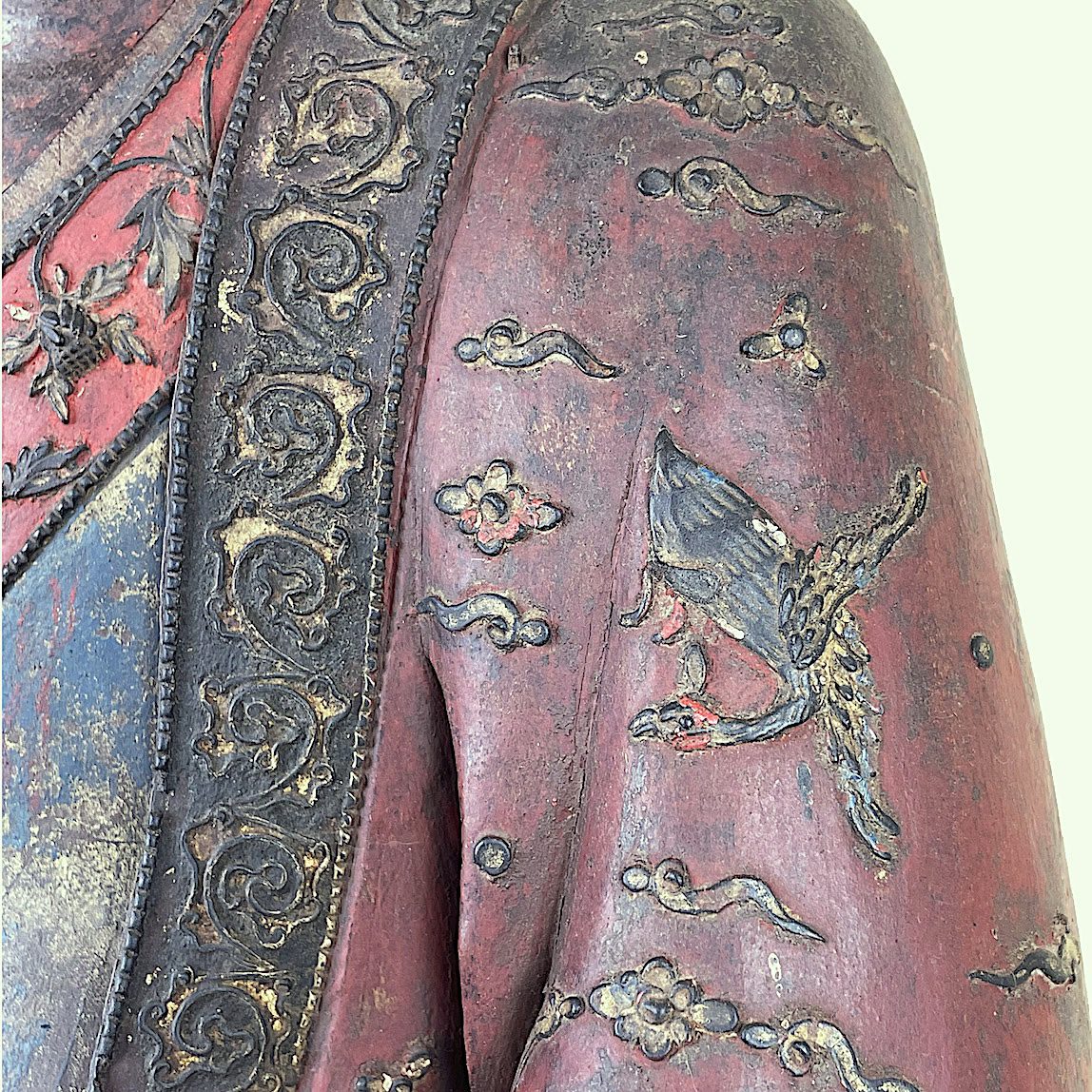
The ancestor’s forceful face with inset glass pupils, high cheekbones, projecting chin with holes for hair for his moustache and beard and wrinkles indicating his wisdom of age and the authoritative achievement. The face is stylized realism with a wise, gentle expression, downcast eyes, and high cheekbones. His official attire is meant to impress from his hat to his extravagant robes to his boots. He wears a traditional Qing official’s winter cap (Guanmao) and flowing, wide-sleeved robes with detailed openwork borders. An exceptionally rich, dark red lacquer covers the gesso undercoating, highlighted by vibrant orange-red mineral pigments on the inner collar and embossed floral gilt-work on the robe’s trim. The heavy use of vibrant red lacquer and expensive gold gilding strongly reflects the lavish, display-centric consumer culture of the late imperial merchant class, who preferred symbols of success and divine favor over the monochrome and minimalism of earlier dynasties.
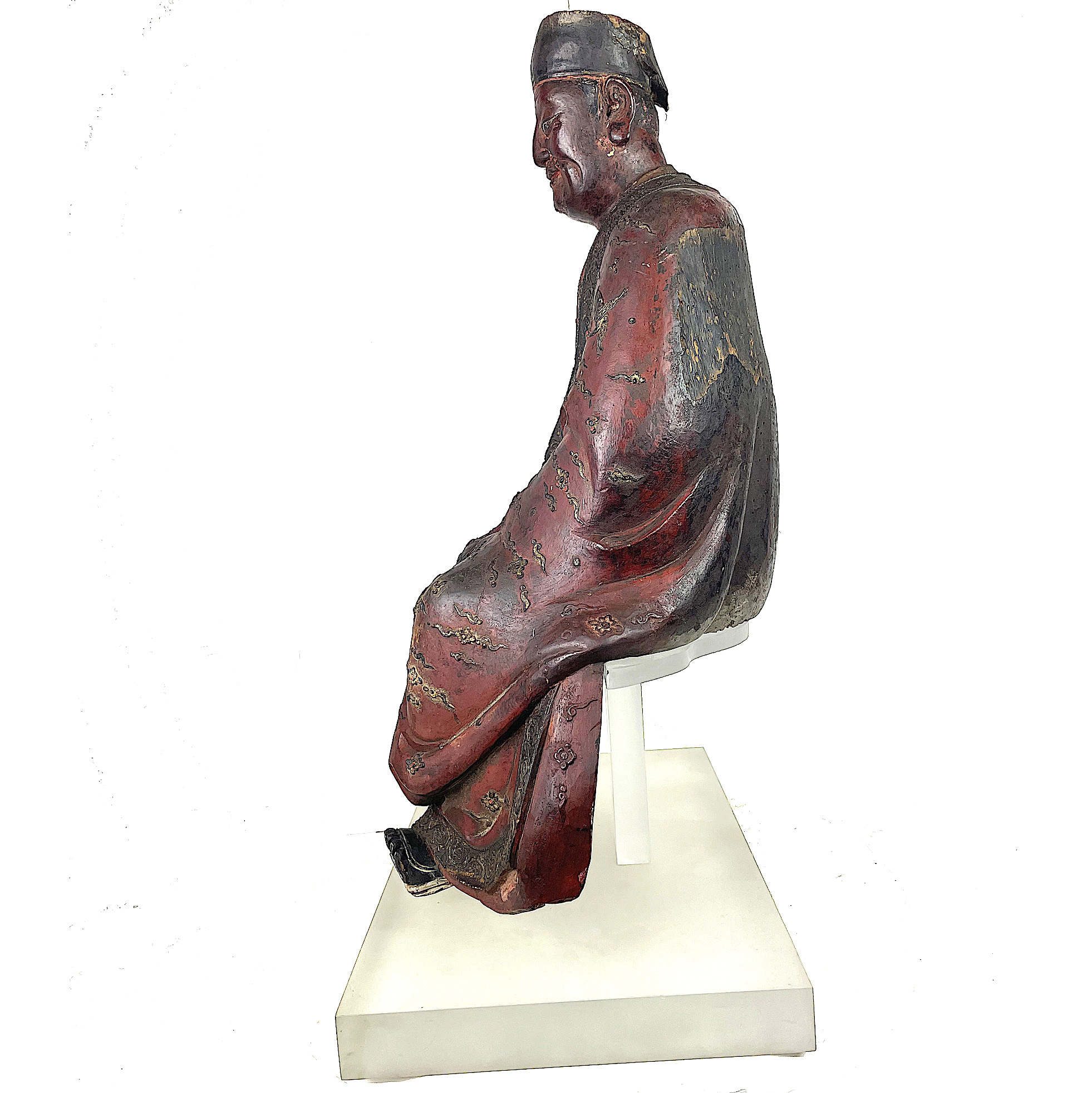
The first layer is a barely visible around his neck. The middle yellow-gold layer is decorated with a wide red trim (the color of fu or blessings) and a bead shaped border enclosing beautifully lacquered floral sprays in relief. The outer robe bordered with spirals. The robe has elegant folds and cranes on the shoulders and knees symbols of longevity, wisdom and good fortune and Taoist ideals of immortality and harmony with nature. Stylized clouds (yun) are scattered which are a homophone for good fortune and, as they are high in the sky, they symbolize high rank. Covered with a smokey black coating from incense and candle offerings, they compound the natural darkening of Chinese lacquer over time.
Statues like this were placed on family altars to visually assert the honored lineage of political and intellectual elite status. The heavy use of vibrant red lacquer and expensive gold gilding are. part and parcel of the lavish, ostentatious culture of the late imperial merchant class, who favored symbols of success and divine favor over the monochrome, minimalist restraint of the previous Ming dynasty.
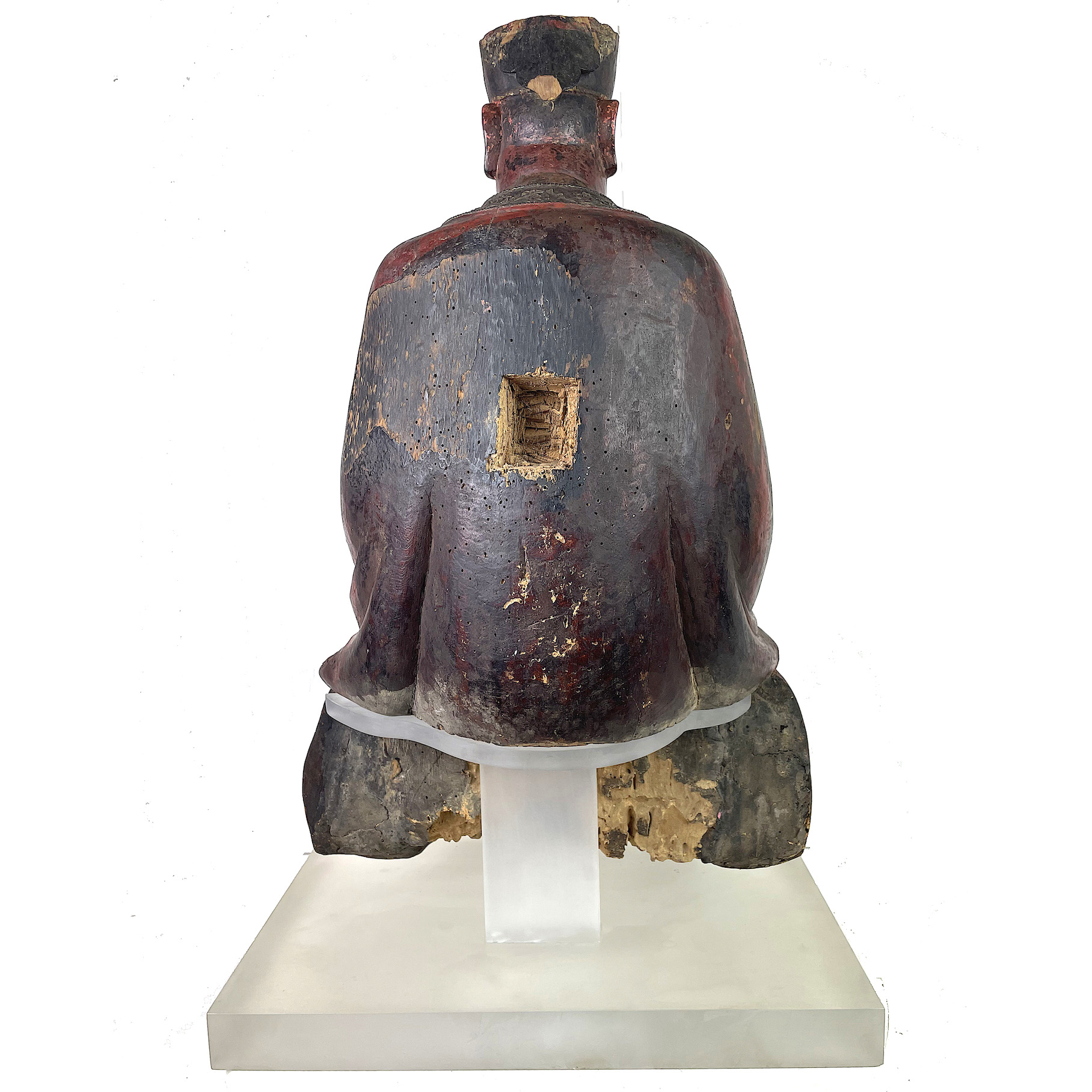
The small square rear cavity indicates it was consecrated. While Buddhist statues held sutras,Qing merchant class typically held a “statue soul” paper or silk scroll that listed the patriarch’s name, birth/death dates, lineage achievements, and specific prayers for the family’s prosperity and business success. The front is in excellent good condition with expected surface losses; the back has age and some old stabilized insect deterioration. This special piece set on a modern frosted Lucite stand is one of our most important ancestor figures.
AI Market Valuation Summary
AI rates this piece as Top-tier Collectors Value for the following reasons:
This magnificent Qing Dynasty wood statue of a seated Mandarin official is a stunning cultural reflection of the social transformations of 18th and 19th-century China. Give its commanding height of 23.5 inches – which makes it far rarer than the common 8-to-12-inch household shrine – it was commissioned for a wealthy clan’s primary ancestral hall or a major regional administrative shrine. The raised, textured lacquer scrollwork lining the hems and sleeves indicates a premium commission rather than standard village craftsmanship. Unlike many wooden carvings this age, the torso and surface are beautifully unified, preserved and structurally sound. The piece features custom conservation-grade lucite mountings to preserve and stabilize its historic wooden base.
Click here for the Blog Consecrating Wooden Images to Imbue Them with A Life Force
Sources
Terese Tse Bartholomew, Hidden Meanings in Chinese Art, San Francisco, Asian Art Museum of San Francisco, 2006. Patricia Bjaaland Welch, Chinese Art: A Guide to Motifs and Visual Imagery, North Clarendon, Tuttle Publishing, 2008.
Additional information
| Place of Origin | China |
|---|---|
| Period | Antique, Qing Dynasty |
| Date | 18-19th Century |
| Materials and Technique | Wood |
| Dimensions (inches) | Ht: 23.5” W: 15.625” D: 10” |
| Dimensions (metric) | Ht: 59.69cm W: 39.68cm D: 25.4cm |
| Item Number | 5686BREM |
| Condition | Very good, see description |