Officials Attire

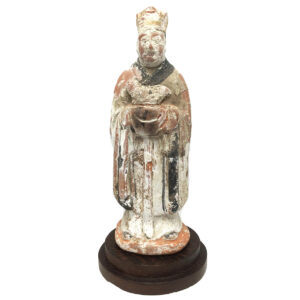
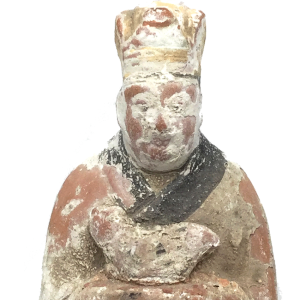
After the Ming Dynasty (1644), Qing Manchu rulers use officials’ attire to foster social stability and economic development, reflected in painted and sculptural images. Elaborate Ming dynasty court attire was replaced with simplified Han Manchu traditional clothing, although some Ming traditions were retained. Manchu imperial dress codes had complex rules regulating hairstyle, uniforms, hats, shoes and ornaments for officials that reflected rank, status, occasions and seasons and non-compliance resulted in harsh punishment. By the Qianlong Emperor (1735–1796) codes applied only to scholars and officials. Through end of the Qing dynasty (1912) government and court officials were required to wear changsang coats modified from Ming attire but slimmer with buttons, loops and a slanted S-shaped collar and hats called a qing guanmao which were black velvet in winter and woven rattan in summer with a button or knob finial. The shape and color of one’s finial was regulated depending on the official’s rank which ranged from 1-9. For daily business or informal occasions, officials had to change the hat’s top. Qing attire make it easier for us to identify ancestors depicted as officials. Military officials wore a cylindrical cap with a higher back and lower front called a Pingshanze, while civil servants wore a variant called a Jieze.

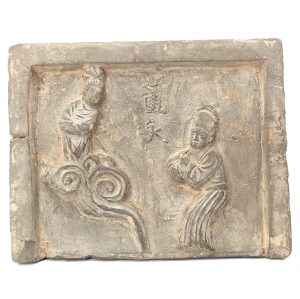
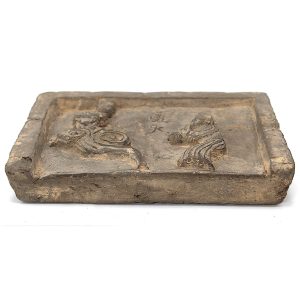
  • Sale! SOLD Song Dynasty Tile of Woman Ascending to Heaven, China (3348BLK) $445

    SOLD Song Dynasty Tile of Woman Ascending to Heaven, China (3348BLK) $445

    Original price was: $445.00.Current price is: $325.00.

    Chinese funerary tiles, as forms of mingqi  adorned tomb as early as the Han dynasty depicting everyday scenes, entertainment, mythical beasts, folklore,  history, literature and poetry. A Han stone tomb relief rubbing in Stories from China’s Past (p. 173) labeled “Ascending to Heaven in Deer Chariot” is reflective of this Song brick-tile. During the Song…

End of content

End of content