Showing 289–300 of 393 results
-

$375.00
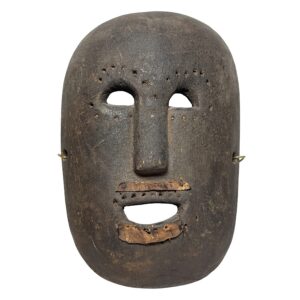
H: 9.125″ W: 6″ D: 3.25″ | Free SHIPPING WITHIN CONTINENTAL U.S.
This authentic blackened elongated anthropomorphic oval ritual mask is strongly associated with animist traditions of the West Timor Atoni people. Its simple geometric features, broad face, and animal hide are distinctive Antoni minimalist carving traditions.
-
Sale!
$650.00 Original price was: $650.00.$495.00Current price is: $495.00.
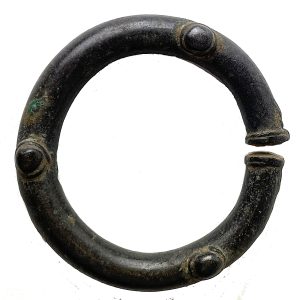
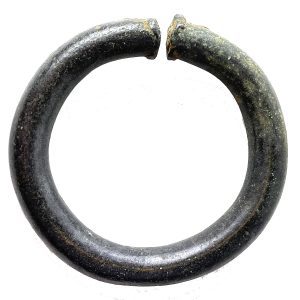
D: 5” Thickness: 2.5” | FREE SHIPPING WITHIN CONTINENTAL U.S.
Rare bronze/copper alloy ring-shaped Sukhothai bangle bracelet with 3 raised knobs and decorative ends made for person of importance and stature. Fine patina.
-
$225.00
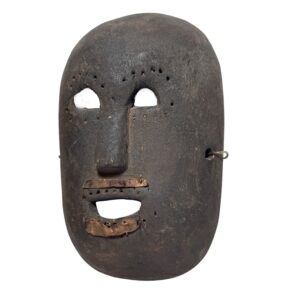
H: 7.5″ W: 5″ D: 3.75″ | Free SHIPPING WITHIN CONTINENTAL U.S.
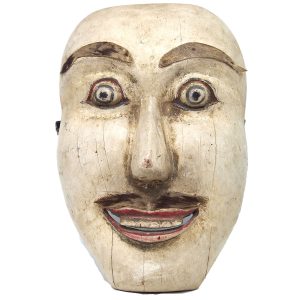
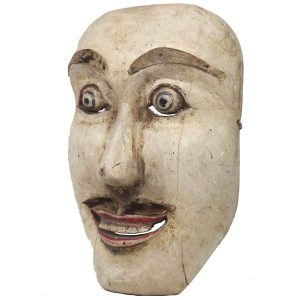
This very masterful and unusual Jauk mask carved by the Balinese community on Lombok has a sweet smile and moustache and eyebrows of animal hide and hair. The dancer wear gloves with very long fingernails moving his hands back and forth to generate anxiety in onlookers.
-
$895.00
H: 9.5” W: 2.25” D: 6.5” | FREE SHIPPING within Continental U.S.!
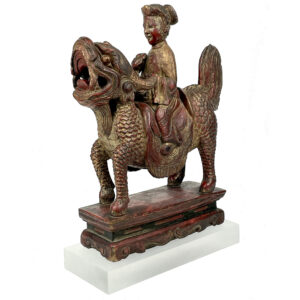
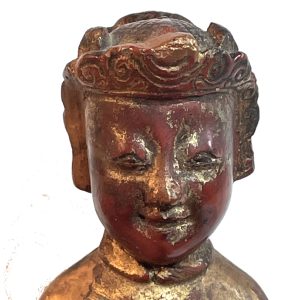
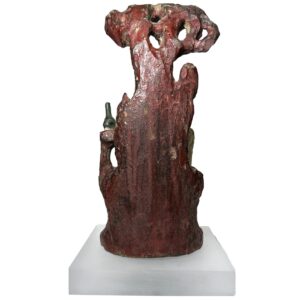
This remarkable figurine is Guanyin on her mythical mount, the Hǒu, guardian master of the universe and model for righteousness and morality who symbolizes bringing forth peace and prosperity.The round orb in its mouth representing a pearl can be rubbed for good luck. It is one of our most unique and favorite Buddhist statues, mounted on a frosted Acrylic stand.
-
$995.00
H: 11” W: 9.5” D: 1.65” | FREE SHIPPING
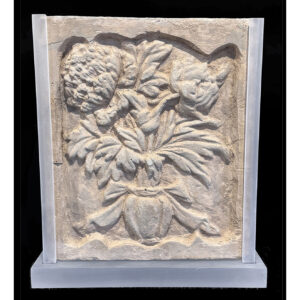
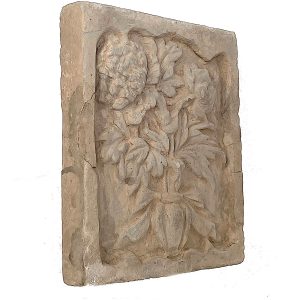
This earthenware brick tile bordered with a deep scalloped frame depicts a vase with a bouquet of propitious flowers: a chrysanthemum and a peony wrapped with an elegant ribbon. Tiles like this were made to decorate the large numbers of buildings created during the prosperous Song dynasty and to adorn tombs. This elegant brick is in good condition for its age with expected chips and cracks, some restoration of background and a re-glued frame break on each side. It has earth adherents from its burial in a tomb.
-
$115.00
SOLD
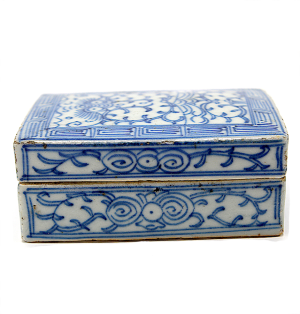
This finely hand-painted rectangular porcelain cobalt blue and white box with underglaze designs was used to store ink cakes as part of an assortment of prized items on a Chinese scholar’s desk. The cover is painted with bindweed designs, wave-like curved lines usually indicating water, and a fanciful bat’s face inside a continuous geometric meander or fret pattern. The box sides are covered with bindweed, spirals, and circles, and although circles and round shapes are usually associated with or represent heaven, these seem strictly decorative. There are traces of red, brown, and black ink inside and on the edges of the unglazed portions and rough and stained areas on the unglazed portions of the box and wear consistent with and demonstrating its age and use.
-
$620.00
This Nanhai Guanyin (Guanyin of the South Sea) sits in her cave on Putuo island in the South China Sea with most of her traditional features. She is portrayed as White Hooded or Clad Guanyin with her hair in a bun covered with a short hood seated in royal ease (lalitsana) with her right hand…
-
$295.00
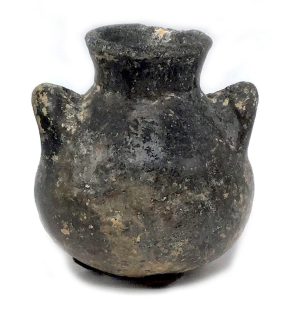
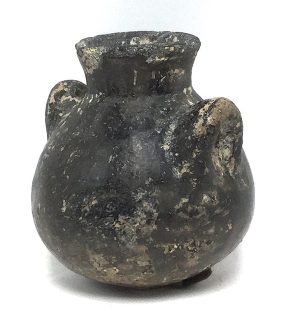
H: 3” Dia: 2.75″ | FREE SHIPPING WITHIN CONTINENTAL U.S.!
This small juglet has a globular body, a round base, a very short neck, a wide mouth and short handles on each side. Like many other small Second Temple Period (circa 597-300BCE) pieces it is a functional item covered with a black slip and burnished. Small juglets like this “…were finished to a higher quality and were used for cosmetics and scented oils [and perfumes and ointments].” (Frank) This piece is intact, in good condition and a genuine piece from ancient history. There are two chips on the mouth rim, body dents, and burnish losses, all expected for its age and longer than two millennia old burial.
Source
Tom Frank, “Imagining the Past: Archeology and the Bible: a juglet to anoint,” September, 2014.
-
$350.00
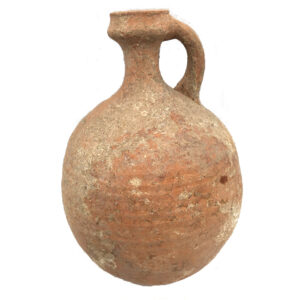
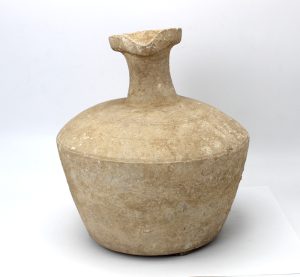
H: 5.75” Dia: 3.375″ | FREE SHIPPING WITHIN CONTINENTAL U.S.!
This pottery Judean juglet was made during the Biblical Period in the Holy Land (Levant) and used to hold perfume or other costly items. Its upper body tapers inward to a narrow neck to limit its pouring rate and conserve its costly contents. Covered with slip to lessen leakage and improve their appearance, these were used throughout the Roman Empire.
-
$155.00
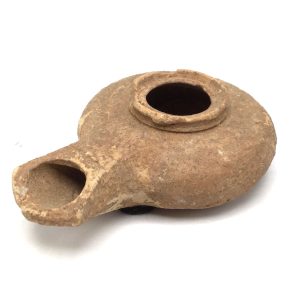
Early Christianity oil lamps were also seen as a symbol of light and a manifestations of the presence of the divine.
-
$425.00
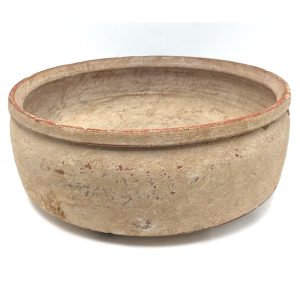
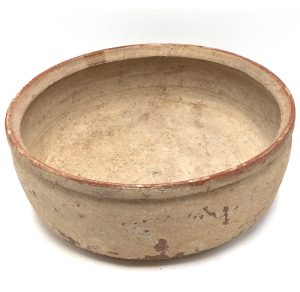
H: 2.875” Dia: 7.5” | FREE SHIPPING WITHIN CONTINENTAL U.S.!
Produced locally in Roman North Africa ceramic centers in Africa Proconsularis after the Roman Empire expanded, pottery like this was shipped throughout the Empire. Functional wares called coarse wares were covered with slip to make them less porous and sometimes as here red paint added for decoration.This finely shaped red clay earthenware is less typical than other bowls with thinner, taller and slightly curved walls.
-
$725.00
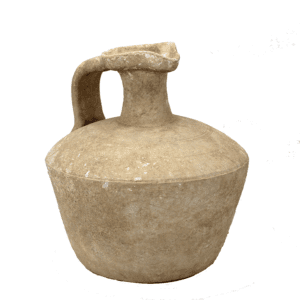
H: 4.5” W: 3” D: 2.75” | SOLD
This Roman ceramic flagon is a uniquely shaped vessel used to store and pour potable liquids. A crème slip carinated jug with a high profile and a trefoil pouring spout, it has a strap handle attached from the carinated edge to just below the rim for easy handling. Roman coarse wars like this were use for liquids and to make offerings to household deities.
End of content
End of content