Showing 1–12 of 14 results
-
Sale!

$395.00 Original price was: $395.00.$275.00Current price is: $275.00.
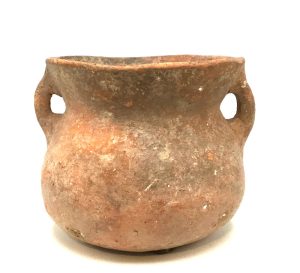
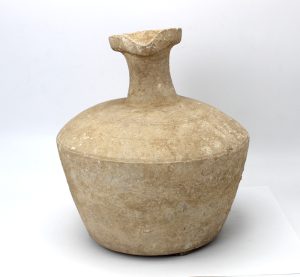
H: 3.375” W: 4.25” D: 3.75” | FREE SHIPPING WITHIN CONTINENTAL U.S.
This ancient Judean vessel created during Israel’s Biblical Period was hand shaped using the coil method. It likely held potable liquids, cooking oil or other items. This is a rather sophisticated piece for Bronze Age vessel made millennia ago.
-
Sale!
$750.00 Original price was: $750.00.$595.00Current price is: $595.00.
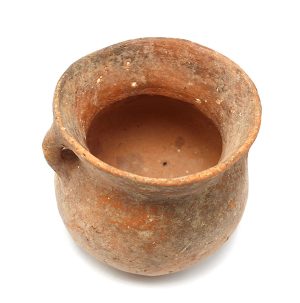
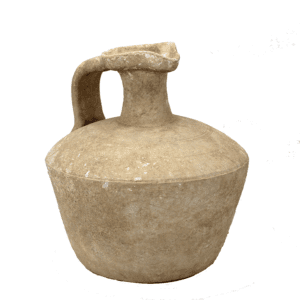
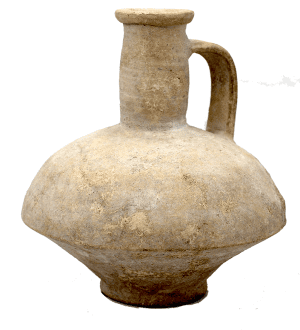
H: 8.5” Dia: 5.5” | FREE SHIPPING within Continental U.S.!
Wine jugs from in the Judean Holy Land at the time of the first Jewish Temple were used for religious ceremonies and wine blessing as an important Jewish prayer. This carinated piece was made using the coil construction method and the paddle and anvil technique.
-
Sale!
$295.00 Original price was: $295.00.$195.00Current price is: $195.00.
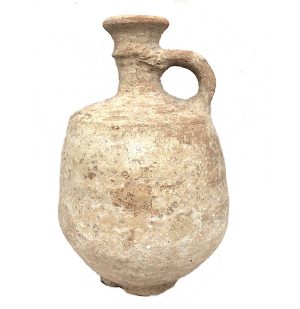
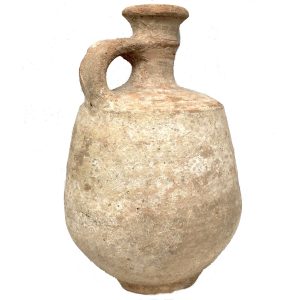
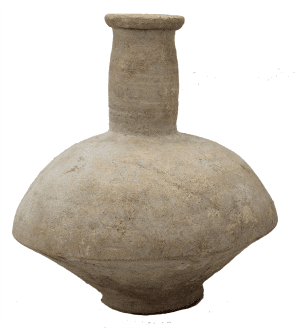
Ht: 6.25” W: 3.25” D: 2.75” | FREE SHIPPING WITHIN CONTINENTAL U.S. !
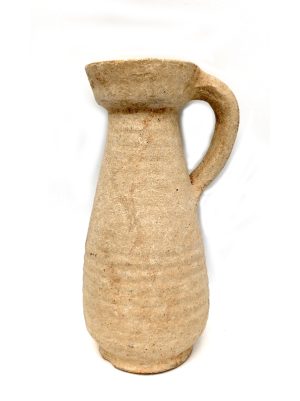
Made in Roman North Africa, this small pouring vessel made of durable materials was called coarse wear for everyday use. Elegant in its simplicity It was made with a potters wheel. A fine small piece of history.
-
$295.00
H: 3” Dia: 2.75″ | FREE SHIPPING WITHIN CONTINENTAL U.S.!
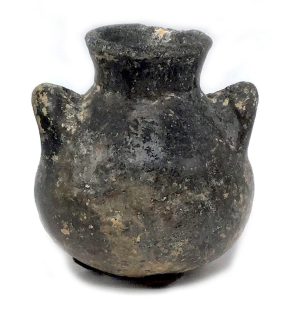
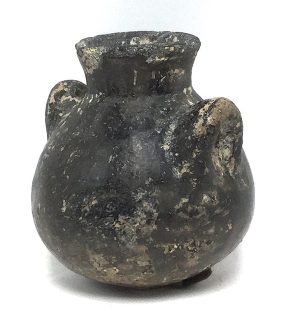
This small juglet has a globular body, a round base, a very short neck, a wide mouth and short handles on each side. Like many other small Second Temple Period (circa 597-300BCE) pieces it is a functional item covered with a black slip and burnished. Small juglets like this “…were finished to a higher quality and were used for cosmetics and scented oils [and perfumes and ointments].” (Frank) This piece is intact, in good condition and a genuine piece from ancient history. There are two chips on the mouth rim, body dents, and burnish losses, all expected for its age and longer than two millennia old burial.
Source
Tom Frank, “Imagining the Past: Archeology and the Bible: a juglet to anoint,” September, 2014.
-
$350.00
H: 5.75” Dia: 3.375″ | FREE SHIPPING WITHIN CONTINENTAL U.S.!
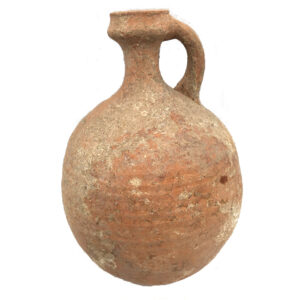
This pottery Judean juglet was made during the Biblical Period in the Holy Land (Levant) and used to hold perfume or other costly items. Its upper body tapers inward to a narrow neck to limit its pouring rate and conserve its costly contents. Covered with slip to lessen leakage and improve their appearance, these were used throughout the Roman Empire.
-
$155.00
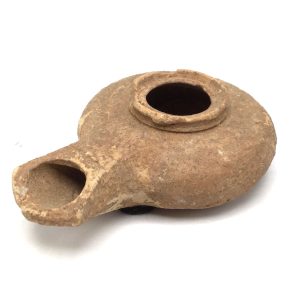
Early Christianity oil lamps were also seen as a symbol of light and a manifestations of the presence of the divine.
-
$425.00
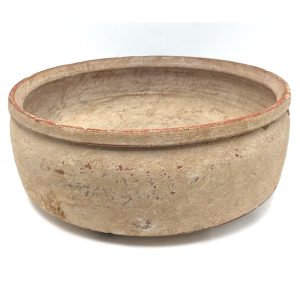
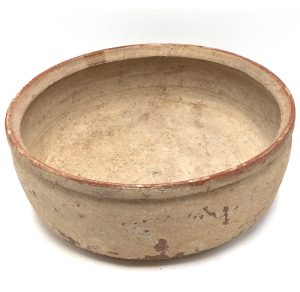
H: 2.875” Dia: 7.5” | FREE SHIPPING WITHIN CONTINENTAL U.S.!
Produced locally in Roman North Africa ceramic centers in Africa Proconsularis after the Roman Empire expanded, pottery like this was shipped throughout the Empire. Functional wares called coarse wares were covered with slip to make them less porous and sometimes as here red paint added for decoration.This finely shaped red clay earthenware is less typical than other bowls with thinner, taller and slightly curved walls.
-
$725.00
H: 4.5” W: 3” D: 2.75” | SOLD
This Roman ceramic flagon is a uniquely shaped vessel used to store and pour potable liquids. A crème slip carinated jug with a high profile and a trefoil pouring spout, it has a strap handle attached from the carinated edge to just below the rim for easy handling. Roman coarse wars like this were use for liquids and to make offerings to household deities.
-
$595.00
H: 8.5” Dia: 5.5” | SOLD
The shape of this elegant carinated ancient earthenware pouring vessel used to hold and dispense potable liquids: water, wine and other drinks. They were used to hydrate everyone including laborers, field workers, ship-rowers, army personnel and people in their homes and were placed wherever they were needed.
-
$395.00
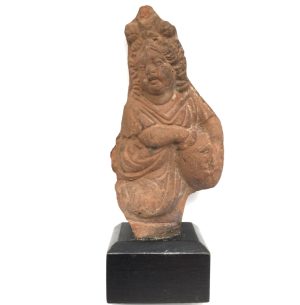
Ht: 6.5” W: 2.625” D: 1.75” | FREE SHIPPING WITHIN CONTINENTAL U.S.!
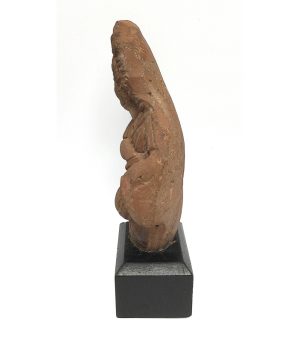
This ancient figurine is Harpocrates the Greek god of silence and secrets holding a jar made for a home shrine. He probably represents a royal and temple cult, as he wears a double crown symbolizing both Upper and Lower Egypt and his royal emblem signifies his association with the reigning Egyptian king, who was considered a manifestation of the Egyptian god Horus. Missing part of his right side when excavated, and no with no repairs this is a true slice of history. It pairs well with #1845 Ancient Pottery Figurine of Child Nurturer Goddess.
-
$450.00
H: 2.25” Dia: 14.5″ |Free shipping in Continental US!
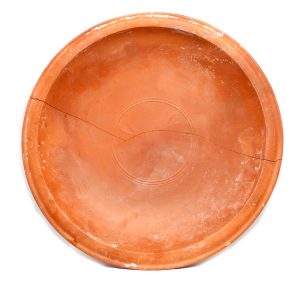
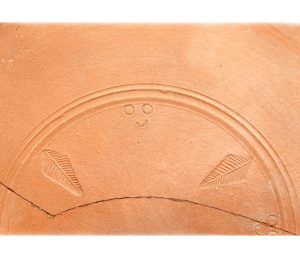
Created in the Roman North Africa platters like this were distributed throughout the Roman Empire. Known as s ARS (African Red Slip) it is decorated with circular rings with perfect ridges made using a pottery wheel. This ancient serving plate is remarkable for its survival, size, stamped designs and graceful simplicity. Found in two pieces, the breaks were clean and glued together. Platters of this size are rare and are usually in multiple broken pieces with significant losses.
-
$395.00
Ht: 6.75” W: 3” D: 2” | FREE SHIPPING WITHIN CONTINENTAL U.S.!
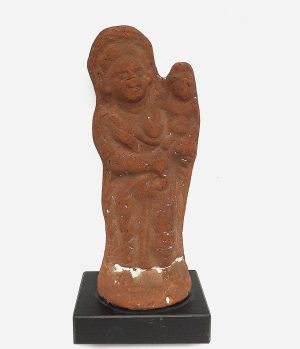
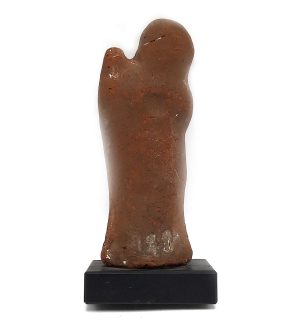
This Roman Egyptian figurine from Alexandria of a woman holding a young child is a Kourotrophos, a class goddess figures holding infants or children. Referred to as “child nurturers”, these were revered deities, cult figures and mortals who were also fertility symbols and protectors of the young. Made from a bivalve mold, this terracotta figurine was probably placed on a home altar for protection. Mother and child figures like this are universal and appear in cultures throughout the world. It pairs well with #1844 Ancient Harpocrates Figurine.
End of content
End of content