


Folk Art Mask of a Horned Beast and Devil, Mexico, Guerrero (1046FHE)
Original price was: $190.00.$150.00Current price is: $150.00.
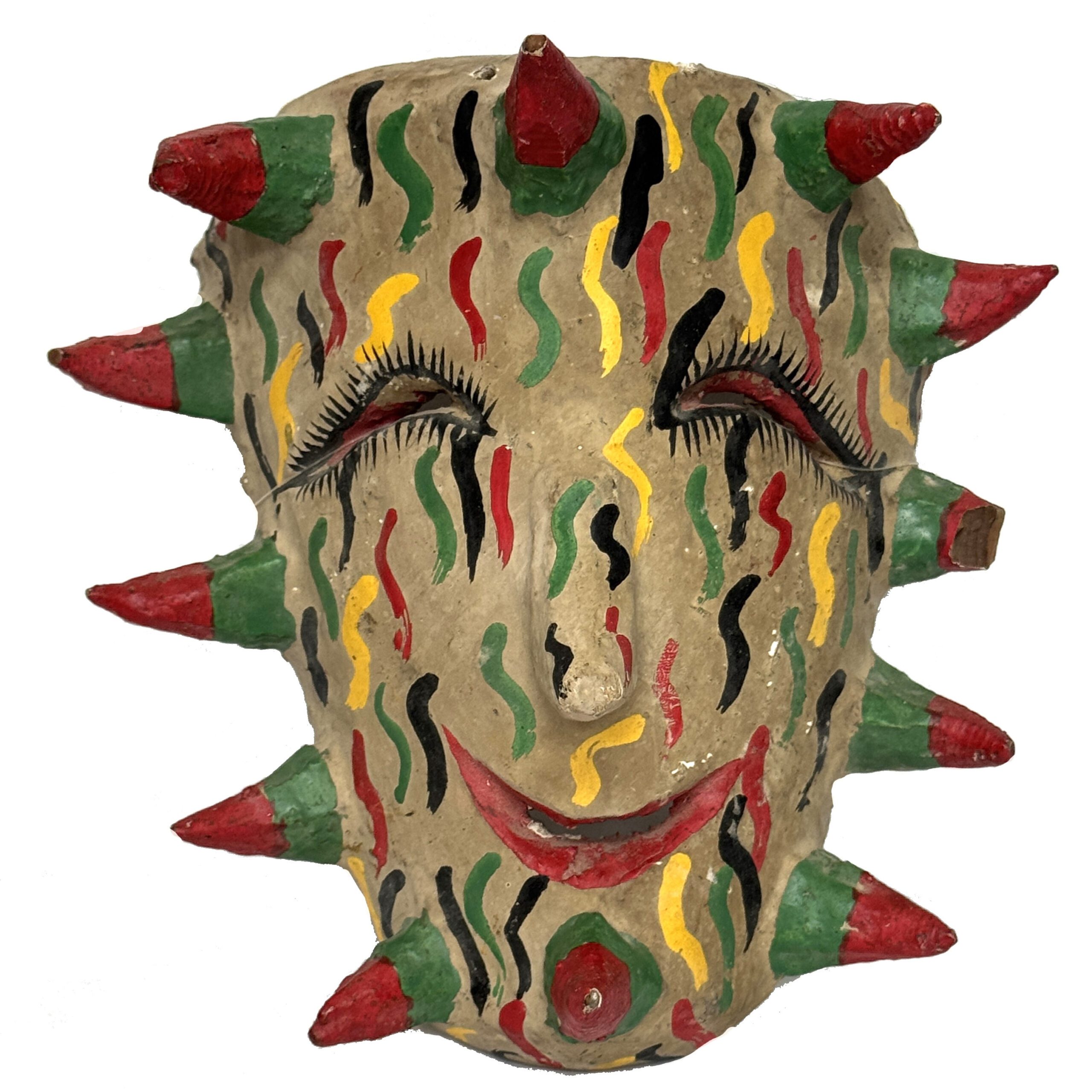
This vibrant folk-art mask is a hybrid of a beast (tecuan) and a devil (diablo) mask. It mixes pre-Hispanic indigenous folklore with 16th century Spanish Catholic colonial traditions. Although not created as a dance mask, traditional artisans carved masks for collectors traveling through Mexican artisan markets, creating a new popular, well respected, and prized folk art form.
Description
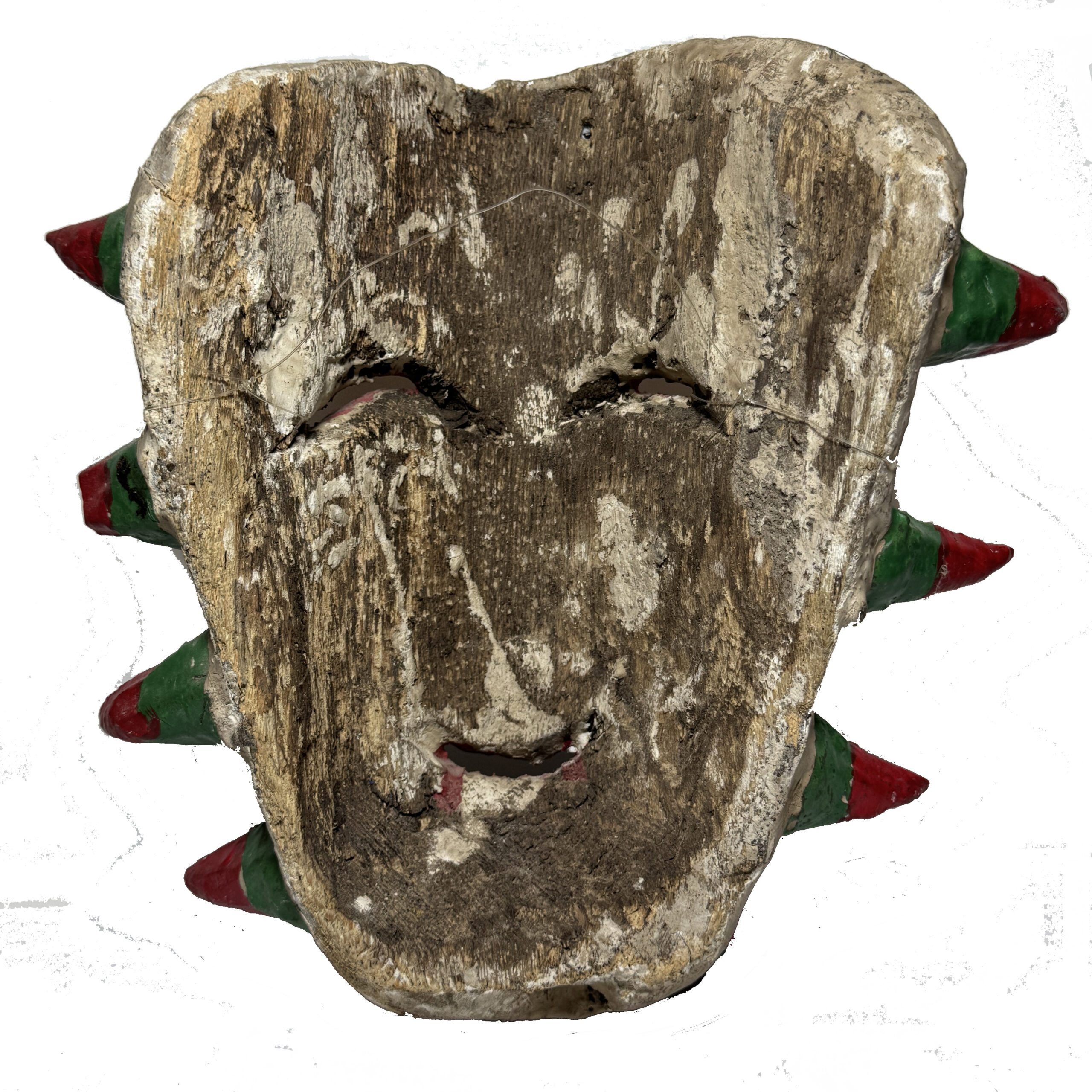
This Mexican ceremonial mask depicts a multi-horned character made by Nahua indigenous artisans from Guerrero, Mexico. It displays authentic characteristics of a vintage folk art mask likely made in the 1970s or 1980s with a naturally vintage chipped paint covering aged grained wood and hand-cut spikes with variations of thickness. It reflects traditional Guerro mask features with its stylized elongated face, gentle smiling expression with closed/slit eyes, and numerous spiked thorns or horn-like protrusions. Hand carved from a lightweight local wood favored by Guerrero craftsmen, its soft traits are primed and covered in red, yellow, green, and black over a neutral-toned base. The back side dark coloration reflects natural oxidation of the wood fibers and dust accumulation over several decades.
Although not made as a dance mask, it was carved by the same traditional dance mask artisans specifically for collectors. Heavily rooted in indigenous dance concepts, Nahua artisans developed a decorative art form during the mid-to-late 20th century that became hugely popular for collectors at important Mexican artisan markets. They modified traditional styles with exaggerated spikes, curvy polychrome lines, and a scale creating striking, expressive wall pieces that retain their collectability and value.
This specific mask is a hybrid alligator-like cayman and devil that blends centuries of pre-Hispanic indigenous folklore with Spanish Catholic concepts of evil introduced to Mexico in the 16th century. Guerrero Mexican mask art often combines native animal lore with theatrical performance mixing human, reptilian, and/or animal characteristics of crocodiles, alligators, caimans (cousins of alligators), and the devil to create a highly complex, highly popular and collectable ceremonial hybrid mask.
As in most Mexican folk-art, this depicts the devil with heavy lined smiling eyes, exaggerated eyelashes, a long prominent nose, and a sarcastic, sardonic, and mischievous smile. The smile is a blend of pre-Hispanic spirituality, Catholic evangelization, and social satire. In contrast to Westernized devilish fangs and serpents, this mask also has cone-shaped wooden horns/spikes radiating around the head to reflect characteristics of caimans and alligators. Introduced by Spanish friars to represent sin, local artists have adapted the devil and added the caiman to symbolize untamed nature, cosmic balance, and moral lessons. The combination of a human facial expression with reptilian spike defenses creates a new hybrid spirit being.
Before the Spanish conquest, Mesoamerican religions had no concept of absolute good vs absolute evil or a punishing “hell.” When Spanish friars used devil images to scare indigenous people into converting, local artisans began to blend the concept of Satan with their own ancient gods. To indigenous people, death and the underworld were parts of a natural cycle celebrated with humor, dance, and food—not fear. The devil’s smile extended the pre-Hispanic tradition of laughing at death and the supernatural and was a declaration that light and darkness and good and bad must coexist.
During the colonial period, the Church used religious dances and dramas to teach Catholic dogma, but marginalized, disregarded populations turned the dances into tools of subversion. Enslaved people were forbidden from practicing their ancestral faiths and were only permitted by the Church to dance “to the devil.” Many, including those who had converted to get along, accepted the devil persona but wore smiling masks to turn the performance into a dance of rebellion, joy, and protest. The smile mocked the serious, oppressive nature of slave owners, the Spanish authorities, and the church and served as a potent mask of absolute freedom and spiritual resistance. A smiling devil became a buffoon or trickster moving through crowds playing pranks, telling vulgar jokes, making obscene gestures, and teasing spectators. By turning the Church’s symbol of fear and damnation into a joke, the Devil’s power to terrify disappeared.
Masks like this are presented during regional Carnaval, other celebrations, and feast days honoring local Catholic patron saints. Presented as a local devil-trickster, the spikes protect against danger and chaos, while the smiling face creates an accessible and very mischievous rather than completely evil archetype.
AI Comments Summary
Guerrero is universally recognized among collectors for producing Mexico’s most surreal, primitive, and expressive dance masks. Masks like this made in the mid-to-late 20th century were created by local artisans as active ceremonial pieces that captured the attention of international folk-art collectors fortifying the “spiked caiman” aesthetic. In all Mexican folk art, a smiling devil mask with a prominent, exaggerated grin added layered meanings born from centuries of Mexican religious and cultural synthesis.
Additional information
| Place of Origin | Mexico |
|---|---|
| Period | Vintage (1920-1980) |
| Date | Mid 20th Century |
| Materials and Technique | Wood |
| Dimensions (inches) | Ht: 8.5” W: 9” D: 5.25” |
| Dimensions (metric) | Ht: 21.59cm W: 22.86cm D: 13.33cm |
| Condition | Excellent condition but chipped end of right 3rd spike, |
| Item Number | 1046FHE |
| Shipping Box Size |