
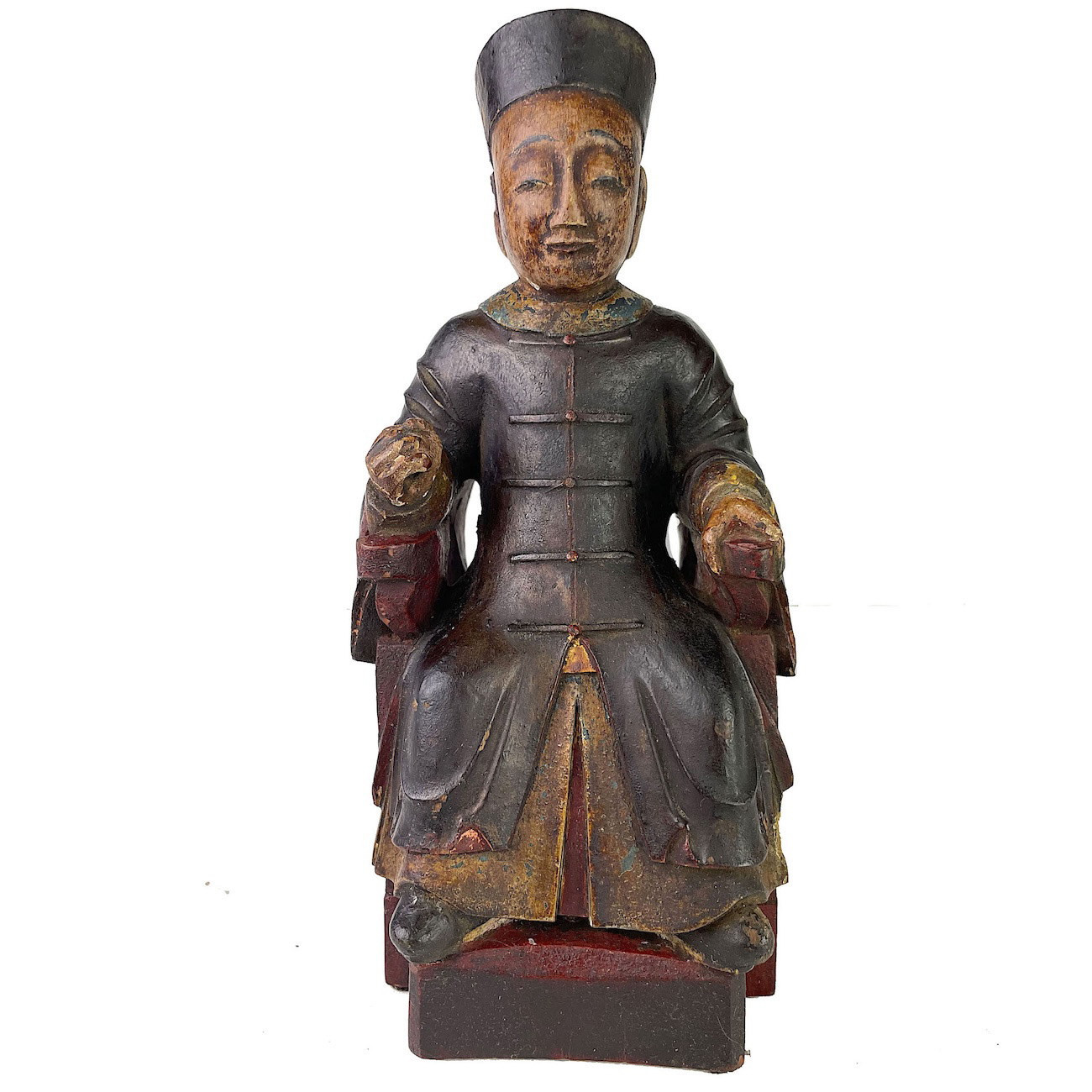
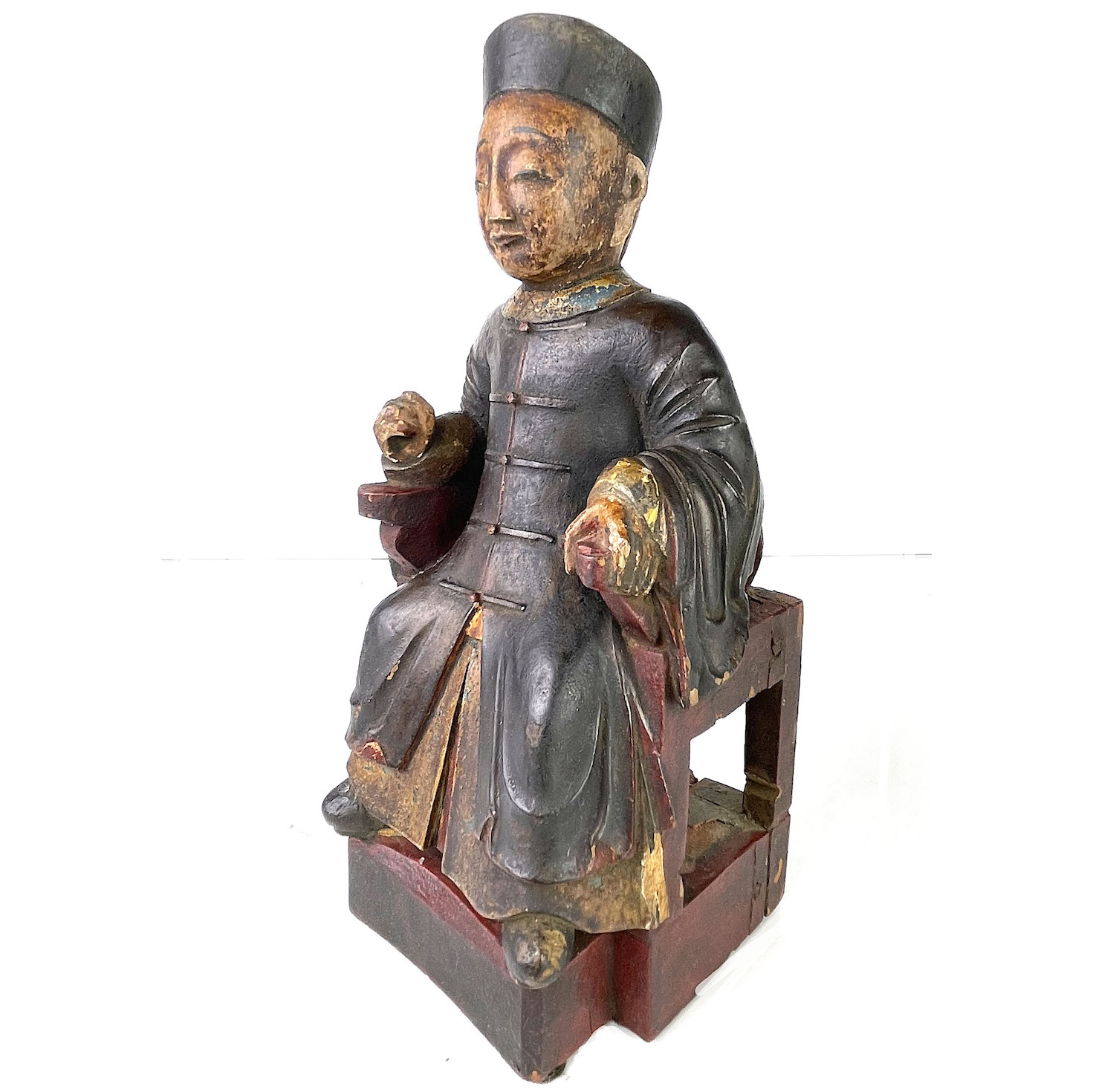


Antique Consecrated Mandarin Ancestor on Horseshoe Chair, China (18061)
Original price was: $310.00.$275.00Current price is: $275.00.
H: 8.5″ W: 4″ D: 3.3″ | FREE SHIPPING WITHIN CONTINENTAL U.S.
This ancestor figure official sits on a horseshoe chair showing his status wearing official’s attire: 5-button Mandarin long coat with a round collar and woven hat. Has a personalized tranquil face with a hint of a smile.
Description
Ancestor figures like this portrayed as Mandarin officials were placed on home altars along with other house gods and religious images to bring blessings of fu to the household. Ancestor figures, a form of filial piety was a cornerstone of ancestor worship, one of the main tenets of Confucianism. Mandarin officials were lesser status public officials who acquired this rank by passing rigid exams. In the Qing dynasty this designation was considered so significant that families emphasized this status in their ancestral figures, and sometimes even stretched the truth about it.
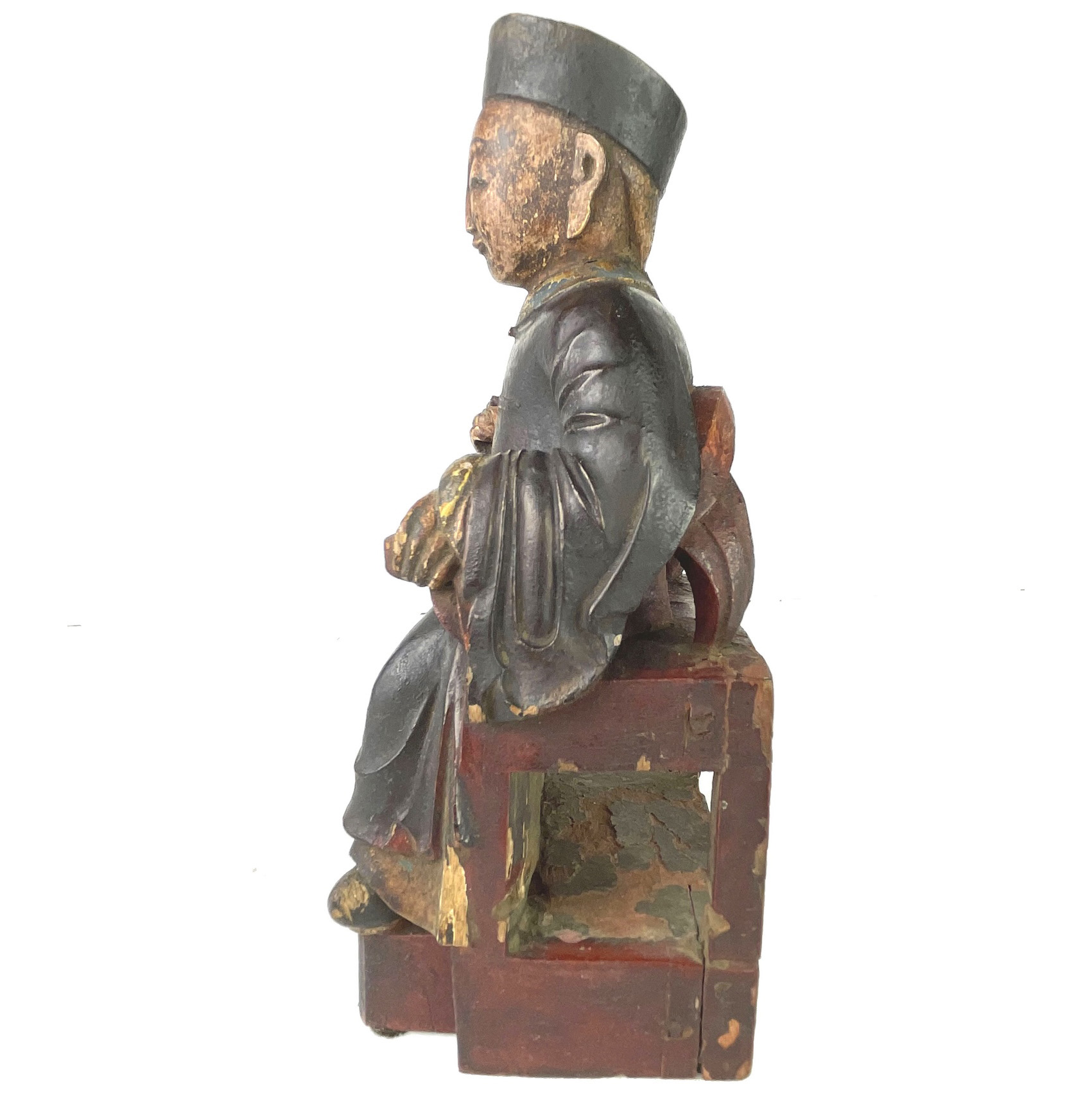
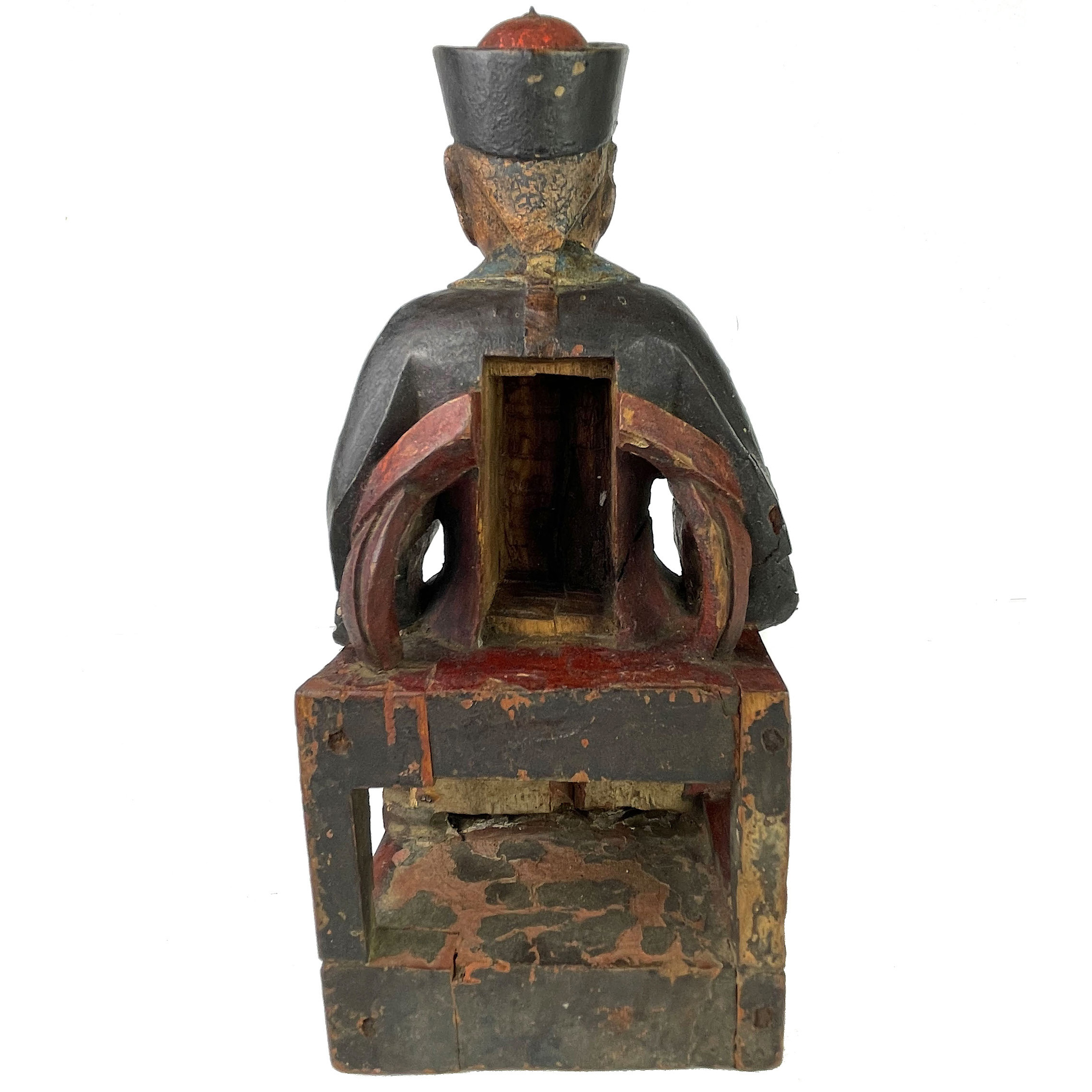
Based on its formal, frontal pose wearing traditional official’s attire, this figure is a mid-to lower-ranking civil scholar-official, a revered position in Qing Dynasty. After the Ming Dynasty fell (1644) the Manchus required Han government officials and those serving at court to wear changsang style clothing considered formal dress for men – a 5-button Mandarin long coat with a round collar and Manchu court black winter woven hat (qing guanmao). With a serious expression he sits on a horseshoe chair with a pedestal for his feet showing his status. His personalized oval-shaped tranquil face has painted brows, and a hint of a smile on his pursed lips. His long pigtail which indicates he was Han Chinese under Manchu rule, symbolizes submission, obedience, and legal identification within the ruling Qing dynasty.
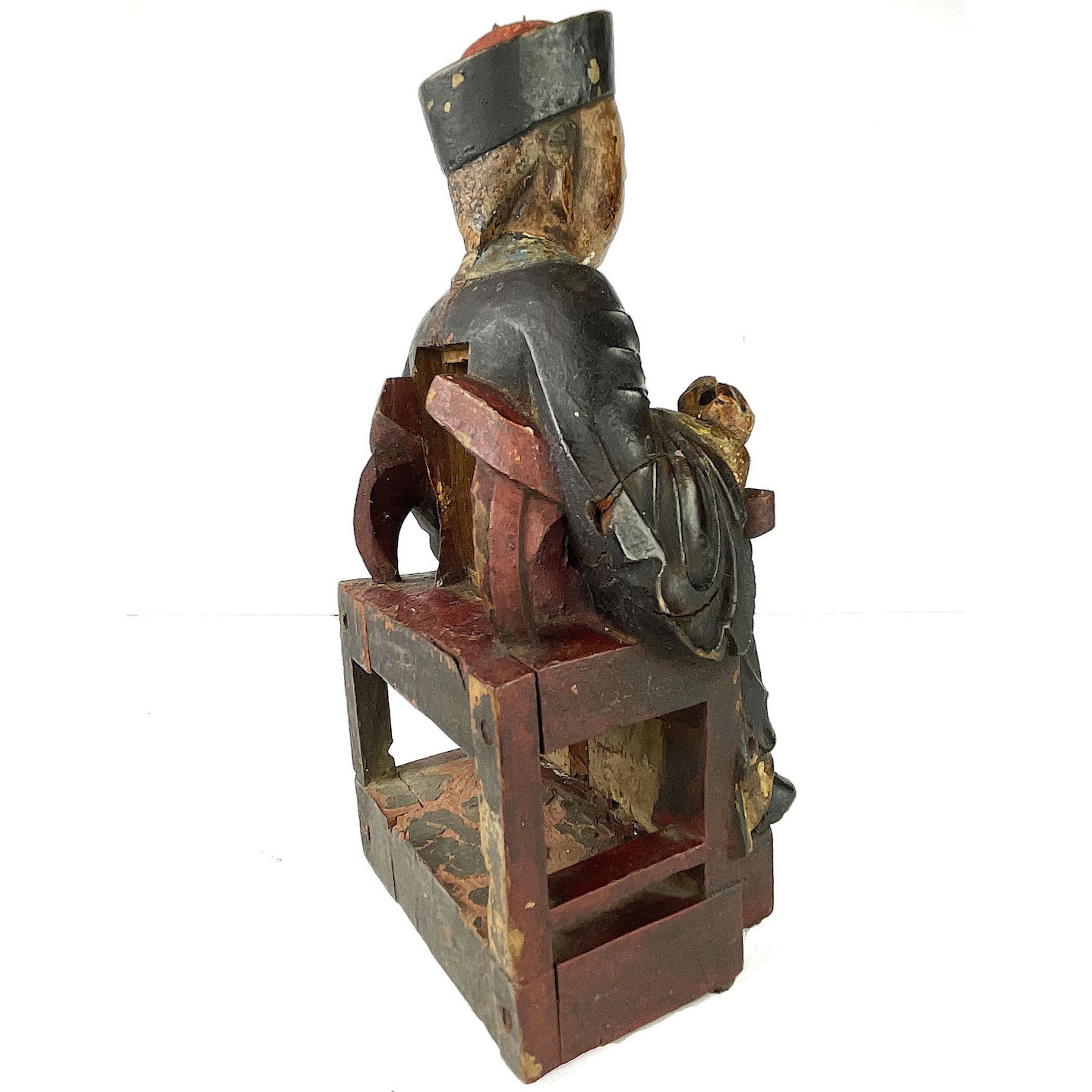
Hand-carved from a single piece of wood the dark paint indicates it was originally dark blue or black, and the traces of gilt and other colors indicate it had an elaborate painted finish used for higher ranking officials. The center of the chair’s rear rail was removed to provide access to the large cavity that had a flat cover bung, now missing, indicating it was consecrated. It is in very good condition with an aged patina and expected cracks, paint and lacquer losses, and chips.
AI Market Valuation Summary
AI rates this piece as a highly collectible piece of Chinese devotional folk art for the following reasons:
The visible wear, crackled dark lacquer, and remnants of reddish cinnabar/polychrome paint show a natural aging process that has resulted in a fine patina. A consecration cavity further indicates its authenticity. In Chinese folk and religious traditions, a statue was an empty piece of wood until a priest performed a ceremony and insert spirit objects to spiritually animate the figure. Many cavities were cleaned out or destroyed over time, so having this feature adds historical and collector value. Its size makes it very displayable and desirable for modern private collectors.
Click here for the Blog Consecrating Wooden Images to Imbue Them with A Life Force
Additional information
| Weight | 3 lbs |
|---|---|
| Dimensions | 12 × 9 × 6 in |
| Place of Origin | China |
| Period | Antique, Qing Dynasty |
| Date | 19th Century |
| Materials and Technique | Wood |
| Dimensions (inches) | Ht: 8.5” W: 4” D:3.375” |
| Dimensions (metric) | Ht: 21.59cm W: 10.16cm D: 8.57cm |
| Weight | 1 lb |
| Condition | Very good, patina and wear consistent with age and use |
| Item Number | 18061BEM |
| Shipping Box Size |