
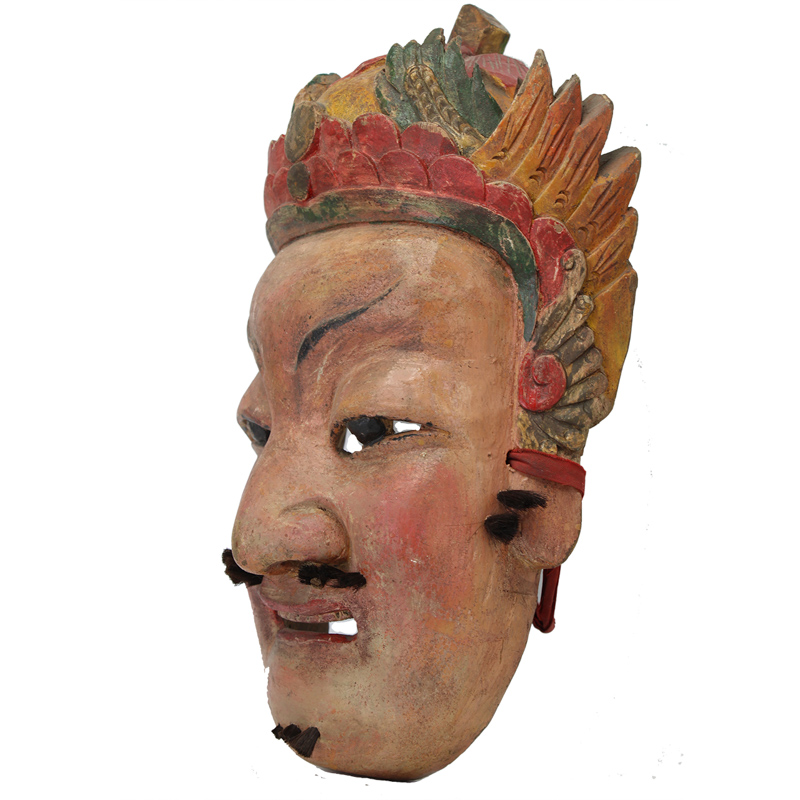


Antique/Vintage Chinese Nuo Opera Mask of a Magistrate, Southwest China (16936)
$395.00
Ht; 13.75” W: 8” D: 4.25” | Free SHIPPING WITHIN CONTINENTAL U.S.
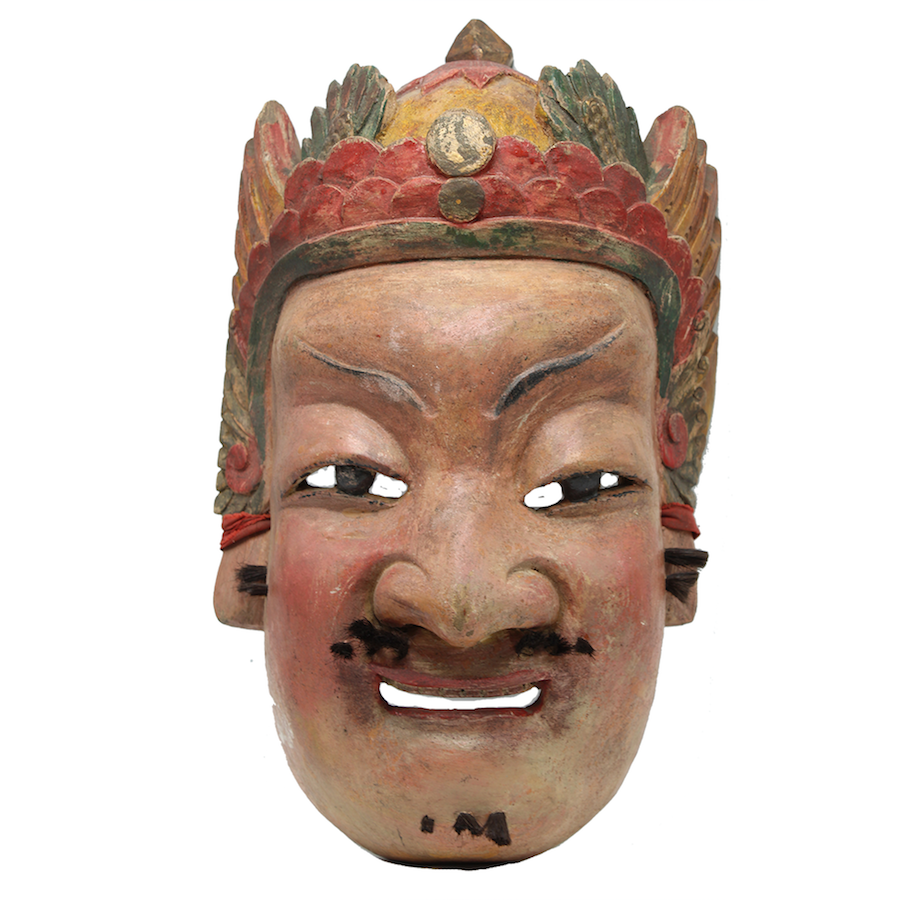
Rare mask used in Noh Opera performances depicting Zhīxiàn – a popular figure of a wise, benevolent judge who resolved local disputes and was likely used in rituals to ask the gods for blessings, health, and long life. Signs of authentic wear from dance theater performances.
\
Description
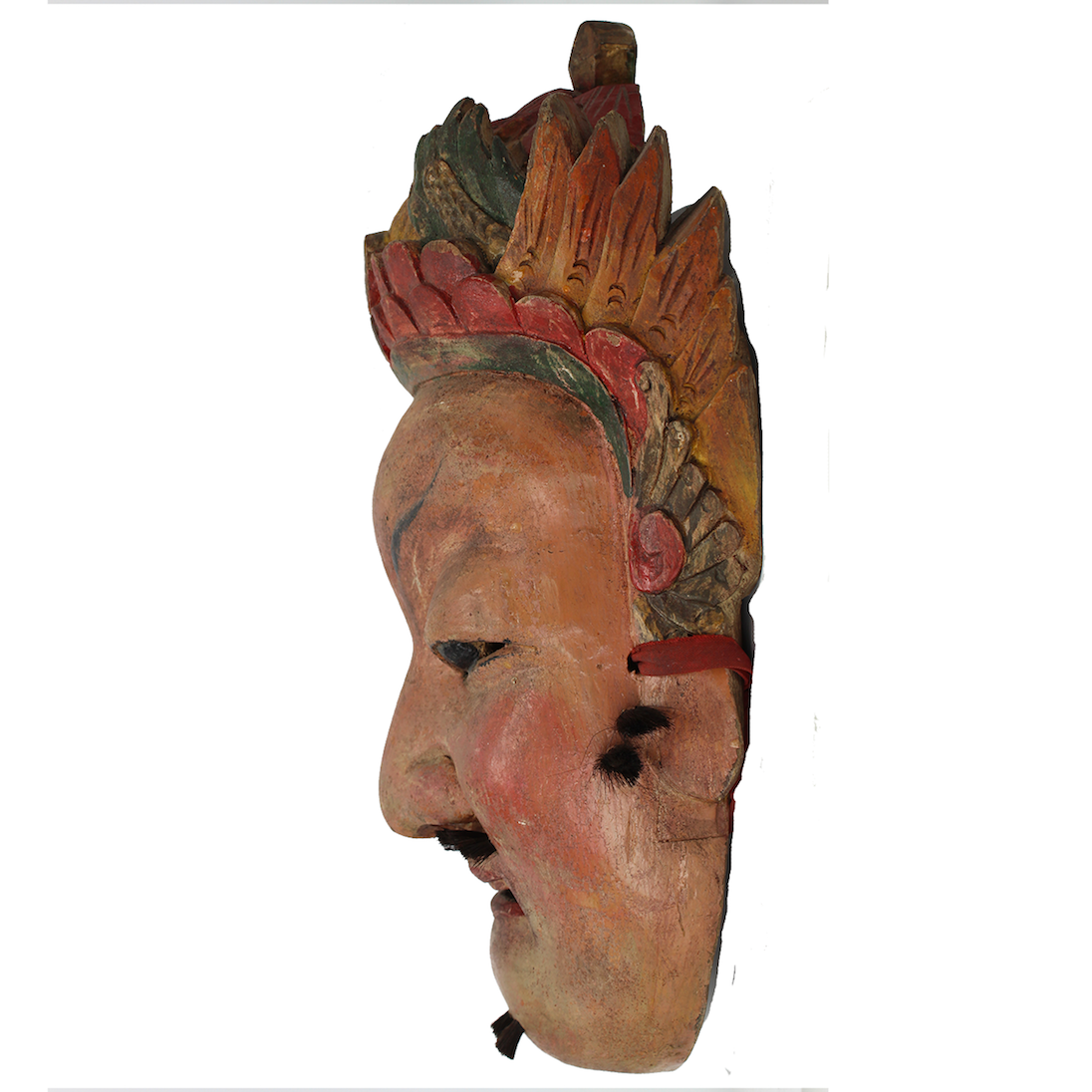
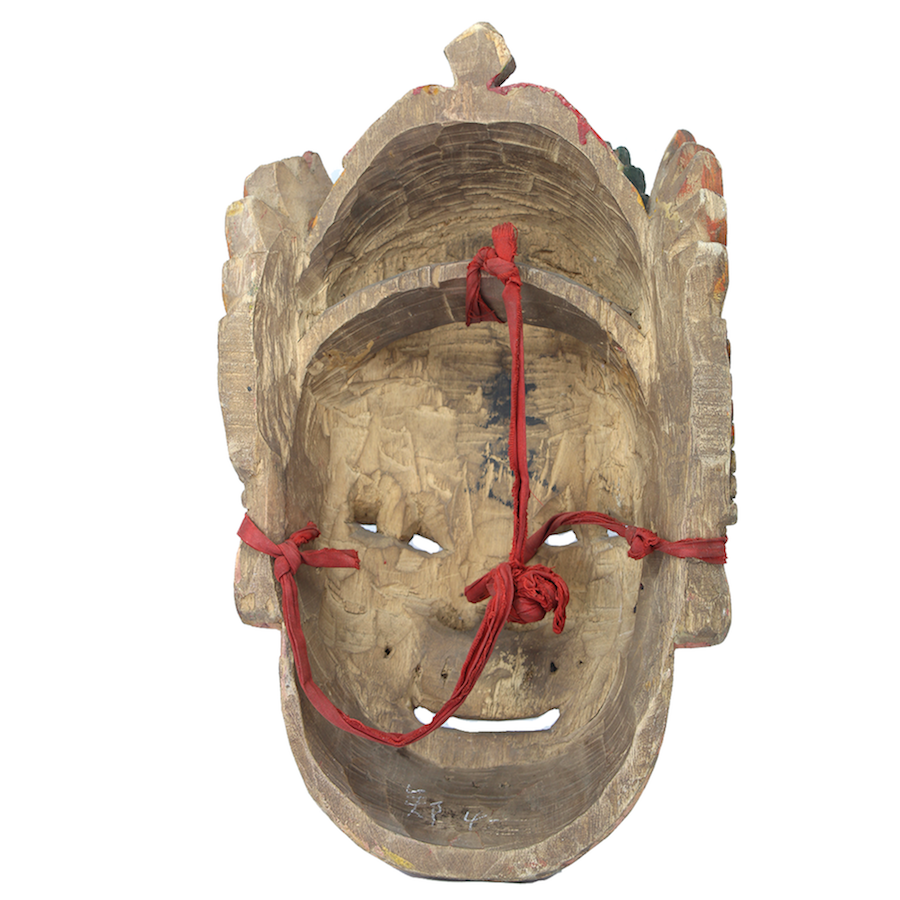
This early to mid-20th century Noh Mask represents Zhīxiàn a popular figure in Chinese Nuo Operas in Southwestern China. The very faint Chinese character at the inside bottom chin is “知县” (Zhīxiàn), which means “magistrate” or “county governor“ and refers to the head chief official of a county administrative district. In Chinese Nuo opera, historical figures, government officials, and regional moral magistrates are very popular characters. Magistrates represent authority on earth and are typically portrayed as an elite scholar or bureaucrat with civil power. Zhixian written on the lower inside rim indicates this mask represents a historical or local magistrate celebrated for bringing peace, justice, and long-lasting prosperity. Auspicious calligraphic characters in black ink on the inner side were traditionally used for Chinese theatrical and ritual masks. The stylized Chinese character Shòu in the top center of this mask means long life and suggests the mask depicted a wise, benevolent judge who resolved local disputes and/or was used in rituals to petition the gods for blessings, health, and a long life. His tiered, crested headdress is an official’s formal cap.
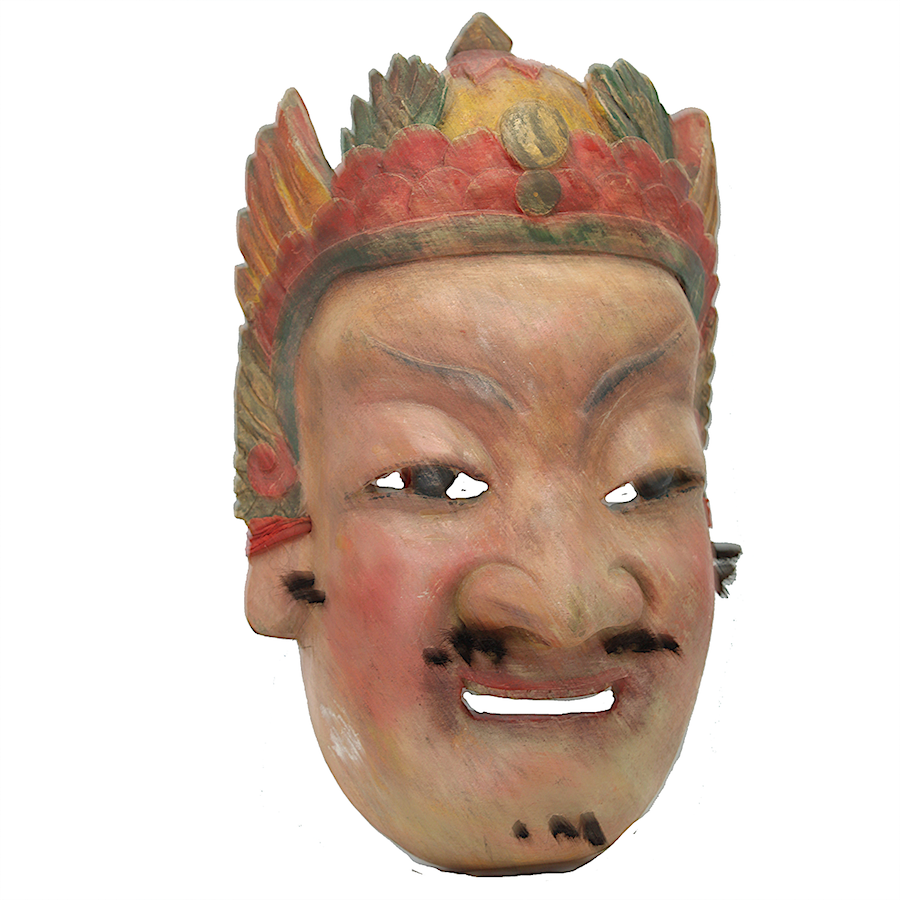
The mask portrays the gentle humanized face of an approachable government official with arched eyebrows and a slightly smiling expression. Made to be used in performances, it is a standard, large size to fit comfortably over an actor’s face with narrow slit eye holes and open mouth to speak. The back wooden bridge across the forehead kept the mask secure during high-energy dance performances. Carved from indigenous wood with flesh-colored pigments, there are traces of adhesives where horsehair or fiber hairs were attached to the upper lip and chin as a mustache and goatee.
In traditional Nuo opera, troupes travel with full sets of masks kept in specialized wooden chests. Masks are often numbered sequentially or by role groupings for packing or organizing the lineup before a performance. The chalk Westernized “No 4” might indicate a modern inventory system used by an art dealer, museum, or private collector who cataloged it for an exhibition or an estate inventory.
AI Content Summary
AI rates this piece as Highly Collectible Tribal and Folk-Art for the following reasons:
Although Nuo opera is a thousand of years old shamanic, animistic tradition, it was heavily suppressed during the mid-20th century, making masks more difficult to find, especially authentic ones in excellent shape. The wear around the inner rims, string holes, red chord in the back, remnants of the facial hair, rear horizontal wooden bridge, and Chinese character signatures suggest this mask was performed in village rituals. The rough gouges on the back indicate it was hand-carved with traditional adzes and curved chisels.
Additional information
| Place of Origin | China |
|---|---|
| Period | Antique/Vintage (1910-1980) |
| Date | Circa 1950 |
| Materials and Technique | Wood |
| Dimensions (inches) | Ht: 14.75” W: 7.75” D: 4” |
| Dimensions (metric) | Ht: 37.46cm W: 19.68cm D: 10.16cm |
| Weight | 25oz |
| Condition | Excellent, fine patina demonstrating age and use |
| Item Number | 16936XRE |
| Shipping Box Size |