Showing 61–71 of 71 results
-

$395.00
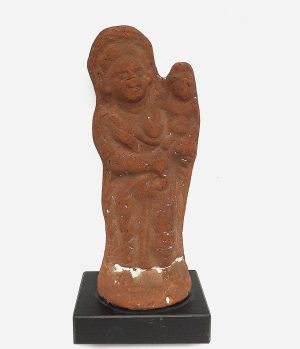
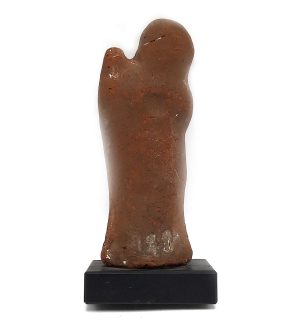
Ht: 6.75” W: 3” D: 2” | FREE SHIPPING WITHIN CONTINENTAL U.S.!
This Roman Egyptian figurine from Alexandria of a woman holding a young child is a Kourotrophos, a class goddess figures holding infants or children. Referred to as “child nurturers”, these were revered deities, cult figures and mortals who were also fertility symbols and protectors of the young. Made from a bivalve mold, this terracotta figurine was probably placed on a home altar for protection. Mother and child figures like this are universal and appear in cultures throughout the world. It pairs well with #1844 Ancient Harpocrates Figurine.
-
$1,375.00
SOLD H: 23.25″ W: 9.25″ D: 6.25″
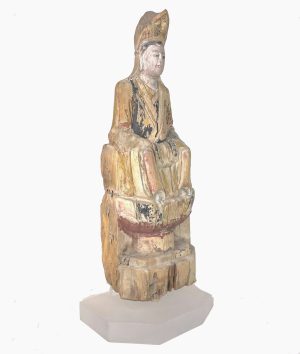
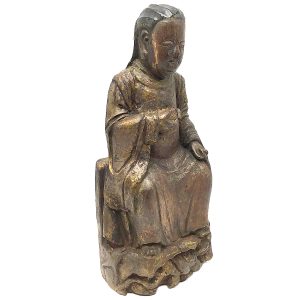
This Guanyin image was probably one of a pair of images along with the Taoist Queen Mother of the West (16206A-WACK) placed together on a community, local temple or home altar. Created by the same local artisan, they are provincial rather than imperial style having a humble, unadorned and simple rendering, seated on backless thrones, hands covered by a ritual cloth, uncharacteristic of Guanyin but common for Taoist goddesses. Both wear layered robes and a high pointed crown – the Queen Mother’s centered by a phoenix and Guanyin’s by a flower surrounded by symbolic aureole of radiating light. Both have soft blissful smiles with eyes cast slightly downwards to engage their devotees. Initially covered in bright polychrome colors, there are traces of surviving red, yellow, green, brown and black.
-
$125.00
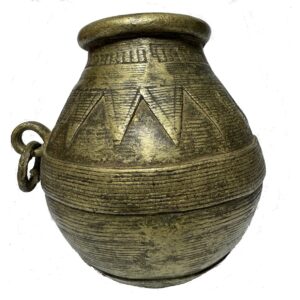
H: 4.25” Dia: 4” | FREE SHIPPING IN CONTINENTAL U.S.
Dhorka brass lost wax method grain and rice measuring bowl. One-of-a-kind intricately decorated with horizontal and triangular striations. Bowls were symbol of Hindu goddess Lakshmi placed on home altars for puja.
-
$475.00
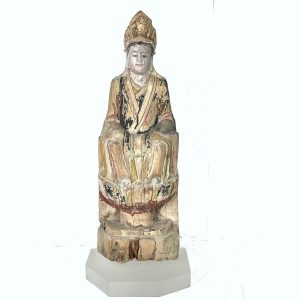
H: 11.6 ” W: 5.3 ” D: 4.25 ” | FREE SHIPPING WITHIN CONTINENTAL U.S.
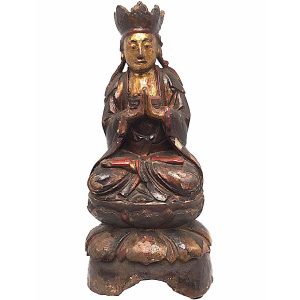
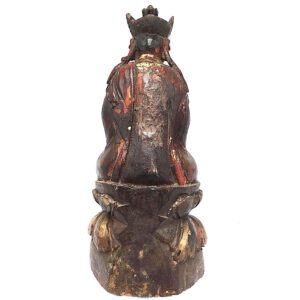
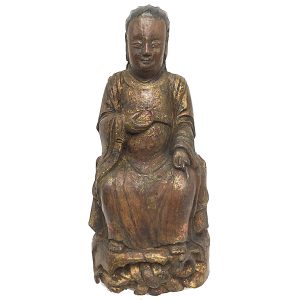
This provincial Guanyin made for a home altar sits in anjali mudra. Portrayed as humble, approachable, she wears a 5-lobed diadem, hair in a chignon with braids and modest robe seated on a waisted lotus throne with stacked lotuses.
-
$295.00
H: 10” Dia: 3.75” | FREE SHIPPING within Continental U.S.
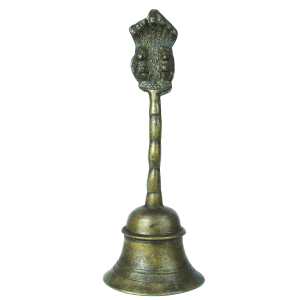
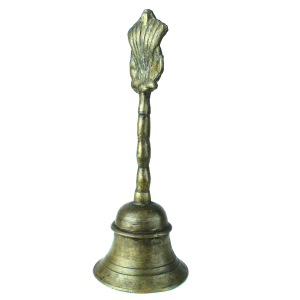
Hindu prayer bell used in a temple or home altar for daily puja rituals. Topped by a pair of Garudas and sheltered by Nagas who are natural enemies, but when represented together symbolize peace and serenity of the prayer bell sounds.
-
$395.00
H: 5.75″ W: 3.25″ D: 2.75″ | SOLD
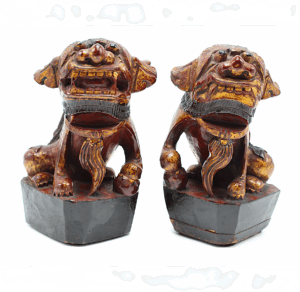
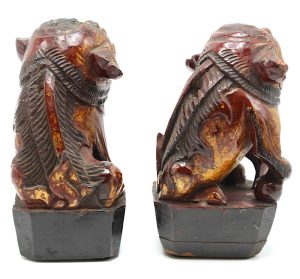
Each of this whimsical gold and red-burgundy lacquered pair of male fu lions sits erect on a high pedestal heads thrown back with flaring ears, bulging eyes, decorative stylized manes and a small bushy tail. Their spirituality is displayed by the pair silently emitting the blessed mantra “aum”: the open mouthed lion forming an “au,” and the other completing it with a closed mouth to form “mmm.” The workmanship on these pieces is masterful, although rustic and provincial, and they are rare with their Buddhist symbolism and because most pairs of fu lions pairs were lost during China’s modernization.
-
$695.00
H: 8” W: 5.5” D: 3.25” | SOLD
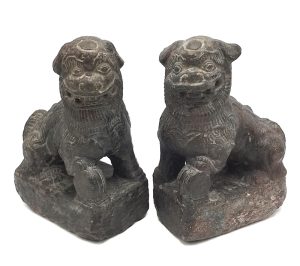
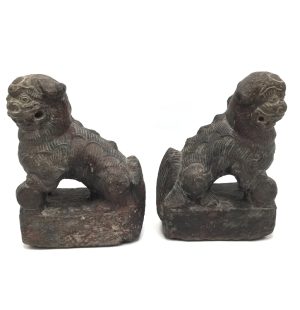
This is a really great pair of stone small fu lions with lots of character, humor, and detailed carving. Each of these very joyous creatures has open mouthed smiling faces with radiant eyebrows and tufts below their chins, scalloped manes and bushy tails. Carved from one piece of a blackish hard stone they could easily withstand additional wear of the elements in a garden. Pairs of fu lions like this belong in the home of people who appreciate spirituality and wish for happiness and fortune along with a touch of wit and whimsy.
-
$1,375.00
SOLD | H: 23.25″ W: 9.25″ D: 6.5″
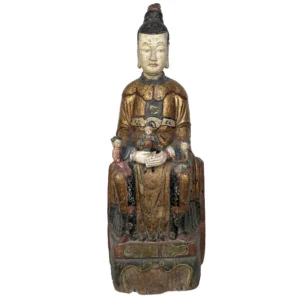
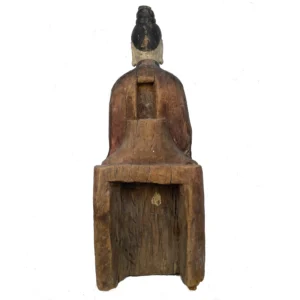
This Queen Mother of the West, the highest ranking female Taoist deity was probably displayed as a pair along a statue of Guanyin, the most significant Buddhism female (Guanyin on a Lotus Pedestal (16206B) highlighting the importance and similarity of these revered female images Like the Guanyin, the Queen Mother’s delicately carved face has half closed eyes, serene composure mouth with a hint of a smile, which is more Buddhist than Taoist. Her headdress, centered by her iconic phoenix, rests under a hood extending to her shoulders and back. She wears a high collared three-layered Taoist robe, her hands covered by a ritual cloth.
-
$6,500.00
H: 43″ W: 15″ D: 9.75 | SOLD
This large rare vibrant carving is the Taoist Deity of fertility Niangniang (“The Maiden Who Brings Children”) is often confused with Songzi Guanyin. Represented as an empress like figure, she glances serenely at 3 diminutive children, 2 males and a female extending their arms for protection. Stunning and peaceful, it is covered with gold highlights with intricate details.
-
$595.00
H: 12″ W:5.6 ” D:4″ | FREE SHIPPING WITHIN CONTINENTAL U.S.!
Zhenwu, the True Warrior, Perfected Warrior or Northern Emperor was one of the most popular TaoistDeities in the Ming and Qing dynasties known as protector of the state and the imperial family. His feet here rest on a pedestal over a turtle with a lifted head and a snake curled around his shell. Among the many interpretations this represent beings over whom he presided including both celestial officers under his command, [and] former demons that were conquered by him. This is a fascinating carving symbolizes trusted strength. and power.
-
$295.00
H: 9” W: 4.25 D: 3.125” | FREE SHIPPING
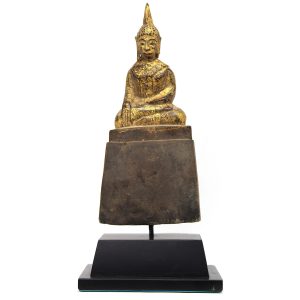
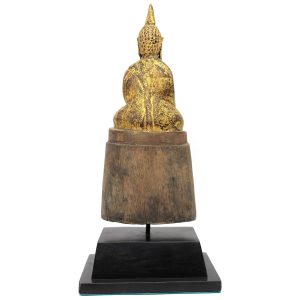
This mid 20th century Buddha Shakyamuni in Earth Witnessing position is carved in rural Lao style. Covered with gilt, the small rustic and simply carved image follows Lao artistic canons for depicting a Buddha: a curved hairline and high arched eyebrows that meet at the bridge of the nose, distinct hair curls, long ears, and a flame-shaped radiance emerging from his ushnisha. Its very large base is as tall and wide as the image, reflecting Laotian beliefs that a high pedestal reflects a deep respect for the Buddha. A base has been added for display purposes. Authentic old Lao images, even small personal ones like this, are difficult to find.
End of content
End of content