Showing 37–45 of 45 results
-

$495.00
H: 11” W: 9.5” D: 2” | SOLD
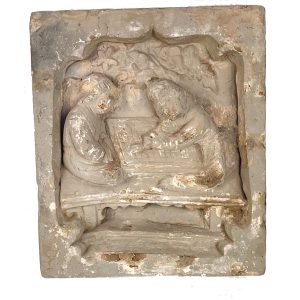
As part of the The Song dynasty cultural expansion, government and public buildings and tombs were built with interior walls decorated with earthenware unglazed mold-made brick tiles. This fanciful vibrant tile with a scalloped frame portrays two people playing a board game called wéiqí which originated in China over 2500 years ago. It is the world’s oldest and most complex board game still played.
-
$485.00
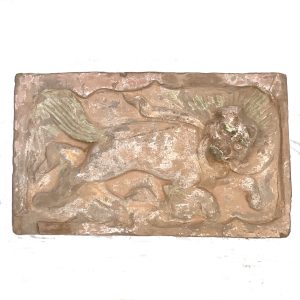
The Song dynasty (960–1279) is considered the most culturally brilliant era in later imperial Chinese history. A massive expansion during this dynasty produced government, public and religious buildings and tombs with walls decorated with earthenware unglazed mold-made brick tiles. Some were purely decorative and others were wishes for happiness and comfort in the deceased’s afterlife…
-
$475.00
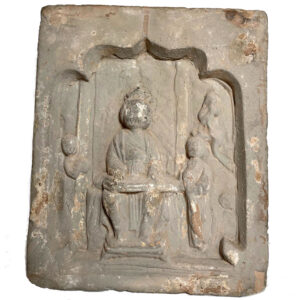
Terracotta tile portraying a seated female musician playing a lute with 2 attendants, and a third person in the distance. The scene is framed in an attractive and decorative curved wide border with a pointed arch called an ogee arch originating in India.
-
$325.00
H: 12.25″ W: 8.5″ D: 2.25″ |
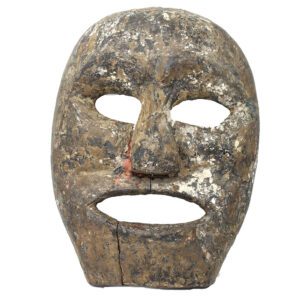
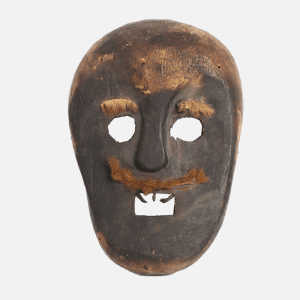
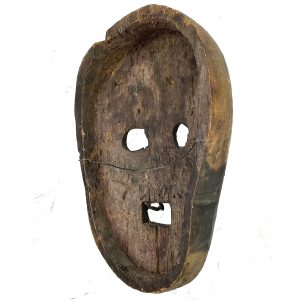
Timor masks are rare, intense, characterized by large roughly cut eyes and sometimes have no teeth. This one is not completely black from being stored in house rafters and also has no animal hide with hair attached to it. Its surface has darkened unevenly and there are white bits of white especially on the front. Threatening due to its lack of teeth, asymmetrical eyes and their lack of balance, ancestral masks are used in offering rituals designed to drive off malevolent spirits, scare enemies and perform ritual ceremonies and war celebrations.
-
H: 13.5″ W: 7.5″ D: 5″ | FREE SHIPPING WITHIN CONTINENTAL U.S.
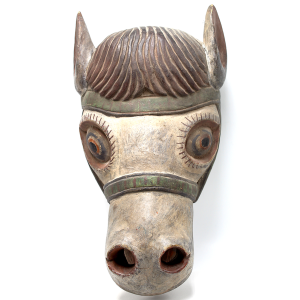
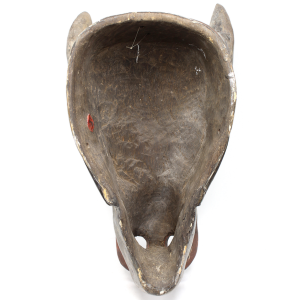
Used in ritual Cham Dances, this whimsical and colorful mask emphasizes the horses playful character, alertness and strength with large eyes, painted lashes, wide raised lids, flaring nostrils, open mouth and pointed ears framed by beautifully carved rows of black hair.
-
$295.00
H: 18.25″ W: 9″ D: 2.75″ | CALL 213-568-3030 OR EMAIL VANISHINGARTS213@GMAIL.COM FOR SHIPPING.
-
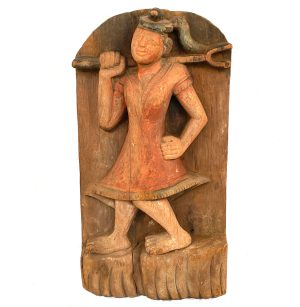
$295.00
H: 16.75″ W: 9.375| CALL 213-568-3030 OR EMAIL VANISHINGARTS213@GMAIL.COM FOR SHIPPING.
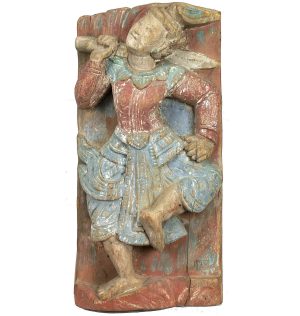
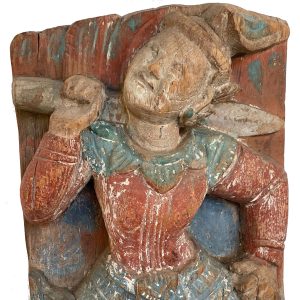
This charming vintage folk-art panel of a barefoot female farmer with a woven rattan basket behind her with the handle over her forehead is part of a 3 part set of farmer images
-
-
Sale!
$435.00 Original price was: $435.00.$325.00Current price is: $325.00.
H: 12.5″ W: 8.625″ D: 2.75″ | FREE SHIPPING WITHIN CONTINENTAL U.S.
Deeply set cut-out eyes and mouths are traditional for West Timor ancestor masks as are few, none or menacing teeth. They are rare and often have hair on animal hides on the upper lip, brows and head. Often looking threatening with stark features, their black color, teeth and often lack of balance scare off malevolent and evil spirits. Storing them in the rafters above the house hearth accounts for their smokey black color. Timor Ancestor masks have an earthy expressive presence and a raw spirit.
Timor’s religion has been described by Barbier as ritual exchanges between persons and social groups with their ancestors and fertility spirits. Timorese believe they can be upset by wicked forces, sickness, infertility and other forces, but particularly by the failure of the living to make suitable sacrifices to ancestral spirits. The departed protect and bring prosperity to the living as long as they are honored properly, so there is a close reciprocal link between the deceased and the secular world. Ancestors mediate between the living and the unseen world for living relatives. Their masks are used in animist veneration rituals, protective ceremonies and ritual dances or ceremonies tied to fertility, harvest, or funerary rites Besides masks, the living s are obliged to carve ancestor effigies to honor departed souls for them to occupy and rest in during their village visits. Many ceremonies usually occur in a house room known as “the womb” where a pillar supports beams rising up to the roof struts. This functions symbolically as an axis mundi (the center of the world or cosmic axis) that connects heaven and supports a simple altar above the floor to hold religious artifacts, protective fetishes and charms to ward off evil. So masks, effigies and fetish objects are protective and magic objects used throughout Indonesian islands in. Timor masks were rarely seen in the west until the mid-1970s.
End of content
End of content