Showing 49–60 of 62 results
-

$625.00
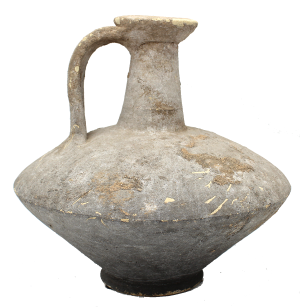
H: 8.5” Dia: 9.75” | FREE SHIPPING WITHIN CONTINENTAL U.S.!
Made in the Roman North Africa, this ancient carinated ceramic flagon called coarse wear for daily use made of inexpensive durable clay was used to hydrate all kinds of people and on home altars for offerings to family deities. Carinated pottery, where the top and lower sections are angled in opposite directions forming a pointed edge, was common ancient pottery shape, this one with a handle.
-
Sale!
$465.00 Original price was: $465.00.$365.00Current price is: $365.00.
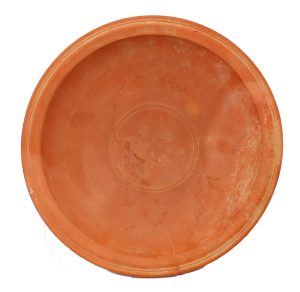
H: 1.625” Dia: 10.125” | FREE SHIPPING WITHIN CONTINENTAL U.S.!
A fine ancient Roman platter produced for upper classes, this is refined and delicate and has stamped decorative images in complex circles. Although rough areas with small losses remain, it is an ancient piece otherwise in very good condition that, especially considering its age and use, remains a remarkable surviving piece of history.
-
$900.00
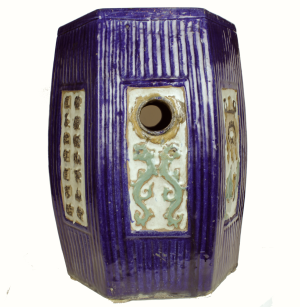
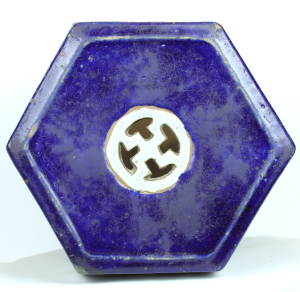
This stoneware glazed garden stool was used by a wealthy family reflected in its complex designs, auspicious symbols and its use of so much cobalt blue, a highly prized and expensive mineral paint color normally used sparingly. The pierced side to side circles running through the inside from side to side and the pierced design…
-
$295.00
Ht: 4.25” Dia: 4.625” | SOLD
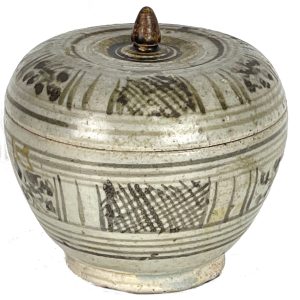
Produced in Thai kilns in the 14th to 15th centuries, Sawankhalok glazed stoneware lidded bowls were distributed through southeast Asia along with a variety of larger and smaller items. Lidded bowls like this were used to store many things, especially spices, powders and cosmetics, betel nut chewing materials, and medicine. This bowl rests on a thick foot, has a lid with a brown lotus bud handle and covered with decorative panels of underglaze brown crosshatch and vegetal scrolls.
-
$295.00
Ht. 4.75 Dia 5.25″ | SOLD
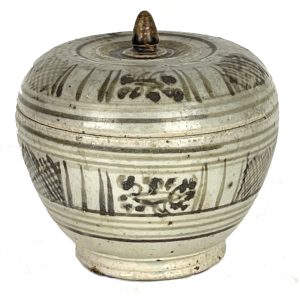
Produced in Thai kilns in the 14th to 15th centuries, Sawankhalok glazed stoneware lidded bowls were distributed through southeast Asia along with a variety of larger and smaller items. Lidded bowls like this were used to store many things, especially spices, powders and cosmetics, betel nut chewing materials, and medicine. This bowl rests on a thick foot, has a lid with a brown lotus bud handle and covered with decorative panels of underglaze brown crosshatch and vegetal scrolls.
-
$495.00
H: 11” W: 9.5” D: 2” | SOLD
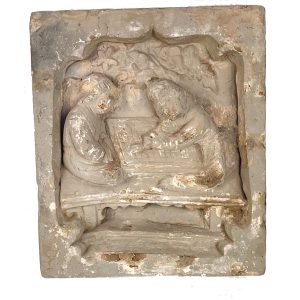
As part of the The Song dynasty cultural expansion, government and public buildings and tombs were built with interior walls decorated with earthenware unglazed mold-made brick tiles. This fanciful vibrant tile with a scalloped frame portrays two people playing a board game called wéiqí which originated in China over 2500 years ago. It is the world’s oldest and most complex board game still played.
-
$295.00
H: 12” W: 4.5” D: 3” | FREE SHIPPING WITHIN CONTINENTAL U.S.
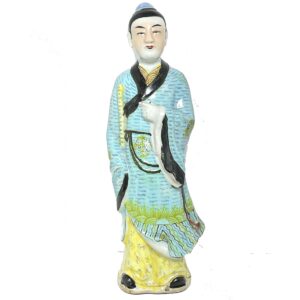
This elegant Chinese Republic Period porcelain is the Taoist immortal Han Xiangzi carrying his auspicious flute dressed in a beautiful blue robe with wide black borders, fine internal decorations and a decorative yellow floral undergarment. On the bottom is the kiln seal. As the patron saint of musicians and florists, it is a great gift for someone who enjoys these pursuits.
-
$485.00
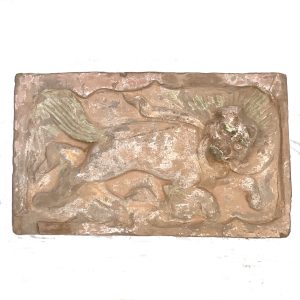
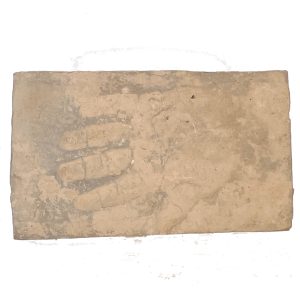
The Song dynasty (960–1279) is considered the most culturally brilliant era in later imperial Chinese history. A massive expansion during this dynasty produced government, public and religious buildings and tombs with walls decorated with earthenware unglazed mold-made brick tiles. Some were purely decorative and others were wishes for happiness and comfort in the deceased’s afterlife…
-
$325.00
H: 7” W: 5” D: 2.75” | FREE SHIPPING WITHIN CONTINENTAL U.S.
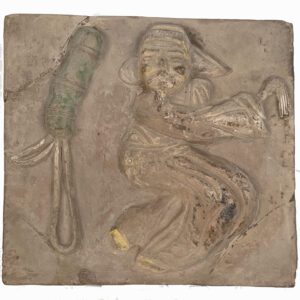
This Song earthenware tile depicts the legendary scholar, poet and alchemist Taoist deity Lu Dongbin, one of the Eight Immortals, who sought to discover the elixir of immortality and used charms still used in Chinese homes to prevent illness and ward off evil. He and his fly whisk are auspicious symbols of longevity and a wish for immortality. Firecrackers, are traditionally used to celebrate the Chinese New Year, to bring in wishes for a safe and prosperous year, scare away evil and provide pleasure for the ancestors’ spirit.
-
$475.00
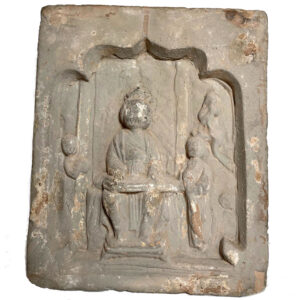
Terracotta tile portraying a seated female musician playing a lute with 2 attendants, and a third person in the distance. The scene is framed in an attractive and decorative curved wide border with a pointed arch called an ogee arch originating in India.
-
Sale!
$165.00 Original price was: $165.00.$110.00Current price is: $110.00.
H: 8″ W: 6″ D: 6″ | FREE SHIPPING WITHIN CONTINENTAL U.S.
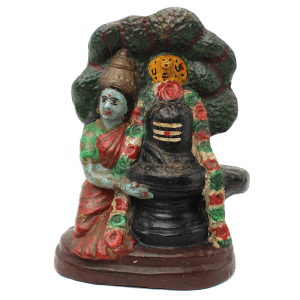
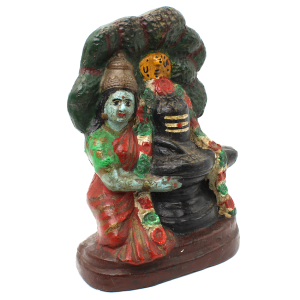
This colorful terracotta image of Shiva and Parvati is aniconic (symbolic) and figurative. Shiva’s is a symbolic lingham (phallus) and Parvati a deity. Together they represent the union of masculine and feminine, thus all existence
-
$295.00
SOLD H: 9″ W: 3 ” D: 3.5 ” | FREE SHIPPING!
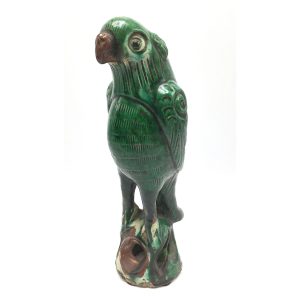
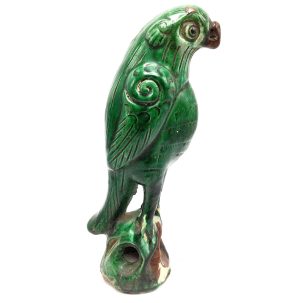
Chinese Republic ceramic parrots are commonly depiction as this one perched on an open rocky base. Porcelain parrots were produced for the domestic and export markets and sometimes sold in pairs leading some to believe they, like pairs of fish, symbolized the love and fidelity of married couples. This one has vivid polychrome colors, large eyes and stylized wings. This piece is in excellent condition.
End of content
End of content