Showing 13–16 of 16 results
-

$295.00
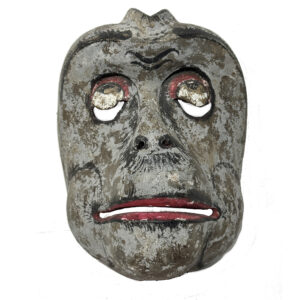
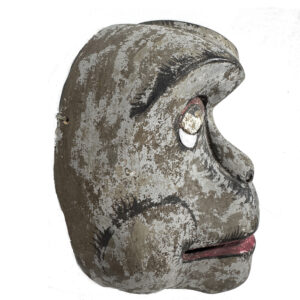
Ht: 7.5″ W: 5.5″ D: 4″ Free Shipping in Continental U.S.
Balinese monkey masks (topeng bojog) are used in dance-dramas based on the ancient Indian moral epic the Ramayana. In Balinese Hinduism, monkeys as sacred guardians and protectors of temples where their auspicious presence brings good luck.
-
$525.00
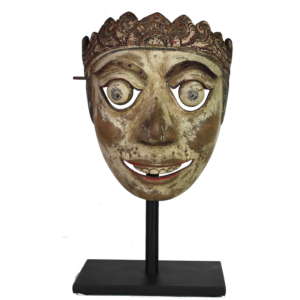
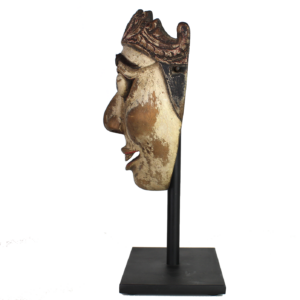
H: 7.25″ W: 6″ D: 3.25″ | CALL 213-568-3030 OR EMAIL VANISHINGARTS213@GMAIL.COM FOR SHIPPING.
Authentic vintage mask of a king (topeng dalem) carved in the Balinese community on Lombok Island. Honoring historical kings, it was also an offering to please the gods. It exhibits the king’s qualities: a refined, cultured, idealized, model leader. Mounted on museum quality stand.
-
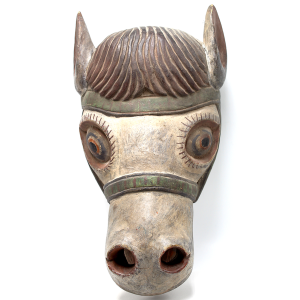
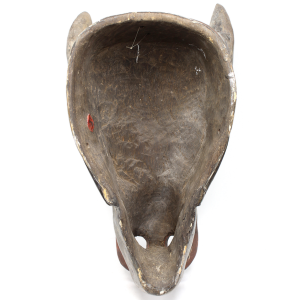
H: 13.5″ W: 7.5″ D: 5″ | FREE SHIPPING WITHIN CONTINENTAL U.S.
Used in ritual Cham Dances, this whimsical and colorful mask emphasizes the horses playful character, alertness and strength with large eyes, painted lashes, wide raised lids, flaring nostrils, open mouth and pointed ears framed by beautifully carved rows of black hair.
-
$375.00
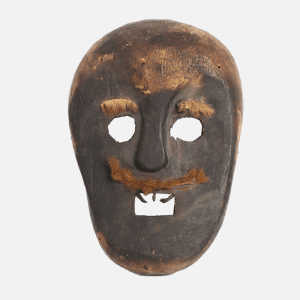
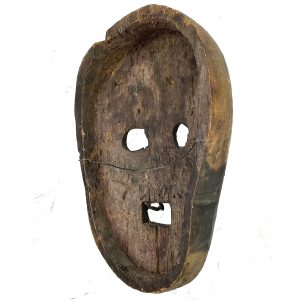
H: 12.5″ W: 8.625″ D: 2.75″ | FREE SHIPPING WITHIN CONTINENTAL U.S.
Deeply set cut-out eyes and mouths are traditional for West Timor ancestor masks as are few, none or menacing teeth. They are rare and often have hair on animal hides on the upper lip, brows and head. Often looking threatening with stark features, their black color, teeth and often lack of balance scare off malevolent and evil spirits. Storing them in the rafters above the house hearth accounts for their smokey black color. Timor Ancestor masks have an earthy expressive presence and a raw spirit.
Timor’s religion has been described by Barbier as ritual exchanges between persons and social groups with their ancestors and fertility spirits. Timorese believe they can be upset by wicked forces, sickness, infertility and other forces, but particularly by the failure of the living to make suitable sacrifices to ancestral spirits. The departed protect and bring prosperity to the living as long as they are honored properly, so there is a close reciprocal link between the deceased and the secular world. Ancestors mediate between the living and the unseen world for living relatives. Their masks are used in animist veneration rituals, protective ceremonies and ritual dances or ceremonies tied to fertility, harvest, or funerary rites Besides masks, the living s are obliged to carve ancestor effigies to honor departed souls for them to occupy and rest in during their village visits. Many ceremonies usually occur in a house room known as “the womb” where a pillar supports beams rising up to the roof struts. This functions symbolically as an axis mundi (the center of the world or cosmic axis) that connects heaven and supports a simple altar above the floor to hold religious artifacts, protective fetishes and charms to ward off evil. So masks, effigies and fetish objects are protective and magic objects used throughout Indonesian islands in. Timor masks were rarely seen in the west until the mid-1970s.
End of content
End of content