Showing 205–216 of 393 results
-
Sale!

$785.00 Original price was: $785.00.$625.00Current price is: $625.00.
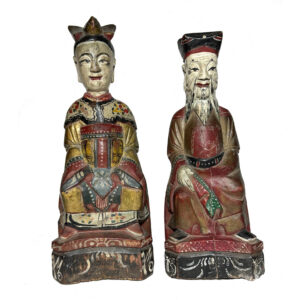
H: Tudi Gong: 11.75″. Tudi Po 12.37″ | CALL 213-568-3030 OR EMAIL VANISHINGARTS213@GMAIL.COM FOR SHIPPING.
This happy benevolent couple are Taoist Earth God Tudi Gong and his wife Tudi Po placed on a home altar to assure an abundant harvest. Referred to as “Grandpa” and “Grand Ma” they wear vibrant Mandarin official’s attire, him with a mandarin square with a bird, and her with a phoenix headdress.
-
$795.00
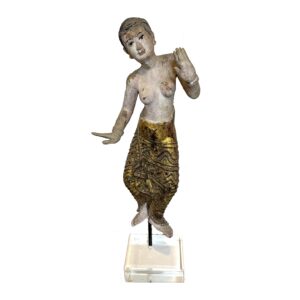
H: 22″ W: 8.5″ D: 6.5″ | CALL 213-568-3030 OR EMAIL VANISHINGARTS213@GMAIL.COM FOR SHIPPING.
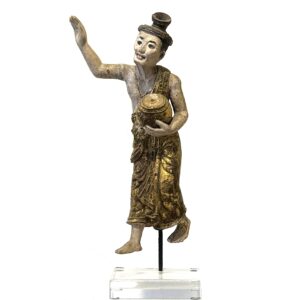
Decorative and charming wood provincial Burmese female dancer with bare top and gilded Burmese sarong with inset glass and sequins. Set high on a transparent Lucite base, she appears to float in motion.
-
$295.00
H: 8.5″ W: 4″ D: 2.75″ | FREE SHIPPING WITHIN CONTINENTAL U.S.!
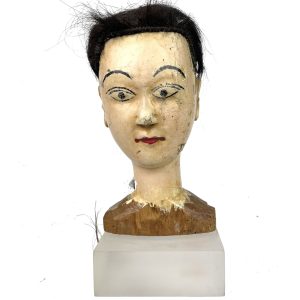
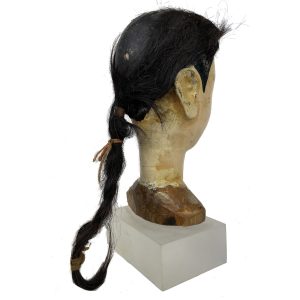
Antique Chinese puppets were often made in several parts with removable heads. This early 20th century puppet head represents a young, refined, or virtuous female role in traditional Chinese opera.with delicately painted features and animal hair braided down the back.
-
$595.00
H: 13.75″ W: 3″. D: 3.75″ | CALL 213-568-3030 OR EMAIL VANISHINGARTS213@GMAIL.COM FOR SHIPPING.
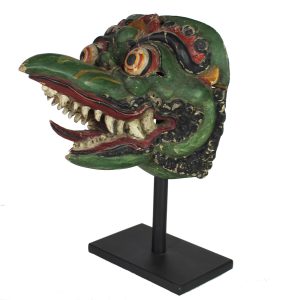
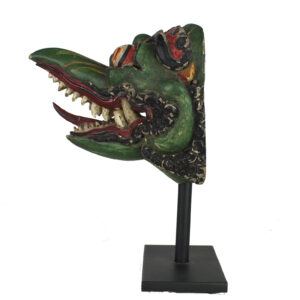
This rare vintage Balinese mask of Jatayu was used in Ramayana performances. He is the Hindu vehicle of Vishnu, one of the principal Hindu Gods triad. On a museum quality stand.
-
Sale!
$625.00 Original price was: $625.00.$425.00Current price is: $425.00.
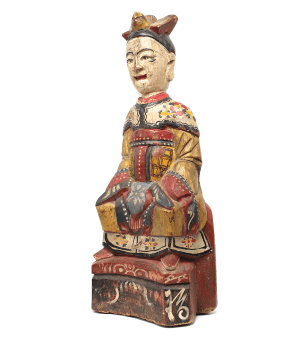
H: 8.25″ W: 3.125″ D: 2.25″ | FREE SHIPPING!
This Kitchen God and his Wife is posed as streamlined virtual mirror-images and fashioned with a general quality relying on paint rather than deep carving for details. They sit on backless chairs on a plinth, with simplified gold officials’ robes with long color sashes, and well-carved black and gilt head gear. The wife’s face is smooth, generalized and the male face has a more deeply carved surface and painted highlights.
-
$795.00
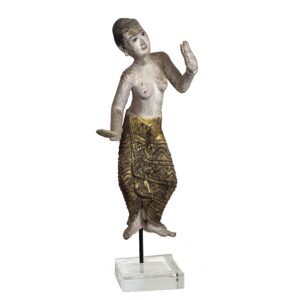
H: 22″ W: 8.5″ D: 6.5″ | CALL 213-568-3030 OR EMAIL VANISHINGARTS213@GMAIL.COM FOR SHIPPING.
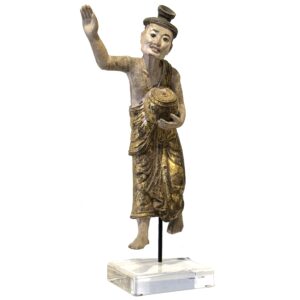
Lyrical wood provincial Burmese male dancer with drum in gilded Burmese sarong with glass and sequins. Set high on a transparent Lucite base, he appears to float in motion.
-
$125.00
H: 7” W: 7” D: 3.5” | FREE SHIPPING IN CONTINENTAL US
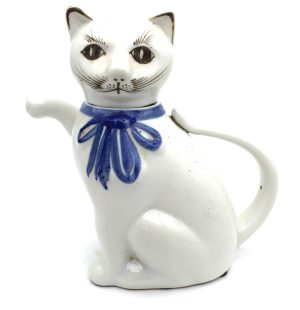
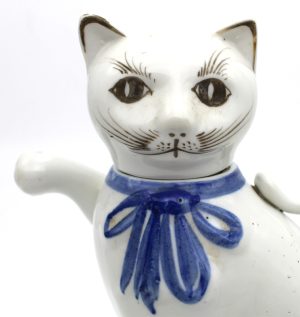
Porcelain cat teapot removable head, sinuous tail handle. Beautifully hand-painted whimsical ribbon-like blue collar, dangling ornamental bow, and the black accents. Likely Qing Dynasty circa 1900-1920.
-
$125.00
H: 5.5″ W: 3″ D: 3.375″ | FREE SHIPPING WITHIN CONTINENTAL U.S.
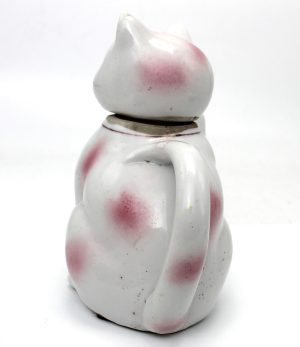
Antique porcelain teapot, removable head, tail handle, and spout paw. Hand painted design with ribbon-like gold collar and dangling ornamental bow symbolizing long life. Great gift, recommended for decorative use only.
-
$295.00
H: 8.25″ W: 6.75″ D: 3.5 ” | Free SHIPPING WITHIN CONTINENTAL U.S.
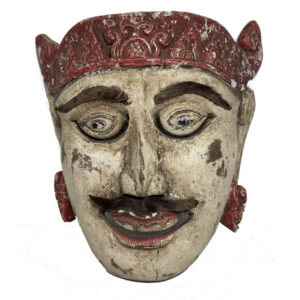
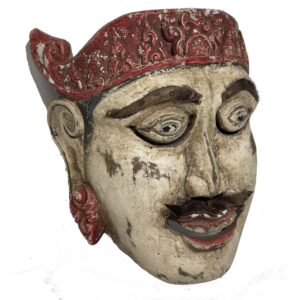
Similar to Balinese masks, this rare carving is a king’s mask (topeng dalem) with an intricately carved crown. Its white color symbolizes the king’s purity, refinement, and morality. Made from a heavier, dense wood, it requires more effort and skill to carve. Old authentic, traditional Lombok masks are scarce.
-
$350.00
Ht: 8″ W: 6″ D: 4.125″ | Free SHIPPING WITHIN CONTINENTAL U.S.
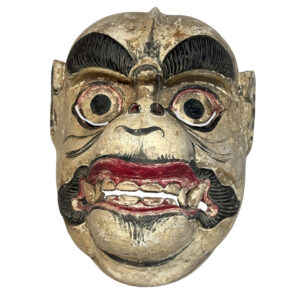
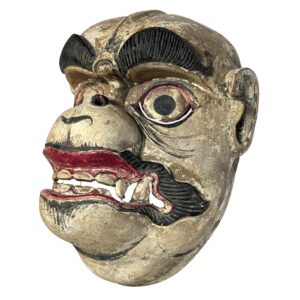
Masterfully carved authentic antique mask of powerful Monkey King Subali from the Ramayana with exaggerated simian characteristics made to present his power. Wear from use in Balinese drama theater presentations.
-
$450.00
H: 26″ Dia: 12.5″|CALL 213-568-3030 OR EMAIL VANISHINGARTS213@GMAIL.COM for shipping.
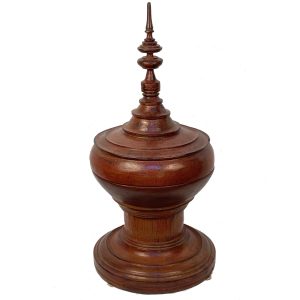
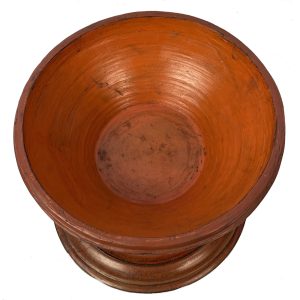
This elegant early 20th century red lacquer hsun-ok has a simple striking silhouette with raised circular layers on a pedestal base and woven vertical bands topped by a tall round finial resembling a Buddhist stupa.
-
Sale!
$150.00 Original price was: $150.00.$130.00Current price is: $130.00.
H: 2.5″ W: 1.75″ | FREE SHIPPING WITHIN CONTINENTAL U.S.
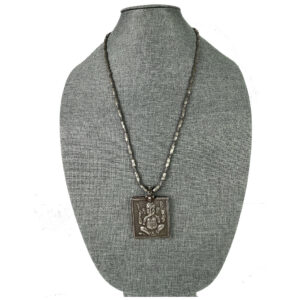
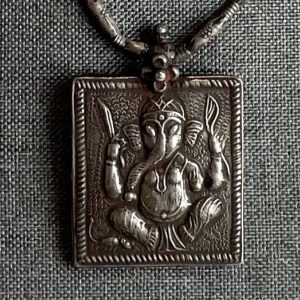
Indian silver embossed or repoussé Ganesh amulet pendant seated with 4 arms holding traditional items like an axe, a lotus, or sweets in a braided rope-like design border.
End of content
End of content